Russia Strikes Ukraine Power Grid and Aid Centre as November 4 Death Toll Rises to 37
On November 4, 2026, the death toll from a Russian bombing of an aid distribution point in the Ukrainian village of Komyshuvakha rose to 37, with dozens of people still missing, Ukrainian officials said. The strike, which hit a school building being used to hand out aid near the front line in the Zaporizhzhia region, is now one of the deadliest attacks on civilians in Ukraine this year. On the same day, Russia kept up its campaign against Ukrainian energy sites, hitting power stations in the Kyiv and Zhytomyr regions, while Ukraine struck back with a drone attack that set fire to a logistics hub in southern Russia.
The events unfolded one week before United States brokered peace talks are due to resume in Abu Dhabi on November 10 and 11. Here is what happened on November 4, what each side says, and why the timing matters for the talks ahead.
| Quick Fact | Detail |
|---|---|
| Komyshuvakha death toll | 37 dead, with 59 people reported missing, according to Ukrainian officials on November 4 |
| Where it happened | A school used as an aid distribution point in Komyshuvakha, Zaporizhzhia region |
| When the aid centre was hit | Monday, November 2, with the toll updated on Wednesday, November 4 |
| Power grid strikes | Russian strikes hit power stations in Kyiv and Zhytomyr regions on November 4 |
| Tuesday bombardment | 289 drones, 17 ballistic missiles and 59 cruise missiles, according to President Volodymyr Zelenskiy |
| Ukrainian counterstrike | Drone strike set fire to an Ozon logistics hub in Adygeysk, southern Russia |
| Peace talks | US mediated talks between Ukraine and Russia due in Abu Dhabi on November 10 and 11 |
| Humanitarian truce | A six day ceasefire to evacuate civilians from Oleshky expired shortly before the strikes |
What Happened at the Komyshuvakha Aid Centre
Ukrainian officials said Russian forces first dropped aerial bombs on the school building in Komyshuvakha as people arrived to collect aid, then struck the shelter again with more bombs. President Volodymyr Zelenskiy had earlier said at least 33 people were killed on Monday. By Wednesday, the acting head of the Regional Military Administration, Mykhailo Semikin, put the toll at 37, while Ivan Fedorov, co-head of the Zaporizhzhia Regional Defense Council, wrote on Telegram that 59 people were missing.
The village sits near the front line in southeastern Ukraine, and the school had been converted into a place where residents could pick up aid. That is why the casualty count is so high and why the missing figure matters: rescue teams were still working through the wreckage days after the first strike, and officials warned the numbers could change as more of the site is searched.
Russia’s Defence Ministry gave a different account. Moscow said its forces had targeted Ukrainian military units in areas around Komyshuvakha and two other settlements in the Zaporizhzhia region, and said up to 25 Ukrainian servicemen had been killed, along with 15 vehicles and an electronic warfare station. Both Russia and Ukraine deny deliberately targeting civilians, and the two accounts of the same strike cannot both be fully true. What is not in dispute is that a building full of people collecting aid was destroyed, and that dozens of civilians are dead or missing.
The strike came a day after a six day ceasefire to evacuate civilians from the Russian occupied southern town of Oleshky expired. That truce, brokered with the help of United States First Lady Melania Trump, allowed nearly 800 people to be evacuated, according to the First Lady. Zelenskiy said the Komyshuvakha attack showed Moscow was intent on killing people instead of building on that humanitarian opening.
The Power Grid Campaign Continues
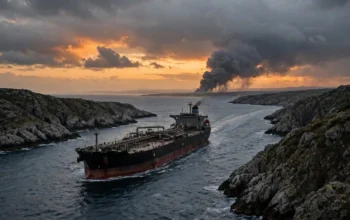
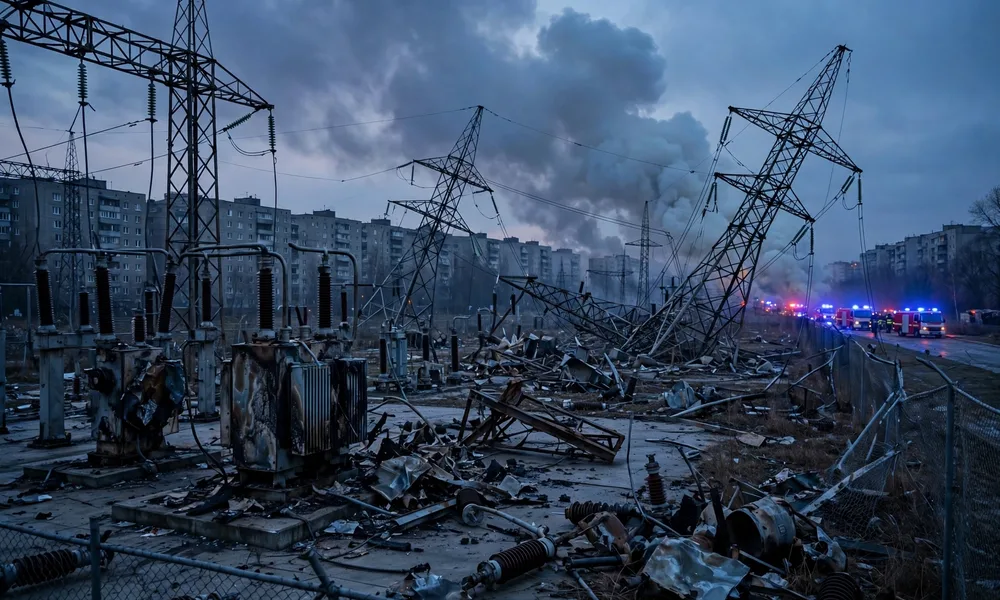
Separately on Wednesday, Russia hit two power stations in the Kyiv and Zhytomyr regions, its Defence Ministry said on Telegram, keeping up near daily strikes on Ukrainian energy facilities as temperatures fall. The strikes also targeted a cargo vessel at sea near Odesa. Elsewhere, Ukraine’s emergency service and local officials reported Russian hits in Poltava, Dnipro, Kirovohrad and Rivne, in addition to the capital Kyiv.
Those strikes followed a much larger bombardment on Tuesday. Zelenskiy said Russia had launched 289 drones, 17 ballistic missiles and 59 cruise missiles overnight, hitting power plants and substations from the Black Sea port of Odesa in the south to Rivne in the west. Ukraine’s largest private generating company, DTEK, said three of its five thermal power plants had been knocked offline. Russia’s Defence Ministry said its troops struck electricity facilities in several regions that supply power to military factories and the Ukrainian army.
The pattern is familiar from previous winters: as cold weather arrives, energy infrastructure becomes a central target, and each wave of strikes leaves more households without heat and light. US President Donald Trump announced in September and October that both sides had agreed to halt attacks on energy targets, although neither side confirmed such an agreement. The November 4 strikes show that, whatever was discussed, the energy campaign has not stopped.
For another major security story from this week, read about North Korea firing multiple missiles as Kim Yo Jong rules out dialogue.
Ukraine Hits Back at a Russian Logistics Hub
Ukraine also struck inside Russia on Wednesday. A Ukrainian drone strike caused a fire at a logistics hub belonging to Russian e-commerce group Ozon in the town of Adygeysk in southern Russia, the company and a regional official said. It was the second time that facility had been targeted, part of a wider Ukrainian campaign that has hit dozens of huge warehouses operated by Ozon and its rival Wildberries since July, aimed at disrupting Russia’s economy and war effort.
Regional head Murat Kempelov said firefighters were deployed to tackle the blaze at Adygeysk. Russia has mounted similar attacks on Ukrainian commercial sites, and the air war between the two sides has escalated in recent months even while battle lines on the ground remain largely static. Ukraine also struck an oil refinery in Yaroslavl on Monday night, according to the reports, showing that Kyiv is widening its target list beyond the front line.
The exchange underlines a grim reality of this phase of the war: both sides can still reach deep into each other’s rear areas, and civilian linked infrastructure on both sides is now part of the contest. For Ukraine, hitting logistics hubs is a way to raise the economic cost of the war for Russia. For Russia, hitting power stations is a way to strain Ukrainian society as winter sets in. Neither approach, on its own, has changed the front line.
What the Abu Dhabi Talks Are Supposed to Decide
The United States will bring together delegations from Ukraine and Russia in Abu Dhabi on November 10 and 11, US envoy Steve Witkoff said on Monday. The talks are meant to discuss ending the conflict, postwar security agreements and de-escalation, and they would be the first trilateral peace talks since February. Zelenskiy has said discussions on a proposed energy ceasefire would be high on Ukraine’s agenda.
Ahead of those talks, the European Commission said it would host a meeting on Ukraine on Wednesday with the US, NATO and European allies, as well as Ukraine itself. At a press conference in Berlin with German Chancellor Friedrich Merz, Zelenskiy urged Moscow to engage seriously, while Merz pressed Russia to come to the table. A Kremlin aide said last month that Moscow’s attitude to three way talks would depend in part on whether Ukraine launched a large scale attack on Russia’s National Unity Day, a public holiday observed on November 4.
The flurry of meetings shows that diplomacy is active, but the strikes of November 3 and 4 show its limits. Russia bombarded Ukraine’s energy infrastructure in waves on Tuesday, knocking out power to swathes of the country, less than two days after the Oleshky humanitarian truce ended. That sequence does not bode well for talks, but it does not make them pointless either: the fact that both sides are still agreeing to meet, and that an energy ceasefire is on the agenda, means the diplomatic track is still alive even as the bombing continues.
For more on how global markets are reacting to this week’s shocks, see the global stocks slide after the Democratic sweep and Iran claims four tankers destroyed near the Strait of Hormuz.
Frequently Asked Questions
How many people died in the Komyshuvakha aid centre strike?
Ukrainian officials said on November 4 that the death toll had risen to 37, with 59 people reported missing. The strike hit a school being used as an aid distribution point in Komyshuvakha, in the Zaporizhzhia region, on Monday, November 2.
What does Russia say about the strike?
Russia’s Defence Ministry said its forces targeted Ukrainian military units around Komyshuvakha and two other settlements, and claimed up to 25 Ukrainian servicemen were killed. Russia denies deliberately targeting civilians, as does Ukraine.
Which power stations were hit on November 4?
Russia said it hit two power stations in the Kyiv and Zhytomyr regions on Wednesday, and Ukrainian officials also reported strikes in Poltava, Dnipro, Kirovohrad and Rivne, plus a cargo vessel near Odesa.
When are the Abu Dhabi peace talks?
US mediated talks between Ukraine and Russia are scheduled for November 10 and 11 in Abu Dhabi, the first trilateral talks since February. An energy ceasefire is expected to be high on Ukraine’s agenda.
Sources
Reporting for this article drew on Reuters coverage of the November 4 developments. Readers can check the original reporting here: Reuters on the rising death toll from the aid centre strike, Reuters on the November 4 power station strikes, and Reuters on the Ukrainian drone strike on the Ozon hub.
Final Thoughts
November 4 was a day when war and diplomacy ran side by side in Ukraine, and the war looked louder. A school full of people collecting aid was destroyed, power stations were hit as winter approaches, and a Russian warehouse burned in return. All of it happened one week before negotiators are due to sit down in Abu Dhabi. That is the contradiction at the heart of this moment: both sides are still talking about an energy ceasefire while still bombing energy targets. The talks may produce something, and the Oleshky evacuation showed that even small humanitarian deals are possible. But the toll at Komyshuvakha is a reminder of what is at stake if they fail, and why the next week matters more than the last one.