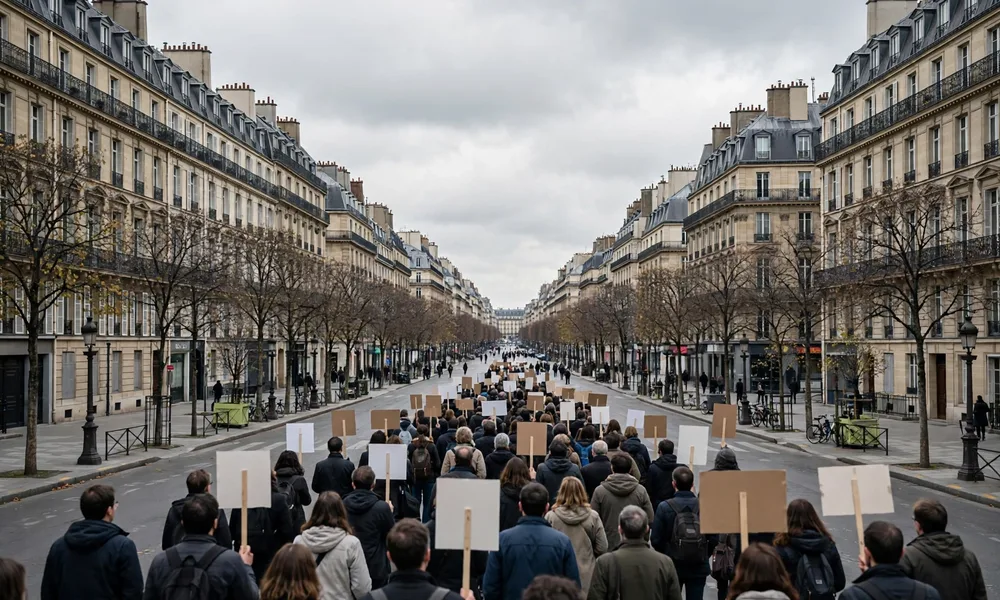
France is set for a nationwide strike on Thursday, November 5, 2026, as five trade unions, students and Yellow Vest protesters join forces in a single day of action. The strike was called on October 5, after a day of public sector protests in late September and a wave of high school student protests that kept growing. Workers in the public and private sectors are expected to walk out, trains face disruption, and refinery staff have been called to halt production. The demands are broad, from a higher minimum wage to higher taxes on large fortunes, and unions say the day is about bringing every part of the movement together.
Quick Facts
| Date of the strike | Thursday, November 5, 2026 |
| Who called the strike | Five trade unions, on October 5, 2026 |
| Unions that joined later | Three additional unions joined after the call was made public |
| Main demands | A higher minimum wage, the immediate opening of pay negotiations, protection of public services, jobs and industry, and greater tax fairness through higher taxes on large fortunes |
| Who is taking part | High school and university students, private and public sector workers, former and new Yellow Vest members, and parents |
| Rail disruption | SNCF management expects service disruptions, especially in the Paris region |
| Energy sector | TotalEnergies refinery employees across the country have been called to halt production |
| Background protests | Rounds of Saturday protests took place on October 17, 24 and 31 |
| Government meeting | Prime Minister Sebastien Lecornu met employee organisations on October 21 about pay slips, without concrete commitments |
| Next gathering | A further gathering is set for Saturday at Place de la Concorde in Paris |
How the Strike Came Together
The date of November 5 was set well in advance. On October 5, five French trade unions called for new demonstrations and strikes on Thursday, November 5. The call came six days after a day of protests by public sector workers in late September, and at a moment when high school student protests were gaining momentum across the country.
The timing was no accident. The unions chose a date that gave the movement a full month to grow, and it did. Since the call was made public, three additional unions have decided to join in, widening the strike beyond the five organisations that first announced it. The result is a much broader front than the one that existed on October 5.
The strike also follows three rounds of Saturday protests on October 17, 24 and 31, driven in part by anger over the rising cost of living.
On October 21, Prime Minister Sebastien Lecornu met employee organisations about pay slips, but the meeting produced no concrete commitments, and the unions went ahead with their plans.
What the Unions and Protesters Want
The demands behind the strike are broad, and they go beyond a single pay claim. The unions are calling for an increase in the minimum wage, so that the lowest paid workers see a real rise in what they take home. They also want the immediate opening of pay negotiations, so that wages can be discussed properly rather than left to drift.
Protection of public services is another central demand. The unions say schools, hospitals and other public services need to be defended, and they link that demand to jobs and industry. In their view, the strike is about keeping work and public services safe, not just about pay packets in the short term.
Tax fairness is the fourth part of the platform. The unions want greater tax fairness through higher taxes on large fortunes. People with the most should pay more, and the money raised should help fund public services and support workers.
Students, Workers and Yellow Vests Join Forces
What makes November 5 different from a normal strike day is the mix of people taking part. The protests began in high schools, then spread to universities, and then grew into a broad movement that brought together groups that do not often march side by side. High school and university students are there, along with workers in both the private and public sectors, former and new members of the Yellow Vest movement, and parents.
CGT leader Sophie Binet spoke about the day on France 2 television, and her message was clear. She said the day had to be a great day of convergence, a moment when all the separate strands of protest came together. FSU leader Caroline Cheve, who leads the education sector union, is part of the same push, and her presence shows how central schools and students are to the movement.
The Yellow Vests are a familiar part of French protest life, and their return adds weight to the day. Former members who marched in the original Yellow Vest protests are joining new members who have come to the movement more recently. Their presence links November 5 to an older story of anger over the cost of living, and it gives the strike a reach that goes beyond the unions alone.
Rail and Refineries Face Disruption
The strike is expected to cause real disruption, and transport is the most visible place where people will feel it. At SNCF, the national railway company, management is expecting service disruptions, especially in the Paris region. Commuters in and around the capital should expect a difficult day, and travellers across the country should check before they set out.
The energy sector is also affected. At TotalEnergies, CGT coordinator Eric Sellini said employees at refineries across the country were called to halt production. If refinery staff stop work, the effects could reach beyond the day itself, because fuel supply depends on steady production. The call to halt production is one of the strongest steps the unions can take, and it shows how serious the strike is meant to be.
The unions have picked sectors where a walkout is felt at once. Rail, energy and education are all places where a stoppage reaches millions of people, and that is why they sit at the heart of the November 5 plan. France has been in the headlines for other reasons too, including our report on the hack that hit French blood banks and put freezers at risk, and the Credit Mutuel Arkea cyberattack linked to 133 million in fraud.
Tensions, Injuries and Arrests Before the Strike
The run up to November 5 has not been peaceful. Some high schoolers were seriously injured by explosive devices fired by police during the protests, and thousands of people were arrested in the weeks leading up to the strike. Those facts have shaped the mood around the day, and they have added a new layer of anger to the protests.
Disputes have also erupted over protest routes, particularly in Paris, Toulouse and Lyon. The question of where marches are allowed to go has become a flashpoint in its own right, and it has led to arguments between organisers and the authorities in the three cities. The route of a march matters to both sides. For protesters it is about being seen and heard, and for the authorities it is about keeping order.
The injuries to high school students have drawn particular attention, because the students at the heart of the movement are young. When teenagers are seriously hurt in a protest, the story changes, and it brings parents and the wider public into the argument. The arrests, running into the thousands, have had a similar effect, turning a dispute about pay into a dispute about the right to protest.
What Happens Next
A further gathering is set for Saturday at Place de la Concorde in Paris, and it will be the next test of the movement. The unions have not yet decided what comes next after that, and the question of whether the strike continues or turns into something longer is still open. For now, the focus is on making November 5 as big as possible.
The strike comes on a week of heavy international news, including our report on Ukraine strikes on November 4 that hit an aid centre and the power grid. But the French story is its own, and its outcome will be judged in France first. The government has so far offered no concrete commitments on pay, and the unions have shown no sign of backing down.
For people in France, the practical advice is simple. Expect disruption on trains, especially around Paris, expect schools to be affected, and expect large marches in major cities. The strike was announced a month ago, the demands have been clear from the start, and the movement behind it has only grown since then.
Frequently Asked Questions
When is the France nationwide strike?
The nationwide strike takes place on Thursday, November 5, 2026. Five trade unions called the strike on October 5, after public sector protests in late September and growing high school student protests. Three additional unions joined after the call was made public.
Who is taking part in the strike?
High school and university students, workers in the private and public sectors, former and new members of the Yellow Vest movement, and parents are all taking part. The strike is meant to bring these groups together in a single day of action, which CGT leader Sophie Binet described on France 2 television as a great day of convergence.
What are the protesters demanding?
The demands are an increase in the minimum wage, the immediate opening of pay negotiations, protection of public services, jobs and industry, and greater tax fairness through higher taxes on large fortunes. The unions say the strike is about pay, public services and fairness all at once.
Will trains and fuel supplies be affected?
Yes. SNCF management expects service disruptions, especially in the Paris region, and at TotalEnergies, CGT coordinator Eric Sellini said employees at refineries across the country were called to halt production. Travellers and commuters should expect a difficult day.
Sources
This article is based on reporting from Le Monde and NSS Magazine. The Le Monde report is available at Le Monde, and the NSS Magazine report is available at NSS Magazine.
Final Thoughts
November 5, 2026 is shaping up to be a major day for France. Five trade unions called the strike a month ago, three more unions joined, and the movement has grown from high school protests into a broad front of students, workers, Yellow Vest members and parents. The demands are clear: higher pay, open negotiations, protected public services and fairer taxes on large fortunes. The government meeting on October 21 brought no concrete commitments, and the Saturday protests on October 17, 24 and 31 kept the pressure on. With rail disruption expected, refinery staff called to halt production, and a further gathering set for Saturday at Place de la Concorde, the strike is a test for both sides. The unions want to show that a divided country can still act together, and Thursday is their chance to prove it.