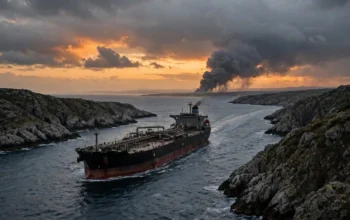
Iran Claims Four Tankers Destroyed by Mines Near the Strait of Hormuz as Tensions Rise

Iran Islamic Revolutionary Guard Corps has claimed that four oil tankers were destroyed after hitting naval mines south of the Strait of Hormuz, one of the world most important routes for global oil. The claim, reported by Reuters and carried by Iran state media on November 4, 2026, also says two other vessels were seized and that an American MQ-9 drone was shot down over the strait. No tanker has been named, and no independent authority has confirmed the claim so far.
The announcement has drawn wide attention because the Strait of Hormuz carries a large share of the world seaborne oil, and any disruption there can move oil prices and raise fears of a wider conflict. But it has also drawn caution, because similar claims from the same force in recent weeks were not backed by independent evidence. Readers should treat this story as a claim that is still being checked, not as a confirmed event.
Here is what is known, what is claimed, and what remains unverified.
| Quick Fact | Detail |
|---|---|
| Claim made by | Iran Islamic Revolutionary Guard Corps, the IRGC |
| Claim | Four oil tankers destroyed after hitting naval mines south of the Strait of Hormuz |
| Other claims | Two more vessels detained, and a US made MQ-9 drone shot down |
| Date of statement | Early November 4, 2026, carried by IRNA and Tasnim news agency |
| Vessels named | None, no flag, owner, cargo or exact position given |
| Independent confirmation | None so far, maritime authorities have not reported a ship lost to a mine |
| Why it matters | The Strait of Hormuz is a key global oil route, so claims there move markets and raise tensions |
What Iran Claimed
According to the IRGC statement, carried by Iran official IRNA news agency and the semi official Tasnim news agency, four oil tankers were destroyed after striking naval mines while trying to cross a route the IRGC describes as prohibited, south of the Strait of Hormuz. The statement said the vessels caught fire after the explosions and were still burning.
The IRGC also said its forces detained two other vessels for allegedly violating maritime restrictions in the strategic waterway. Reuters reported the claim, noting that the tankers were still ablaze and that two other vessels had been seized. In a separate claim in the same statement, the IRGC said its air defence forces shot down a US made MQ-9 Reaper drone over the Strait of Hormuz at about 4.30 am local time, calling it the 56th American MQ-9 drone it claims to have downed over the strait.
The statement did not identify any of the tankers, their flags, owners, cargoes, crews or exact locations. It did not report casualties. That lack of detail is one reason independent experts are urging caution before treating the claim as fact.
Why the Claim Is Not Yet Confirmed
Major claims about ships in the Strait of Hormuz are usually easy to check, because tankers are tracked, crews report incidents, owners and insurers speak quickly, and maritime authorities publish notices. In this case, none of those checks has produced confirmation so far. No maritime authority or shipping company has reported a ship lost to a mine in these waters, according to reports reviewing the claim.
There is also a recent pattern that makes caution sensible. This is the third time in two weeks that the IRGC has announced four ships lost in a single statement, according to analysis of the claims. Earlier claims were also challenged. After the IRGC claimed on August 31 that a supertanker had struck two mines, US Central Command said no ships had hit mines in the Strait of Hormuz and called the announcement an attempt to intimidate commercial shipping through disinformation.
On October 18, the multinational Joint Maritime Information Centre said there was no substantiation for an IRGC claim made a day earlier that two supertankers had struck mines. That record does not prove the new claim is false, but it does mean the claim needs independent proof before it can be reported as an established fact.
What Has Actually Happened in the Strait Recently
The waters around the Strait of Hormuz have genuinely been dangerous in recent weeks, and that is part of why the new claim spread so fast. Ships confirmed hit in recent days were struck by projectiles or charges fixed by boat rather than by sea mines, according to maritime reporting.
One tanker was hit by two projectiles in its engine room about 14 nautical miles northeast of Oman Limah on November 3, and another was set ablaze by limpet mines off Khasab on October 29. Ships using the southern route have been sailing with their identification systems switched off on US guidance, which makes tracking harder and rumours easier to spread.
The wider background is a tense standoff between Washington and Tehran over maritime security and a US naval blockade affecting shipping activities in the region. Reports also note that US officials said the US military had launched strikes on the country a day before the IRGC statement. In that climate, every claim about tankers carries political weight, whatever the facts on the water turn out to be.
Why the Strait of Hormuz Matters So Much
The Strait of Hormuz is a narrow waterway between Iran and Oman, linking the Persian Gulf to the open ocean. A large share of the world oil exports pass through it, along with liquefied natural gas shipments. When shipping there is threatened, oil traders react at once, and governments around the world pay attention.
That is why even an unconfirmed claim can move markets. Oil prices rose on November 4, with Brent crude above 100 dollars, as traders weighed the midterm election results in the United States, the Hormuz claims and wider tensions together. For ordinary people, the link is simple: a threat to oil supply can push up fuel prices, transport costs and the price of goods that travel by road, sea and air.
The strait has been a flashpoint many times before. Iran has threatened to close it in past disputes, and incidents involving tankers, drones and naval forces have repeatedly raised fears of escalation. Each time, the first reports are often confusing, and the confirmed facts emerge only after ships, crews and satellite images are checked.
What to Watch Next
Several checks will show whether this claim holds up. First, maritime authorities and shipping trackers may name a vessel, a flag or a position, or confirm that no ship is missing. Second, tanker owners and insurers would normally report a loss quickly, because a burning tanker cannot be hidden for long. Third, satellite images and naval statements from the United States or regional navies could confirm or challenge the claim.
Until one of those checks lands, the honest way to describe the story is this: Iran IRGC claims four tankers were destroyed by mines near the Strait of Hormuz, but the claim has not been independently verified, no vessel has been named, and no maritime authority has reported a ship lost to a mine.
It is also worth watching how oil markets and governments respond. If the claim fades without confirmation, it will join a list of recent Hormuz claims that did not stand up. If a vessel is named and confirmed, it would mark a serious escalation in a waterway the whole world depends on.
Did four tankers really hit mines near the Strait of Hormuz?
Iran IRGC claims they did, but the claim has not been independently verified. No tanker has been named, and no maritime authority or shipping company has reported a ship lost to a mine.
Why are experts cautious about the claim?
Similar IRGC claims in recent weeks were not backed by independent evidence. US Central Command and the Joint Maritime Information Centre have previously said there was no substantiation for comparable claims about tankers hitting mines.
What else did the IRGC claim?
The IRGC also said two other vessels were detained for violating maritime restrictions, and that its air defences shot down a US made MQ-9 drone over the Strait of Hormuz.
Why does the Strait of Hormuz matter?
The strait is one of the world most important energy routes. A large share of global seaborne oil passes through it, so any threat to shipping there can move oil prices and raise fears of wider conflict.
Final Thoughts
The Hormuz tanker claim is a reminder of how fast alarming news travels when it touches oil, war and a narrow stretch of water the world depends on. The claim may turn out to be true, partly true or unproven, but right now the evidence does not support stating it as fact. The responsible course is to keep watching for a named vessel, a shipping report or a satellite image, and to remember the recent record of claims that faded under checking. In a story like this, what is not yet proven matters just as much as what has been claimed.