North Korea Fires Multiple Missiles as Kim Yo Jong Rules Out Dialogue With Washington

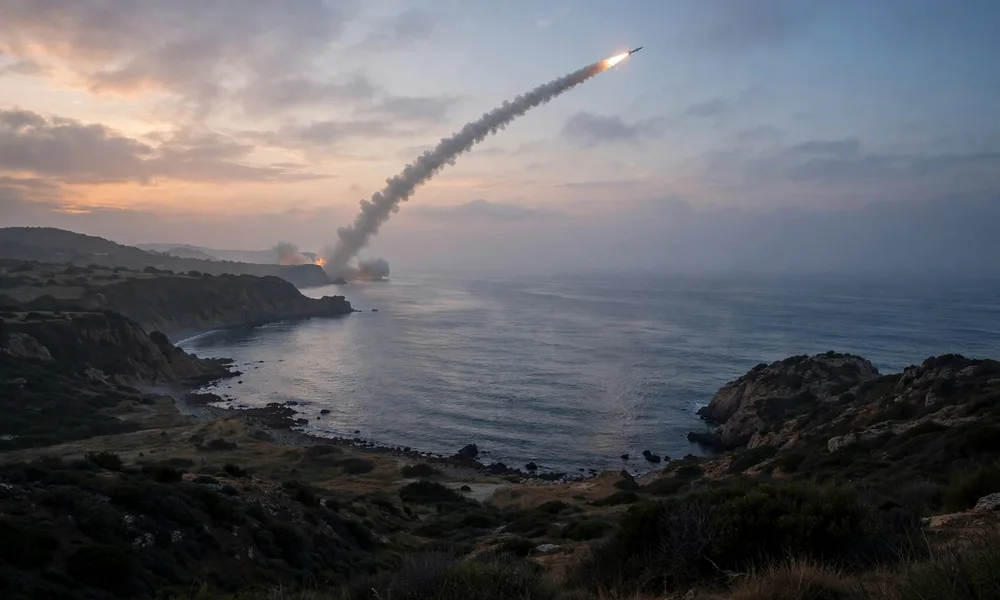
North Korea fired multiple missiles on Wednesday, November 4, 2026, toward the sea off its east coast, South Korea’s defence ministry said, marking Pyongyang’s fourth weapons launch in a month. The launches came just hours after Kim Yo Jong, the sister of North Korean leader Kim Jong Un, ruled out dialogue with Washington until the United States abandons what she called its hostile policy, and repeated Pyongyang’s denial that it was behind the hacking of crypto exchange Binance.
South Korea and the United States are analysing the launches, which were detected from the Sondok area on North Korea’s east coast. Here is what happened, what Kim Yo Jong actually said, and why this launch matters even though missile tests from Pyongyang have become almost routine.
| Quick Fact | Detail |
|---|---|
| What happened | North Korea fired multiple missiles toward the sea off its east coast on November 4, 2026 |
| Launch site | Sondok area on North Korea’s east coast, toward the East Sea, also known as the Sea of Japan |
| Who reported it | South Korea’s defence ministry and Joint Chiefs of Staff |
| Launch count | Fourth weapons launch in a month |
| Kim Yo Jong statement | No reason to meet hostile and untrustworthy people while US policy stays confrontational |
| Binance link | FBI says North Korea linked group TraderTraitor carried out the Binance attack; Pyongyang denies it |
| Earlier tests | Missile flying more than 900 km, hypersonic missiles, attack drones, precision guided torpedo |
| US response | Seoul and Washington analysing the launches and ready to respond to provocation |
What South Korea Detected
South Korea’s Joint Chiefs of Staff said it detected several North Korean missiles launched from the Sondok area towards the East Sea, also known as the Sea of Japan, on Wednesday. The South Korean and US militaries were analysing their characteristics, the Joint Chiefs said, and had tracked preparations and launches. Seoul and Washington said they remained ready to respond to any potential provocation.
The announcement did not immediately specify the type or range of the missiles, and that analysis is still under way. What is clear is the pattern. North Korea has carried out a series of weapons tests this year, including the launch of a missile that flew more than 900 kilometres (559 miles) as well as testing hypersonic missiles. Separately, North Korea’s state news agency KCNA said the country tested strategic cruise missiles equipped with a new cluster munition warhead on Monday.
The accounts do not establish that the Wednesday launches were the same test or that either missile event was a response to the FBI’s accusation over Binance. North Korea has also recently tested other weapons, including attack drones, a precision guided torpedo system and an intermediate range hypersonic missile, according to the reports. The launches followed a separate report from North Korean state media that Kim Jong Un visited a naval shipyard building a destroyer and stressed the importance of a powerful naval force.
For a closer look at another major security story this week, read about Iran claims four tankers destroyed near Strait of Hormuz.
What Kim Yo Jong Said About Dialogue
Kim Yo Jong warned on Wednesday that North Korea would respond more strongly to what she called Washington’s unchanging hostile policy. The influential sister of leader Kim Jong Un also said Pyongyang had no reason to resume dialogue, and she said North Korea had no reason to meet with people she called hostile and untrustworthy while they maintained a confrontational policy.
US President Donald Trump had raised the possibility of a summit with Kim Jong Un during his November Asia tour, but Pyongyang had given no positive signal, according to the report. The immediate message is therefore that Kim is rejecting the prospect of talks while warning of a firmer response to US policy. Neither her remarks nor the missile reports specify what will happen next.
Kim had already rejected the FBI’s account on Tuesday, calling it a grave political provocation. The FBI said on Saturday that TraderTraitor, a hacking group affiliated with North Korea, was responsible for the attack on the cryptocurrency platform Binance. Kim repeated Pyongyang’s denial that it was behind the hacking, and the Binance accusation became the focus of her criticism of the United States.
Why This Launch Still Matters
It is tempting to treat a North Korean missile launch as routine, and in one sense it is. Pyongyang tests weapons often, and the fourth launch in a month fits a familiar rhythm. But three things make this one worth watching. First, the timing: the launch came hours after a senior Pyongyang figure publicly closed the door on dialogue, which turns a technical test into a political signal.
Second, the context: the launches arrive in the middle of a wider week of tension, from the Binance accusation to a naval shipyard visit that stressed sea power. Third, the analysis gap: until Seoul and Washington publish their assessment of what was launched, it is impossible to know whether this was a routine short range test or something more capable. The 900 km flight earlier this year shows that not every test is small.
For South Korea, the practical response is monitoring and readiness, not panic. For the United States, the question is whether the door to a summit stays open even after a public rejection. Trump raised the possibility of a meeting, Pyongyang has now said no in public, and diplomacy with North Korea has often moved in private even when public statements sound final. For more global coverage, see Trump preemptive pardons for Elon Musk and DOGE staff and global stocks slide after Democratic sweep.
Frequently Asked Questions
What did North Korea launch on November 4, 2026?
South Korea’s defence ministry said North Korea fired multiple missiles from the Sondok area toward the sea off its east coast. Seoul and Washington were still analysing the type and characteristics of the missiles when the launch was reported.
Is this the first North Korean launch recently?
No. It was Pyongyang’s fourth weapons launch in a month. Recent tests have included a missile that flew more than 900 kilometres, hypersonic missiles, attack drones and a precision guided torpedo system.
What did Kim Yo Jong say about talks with the US?
Kim Yo Jong said North Korea had no reason to meet with people she called hostile and untrustworthy while the United States maintained a confrontational policy. She warned of a stronger response to what she called Washington’s unchanging hostile policy.
What is the Binance connection?
The FBI said the North Korea linked group TraderTraitor carried out the attack on crypto exchange Binance. Pyongyang denies the accusation, and Kim Yo Jong called the FBI account a grave political provocation.
Sources
Reporting for this article drew on Reuters reporting from Seoul, plus coverage of Kim Yo Jong’s statement. Readers can check the original reporting here: BusinessWorld on North Korea firing multiple missiles in its fourth launch in a month, Bulletin Observer on Kim Yo Jong warning of a stronger response, and AnewZ on North Korea launching missiles amid rising tensions.
Final Thoughts
North Korea’s message on November 4 was delivered in two parts: words first, missiles second. Kim Yo Jong closed the door on dialogue in public, and hours later missiles flew toward the East Sea. That sequence is the story, not just the launch itself. It tells Washington that Pyongyang is not interested in a summit on current terms, and it tells Seoul that the testing programme will continue regardless of outside pressure. What happens next depends on the technical analysis still under way and on whether private channels stay open even when public statements sound final. Until then, the safest reading is the simplest one: North Korea is signalling strength, rejecting talks, and waiting to see how the United States responds.

