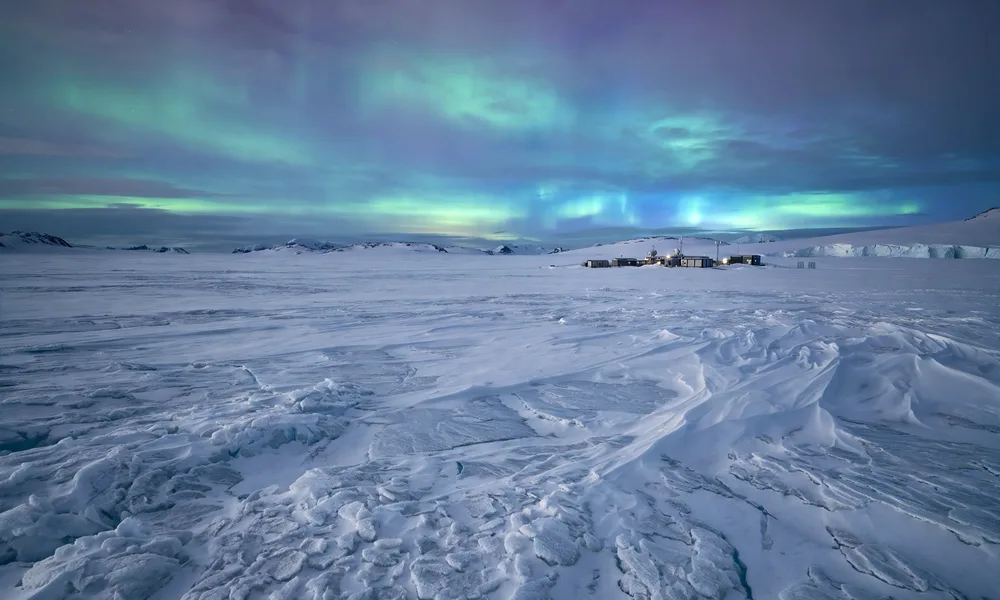
Yes, the 2026 ozone hole is the largest in a decade. NASA and NOAA reported on November 4, 2026 that the hole over the Antarctic grew to 10.5 million square miles on September 18, its greatest one day extent for the year. During the peak season from September 7 to October 13, it averaged about 9.6 million square miles, more than twice the area of the United States. The main cause was an unusually powerful polar vortex that kept cold air trapped over the South Pole for longer than usual. Even so, scientists say the long term recovery of the ozone layer remains on track, and they expect the hole to close by the 2070s.
Quick Facts
| Topic | 2026 ozone hole over the Antarctic |
| Reported by | NASA and NOAA |
| Report date | November 4, 2026 |
| Ranking | Largest in a decade, seventh largest in 48 years of monitoring |
| Greatest one day extent | 10.5 million square miles (27.1 million square kilometers) on September 18, 2026 |
| Average extent in peak season | About 9.6 million square miles (25 million square kilometers) from September 7 to October 13 |
| Comparison with the record | About 90 percent as large as the largest ozone hole on record in 2000 |
| Main cause | An unusually powerful polar vortex that prolonged ozone depletion |
| Lowest ozone value over the South Pole | 105 Dobson units on October 17, 2026 |
| Lowest South Pole value on record | 92 Dobson units in October 2006 |
| Ozone hole threshold | Area where ozone drops below 220 Dobson units |
| 2025 comparison | The 2025 ozone hole was the fifth smallest since 1992 |
| Expected recovery | By the 2070s, according to researchers |
What NASA and NOAA Found in 2026
NASA and NOAA track the ozone hole every year, and their 2026 report brought a clear headline. The hole over the Antarctic was the largest in a decade and the seventh largest in 48 years of monitoring. That puts the year in a small group of very large holes, even though it did not break the all time record set in 2000.
During the peak ozone depletion season, from September 7 to October 13, the hole covered an average of about 9.6 million square miles, or 25 million square kilometers. That is more than twice the area of the United States. On a single day, September 18, it reached 10.5 million square miles, about 90 percent as large as the record hole in 2000. The contrast with the year before is sharp: in 2025, the ozone hole ranked as the fifth smallest since 1992. The findings come from satellite data and balloon borne instruments launched from the South Pole.
Why the 2026 Ozone Hole Grew So Large
The main reason for the large hole was an unusually powerful polar vortex. The polar vortex is a strong ring of winds that circles the South Pole in winter and early spring. When it is strong, it traps very cold air over Antarctica. That cold air is the key ingredient for ozone loss, because ozone destroying chemical reactions happen much faster in extreme cold, on the surface of tiny ice clouds that form only at very low temperatures.
In 2026, the vortex stayed strong for longer than usual, which gave those reactions more time to work. Amy Butler, a research scientist at NOAA’s Chemical Sciences Laboratory, explained that this year’s unusually large polar vortex was partly due to weak planetary scale weather systems that typically disrupt it. In a normal year, large waves in the atmosphere push against the vortex and weaken it. In 2026, those waves were weak, so the vortex held together and kept the cold air locked in place.
The size of the hole in any single year depends on two things at once: the amount of ozone depleting chemicals in the air, which has been falling slowly for years, and the weather over Antarctica, which can change a lot from one year to the next. In 2026, the weather favored ozone loss, so the 2026 ozone hole grew large even though the chemical side continues to improve.
How Big Is 10.5 Million Square Miles
Numbers like 10.5 million square miles are hard to picture. The average size of the hole during the peak season, about 9.6 million square miles, is more than twice the area of the United States. The one day peak of 10.5 million square miles is larger still.
Scientists measure the hole by drawing a line around the area where ozone levels fall below 220 Dobson units, the standard unit for ozone in a column of air. The peak season runs from early September to mid October, when the sun returns to Antarctica after the dark winter and triggers the chemical reactions that destroy ozone. The hole reached its greatest extent on September 18, right in the middle of that window, then began shrinking as the vortex weakened. Ozone science is one of several long running science and public health topics we follow, including our report on the Kentucky measles outbreak, the largest since 1991.
A Shallower Hole Than the Record Years
The 2026 ozone hole’s size is only half the story. Scientists also measure how deep the ozone loss goes, and by that measure the 2026 hole was not as severe as some of the largest holes on record. A hole can be wide but shallow, or smaller but deeper, and the two measures do not always move together.
Using balloon borne instruments from the South Pole, NOAA scientists found that ozone concentrations directly overhead reached their lowest value for the year, 105 Dobson units, on October 17. That is well below the 220 Dobson unit threshold that defines the hole, so the loss was real and serious. But it was not as low as the lowest value ever recorded over the South Pole, which was 92 Dobson units in October 2006. The gap between 105 and 92 marks a real difference in how much ozone was destroyed. Medical research also moves in long cycles of measurement and careful comparison, as seen in our report on Immunic and progressive multiple sclerosis research.
Why Recovery Is Still on Track
The most important message in the NASA and NOAA report is not the size of the 2026 ozone hole. It is that long term recovery remains on track. Scientists from both agencies emphasized that efforts to limit ozone depleting chemical compounds have had a significant impact. Countries agreed decades ago to phase out the chemicals that destroy ozone, and their slow decline is now well documented.
The timeline is long because the chemicals involved last a very long time in the air. Even after production stopped, old chemicals already in the atmosphere keep working their way up to the ozone layer for years. That is why researchers estimate the ozone hole will recover by the 2070s, not in a few years. A single large year does not erase that progress, just as a single small year in 2025 did not prove the job was finished.
Paul Newman, a senior scientist at the University of Maryland and longtime leader of NASA’s ozone research team at the Goddard Space Flight Center, put the progress in plain numbers. He said the 2026 ozone hole could have been 1 to 2 million square miles larger if ozone depleting substances were as prevalent in the atmosphere today as they were at their year 2000 peak. That is the amount of extra damage avoided because those chemicals have been reduced.
What This Means for the Years Ahead
For most people, the ozone hole is not something they can see or feel in daily life, but it matters because the ozone layer blocks harmful ultraviolet radiation from the sun. When the layer thins over Antarctica, more of that radiation can reach the surface in the region below the hole. That is why scientists track the hole so closely, and why the recovery timeline matters for the long term health of the planet.
The 2026 ozone hole result is a reminder that recovery will not be a straight line. Some years will be larger, some smaller, and the weather over Antarctica will decide much of that year to year swing. What matters is the direction over decades, and on that measure the science is steady. Chemical levels are down from their peak, the hole would have been larger without that progress, and the expected recovery date in the 2070s has not changed.
Science news shares the headlines with politics and business, including our report on how data centers fared on the 2026 midterm ballots. The ozone story is a slow story measured over decades, and its most important number is not the size of one year’s hole but the date when the hole is expected to close for good.
Frequently Asked Questions
How large was the 2026 ozone hole?
The 2026 ozone hole reached its greatest one day extent of 10.5 million square miles on September 18. During the peak season from September 7 to October 13, it averaged about 9.6 million square miles, more than twice the area of the United States. It was the largest ozone hole in a decade and the seventh largest in 48 years of monitoring.
Why was the ozone hole so large in 2026?
The main cause was an unusually powerful polar vortex over Antarctica. The strong ring of winds trapped very cold air over the South Pole for longer than usual, which gave ozone destroying reactions more time to work. Amy Butler of NOAA explained that weak planetary scale weather systems, which normally disrupt the vortex, were partly to blame for its strength in 2026.
Does a large ozone hole in 2026 mean recovery has failed?
No. NASA and NOAA scientists say long term recovery remains on track. The chemicals that destroy ozone have been reduced since their peak in 2000, and Paul Newman of NASA said the 2026 hole could have been 1 to 2 million square miles larger if those chemicals were still at peak levels. Researchers still estimate the ozone hole will recover by the 2070s.
How is the ozone hole measured?
Scientists define the ozone hole as the area where ozone drops below 220 Dobson units. Satellites measure its size from above, and balloon borne instruments from the South Pole measure ozone directly in the air. In 2026, the lowest value over the South Pole was 105 Dobson units on October 17, compared with the record low of 92 Dobson units in October 2006.
Sources
This article is based on reporting from NASA, Phys.org and KTBB. The NASA report is available at NASA, the Phys.org report is available at Phys.org, and the KTBB report is available at KTBB.
Final Thoughts
The 2026 ozone hole was the largest in a decade, with a peak of 10.5 million square miles and a ranking as the seventh largest in 48 years. The cause was an unusually strong polar vortex. Yet the deeper story is one of steady progress: the chemicals that destroy ozone are down from their peak, the hole would have been 1 to 2 million square miles larger without that progress, and recovery by the 2070s remains the expected outcome. A single large year driven by weather does not change that long term path.