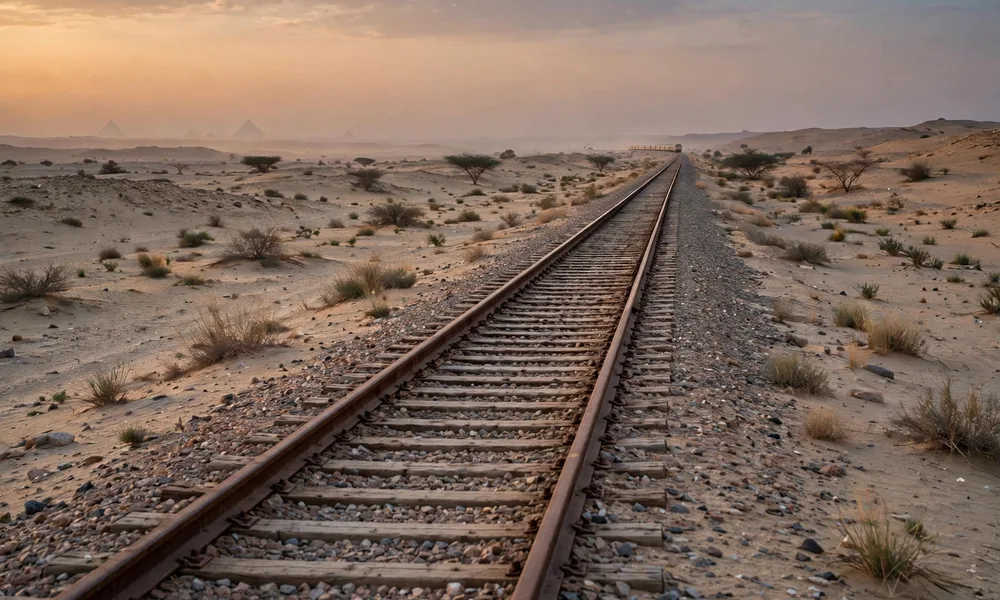
Two trains collided in the al-Ayyat district of Giza province in Egypt on Sunday, November 8, 2026, killing 7 people and injuring more than 112. Train No. 134, a Tahya Misr service travelling from Giza to Fayoum, struck the rear of Train No. 2010, which was travelling from Cairo to Aswan and was stationary on the same track at the time, according to prosecutors. The crash happened between Kafr Ammar and Al-Raqqa stations, about 52 km south of Cairo, and several carriages derailed. At least 72 ambulances rushed to the scene, and President Abdel Fattah el-Sisi ordered a swift investigation into what went wrong.
Quick Facts
| Fact | Detail |
|---|---|
| Date | Sunday, November 8, 2026 |
| Location | Al-Ayyat district, Giza province, between Kafr Ammar and Al-Raqqa stations |
| Distance from Cairo | About 52 km (32 miles) south of Cairo |
| Trains involved | Train No. 134 (Giza to Fayoum) and Train No. 2010 (Cairo to Aswan) |
| Deaths | 7, according to Egypt’s Health Ministry |
| Injured | 112, with some later reports putting the figure slightly higher |
| Ambulances sent | At least 72 |
| Passengers discharged | 45 of the injured had left hospital after treatment |
| Service affected | Trains between Giza and Upper Egypt suspended while wreckage was cleared |
| Investigation | Ordered by President Abdel Fattah el-Sisi, with chief prosecutor’s investigators at the site |
| Official cause | Not yet announced |
What Happened on the Line
The collision took place on a stretch of track that links Cairo with the towns and cities of Upper Egypt. Train No. 2010 was travelling south from Cairo toward Aswan when it came to a stop on the line between Kafr Ammar and Al-Raqqa stations. Behind it, Train No. 134 was travelling from Giza toward Fayoum, a city southwest of Cairo. Prosecutors said the second train ran into the rear of the first one.
The force of the impact derailed several carriages, leaving twisted metal on the track. Passengers on both trains were thrown about inside the carriages, and rail traffic on the line came to a halt within minutes. Local people from nearby areas reached the site quickly, and emergency services followed soon after.
At first, the picture was unclear, as it often is in the hours after a rail crash. The Health Ministry first reported 4 people killed and 88 injured. As the day went on, that toll rose to 7 killed and 112 injured. Some later reports put the injury figure a little higher, at 114 or 125, which is common when hospitals are still receiving patients. The Health Ministry figure of 7 killed and 112 injured is the latest official count, and it is the one to rely on until an updated figure is given.
The Rescue and the Hospitals
At least 72 ambulances were sent to the scene, a number that shows how quickly the scale of the crash was understood by the emergency services. Rescue workers, railway staff and local residents worked together to reach people inside the damaged carriages. The injured were taken to hospitals in the area, where doctors and nurses treated a wide range of injuries.
Of the 112 injured, 45 had been discharged from hospital after treatment, which suggests that many of the injuries, while painful and frightening, were not life threatening. Others remained in hospital for further care. No names of the dead or injured were released in the reports available so far, and the families of those affected were left to wait for news in the hardest of circumstances.
For readers following events across the wider region, our report on the storm flooding that hit displaced families in Gaza gives a sense of how quickly a single day can turn into a crisis for ordinary people far from the headlines.
The Investigation Ordered by the President
President Abdel Fattah el-Sisi ordered a swift investigation into the crash and said anyone found negligent will be held accountable. Investigators from the chief prosecutor’s office arrived at the site to begin their work. Their job is to establish exactly what happened in the minutes before the collision, and why two trains ended up on the same stretch of track at the same time.
No official cause has been announced yet. That is normal at this stage. A rail investigation looks at many things: the signals on the line, the timing of the two trains, the condition of the track and the rolling stock, the actions of the drivers and the control staff, and the records kept by the railway. It takes time to gather that evidence and to check it properly, and officials are right to wait for facts rather than guess. The key question is simple: Train No. 2010 was stationary on the track, and Train No. 134 was travelling behind it on the same line. Something in the system that should have kept them apart did not work as it should have. Whether that was a human error, a signalling fault, a problem with the track, or a mix of factors is what the investigators must now find out.
A District With a Painful Rail History
Al-Ayyat is a name that carries a heavy history in Egypt. The district was the site of the country’s deadliest rail disaster, a train fire in 2002 that killed more than 370 people. That fire broke out on a crowded train travelling south from Cairo, and it is still remembered across Egypt more than two decades later.
The district was also the scene of a collision between two freight trains last September, a reminder that the problems on this stretch of line are not new.
Egypt’s railway is the oldest in Africa and the Middle East, built in the nineteenth century, and it has a long history of deadly accidents. The network carries millions of passengers a year, and it is the main way many Egyptians travel between cities. Over the years, crashes, fires and derailments have claimed many lives. Some were caused by old equipment and worn track. Others were caused by mistakes in the control room or by trains running on lines that had not been properly maintained.
For context on how sudden disasters strike across the wider region, our report on the earthquake that shook central Japan shows how a single event can injure dozens of people and disrupt transport in a matter of seconds.
What Happens Next for Passengers
Trains between Giza and Upper Egypt were suspended after the crash while crews cleared the wreckage from the line. No timeline has yet been given for when full service will return. For passengers who rely on the railway to travel south from Cairo, that means delays and cancelled journeys, and for some it means finding another way to travel at short notice. Before trains can run again, the damaged carriages must be removed, the track must be checked and repaired, and the signalling on the stretch must be tested.
For the families of the dead, the days ahead will be about funerals and grief. For the injured still in hospital, they will be about treatment and recovery. For the railway, they will be about the investigation and about the hard questions that follow every crash. The toll of 7 killed and 112 injured is a reminder of how quickly an ordinary journey can turn into a tragedy, and of how much depends on the systems that are supposed to keep trains apart.
Readers interested in Egypt’s recent diplomatic moves can also read our report on Egypt reopening its embassy in Tripoli after 12 years, a story from the same week that shows a different side of the country’s news.
Frequently Asked Questions
How many people were killed and injured in the Egypt train collision?
Egypt’s Health Ministry reported 7 people killed and 112 injured in the collision on November 8, 2026. The toll rose through the day from an early figure of 4 killed and 88 injured. Some later reports put the injury figure slightly higher, at 114 or 125, but the Health Ministry figure is the latest official count.
Where exactly did the crash happen?
The crash happened in the al-Ayyat district of Giza province, about 52 km (32 miles) south of Cairo, between Kafr Ammar and Al-Raqqa stations. The line there carries trains travelling between Cairo and the cities of Upper Egypt.
Which trains were involved in the collision?
Train No. 134, a Tahya Misr service travelling from Giza to Fayoum, struck the rear of Train No. 2010, which was travelling from Cairo to Aswan. Prosecutors said the Cairo to Aswan train was stationary on the same track when it was hit. Several carriages derailed in the crash.
What caused the crash, and what is being done about it?
No official cause has been announced yet. President Abdel Fattah el-Sisi ordered a swift investigation and said anyone found negligent will be held accountable. Investigators from the chief prosecutor’s office arrived at the site to examine the wreckage, the signals and the records. Trains between Giza and Upper Egypt were suspended while crews cleared the line, and no timeline has been given yet for full service to return.
Sources
Final Thoughts
Seven people set out on a journey on November 8 and did not come home. More than 112 others were hurt, and many more were left shaken by what they saw and felt. Behind each number is a family, a journey and a life interrupted in a moment on a stretch of track in Giza province.
The investigation ordered by the president must now do its work, and it must do it in the open, so that the families of the dead and injured get a clear answer about what went wrong. Egypt’s railway is old, busy and loved by the millions who use it, and it deserves the investment and the care that would make journeys like these safe. The crash in al-Ayyat, a district that has already known the worst rail disaster in the country’s history, is a painful reminder of what is at stake when that care falls short. The best tribute to those who died is a railway that learns from this crash and does not repeat it.