Egypt reopens Tripoli embassy after a 12-year absence — the mission reopened on Saturday, November 7, 2026, in a clear step toward better relations between Cairo and the western-based government in Libya. Egypt closed the mission in 2014, when fighting in Libya forced many foreign missions to leave the capital. Now, after more than a decade away, Egyptian diplomats are back in Tripoli, and the move signals that Cairo wants a working relationship with the authorities who govern the west of the country.
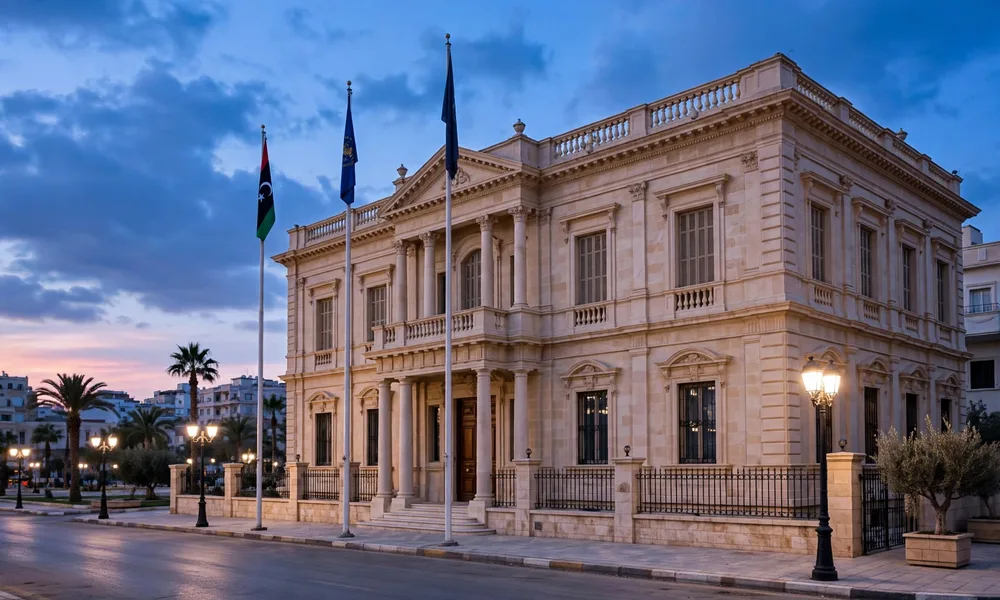
The ceremony took place at the embassy building in Tripoli. Egypt’s foreign affairs minister, Badr Abdelatty, attended the reopening. In a statement from the foreign affairs ministry in Cairo, he pointed to the long history shared by the two countries and to the human and cultural ties between Egyptians and Libyans. The statement described the embassy building itself as part of that shared history. For people watching Libya from outside, the message was simple: Egypt is ready to deal directly with Tripoli again.
This is not a small administrative change. An embassy is the main channel through which two governments talk and protect their citizens abroad. Its return does not solve Libya’s political divisions, but it does restore a direct line of contact that has been missing for 12 years.
| Quick Facts | Details |
|---|---|
| Event | Egypt reopened its embassy in Tripoli, Libya |
| Date | Saturday, November 7, 2026 |
| Length of closure | 12 years, since 2014 |
| Who attended | Foreign affairs minister Badr Abdelatty |
| Announced by | Egypt’s foreign affairs ministry in Cairo |
| Why it matters | Renewed diplomatic engagement with Libya’s western-based government |
| What it is not | A resolution of Libya’s political divisions |
Table of Contents
Egypt Reopens Tripoli Embassy: What Happened on Saturday
On Saturday, November 7, 2026, Egypt formally reopened its embassy in Tripoli. The foreign affairs ministry in Cairo announced the move in a statement. The statement said the reopening marked a rapprochement with the western-based administration in Libya. That word matters. A rapprochement is a careful return to normal relations after a period of distance. It does not mean that every disagreement has been settled. It means that both sides have decided that talking is better than staying apart.
Badr Abdelatty, Egypt’s foreign affairs minister, attended the reopening ceremony in person. His presence gave the event added weight. In the ministry statement, he was quoted as saying that the historical significance of the embassy building aligns with the deep-rooted human and cultural ties that characterize Egyptian-Libyan relations. Egyptians and Libyans share family ties, trade, work, and a long border. Those links did not disappear when the embassy closed, but they were harder to manage without it.
The reopening also fits a wider pattern in the region, where governments have been rebuilding diplomatic ties broken during years of conflict. Trade, security, migration, and consular help all work better when diplomats are on the ground. For readers following regional diplomacy, the story connects with other recent developments, including the confirmation of United States strikes on Qeshm Island air defence, which showed how quickly events in the region can shift.
Why the Embassy Closed in 2014
To understand why this reopening matters, it helps to look back at 2014. That year, Libya was sliding into a deeper conflict. Rival groups were fighting for control, and the country began to split between competing governments, one based in Tripoli in the west and another based in the east. The fighting made Tripoli unsafe for many foreign missions. Egypt was not alone in leaving. Many countries closed their embassies in the capital during that period because they could not guarantee the safety of their staff or carry out normal diplomatic work.
The closure lasted far longer than most people expected at the time. Twelve years is a long time for an embassy to stay shut between two neighboring countries. During those years, Egypt and Libya still had contact through other channels, and Egypt kept a close interest in Libyan affairs. But the absence of an embassy in Tripoli limited what could be done in person. Visa work, help for Egyptian workers in Libya, trade talks, and security discussions all had to go through slower or less direct routes.
Libya had been divided since the 2011 overthrow of Muammar Gaddafi. After 2011, rival groups and leaders competed for power, and by 2014 that competition had hardened into rival administrations in the west and the east. Many foreign governments stepped back until the security picture improved, and Egypt’s closure was part of that wider withdrawal.
A Shift in Cairo’s Approach to Libya
For much of the period since 2014, Egypt was seen as closer to the eastern side of Libya. Cairo historically supported Khalifa Haftar, the military commander based in the east, whose forces remain rivals of the Tripoli authorities. That support shaped how many observers read Egypt’s Libya policy. The reopening of the Tripoli embassy does not erase that history, and it does not mean Egypt has cut its ties in the east. But it does show that Cairo now wants a direct and open relationship with the government in Tripoli as well.
This is a practical shift. The internationally recognized Government of National Unity is based in Tripoli. It controls the capital and the western part of the country, and it is the government that most foreign states deal with on day to day matters in the west. A country that wants to work on trade, border security, migration, energy, and the welfare of its citizens in western Libya needs a presence in Tripoli. An embassy provides that presence. It also gives Egypt a place to raise concerns directly and to hear the Tripoli government’s views without going through intermediaries.
The move may also reflect a wider change in how regional powers approach Libya. After years of division, engagement with all sides now looks more useful than backing one side alone. Libya still has competing administrations, and its political future is still unsettled, but reopening an embassy is a sign that Cairo believes the time is right to invest in a formal relationship with Tripoli. Readers can follow related coverage such as the report on the decision over Iran and the resumption of strikes for a sense of how fast the wider region is moving.
What the Reopening Means for Libyans and Egyptians
For ordinary people, an embassy reopening can matter in very direct ways. Many Egyptians live and work in Libya, and many Libyans travel to Egypt for work, study, medical care, and family visits. When there is no embassy, simple tasks become harder. Passports, visas, legal documents, and help in an emergency all take longer. A working embassy in Tripoli should make those services easier to reach for Egyptians in western Libya and for Libyans who need to deal with Egyptian authorities.
Trade is another practical area. Egypt and Libya share a long border, and goods, workers, and services move across it every day. Formal trade works better when governments have a direct channel to discuss customs, transport, and business rules. A diplomatic presence helps businesses plan with more confidence, and it helps both governments talk about shared problems such as smuggling and border security.
There is also a human side. Egyptian and Libyan families have been linked for generations, and people cross the border for marriage, work, and study. When the minister spoke about the deep-rooted human and cultural ties between the two peoples, he was describing something many families know from daily life. An embassy cannot create those ties, but it can support them by making official contact simpler.
What Comes Next
The next steps will be quieter than the ceremony, but they will tell us more about what the reopening really means. Watch for the appointment of a full ambassador, if one has not yet been named, and for the embassy to begin offering regular consular services. Watch for visits in both directions between Cairo and Tripoli, and for joint statements on trade, security, or border cooperation. Those are the signs that the relationship is becoming active rather than symbolic.
Another thing to watch is how Egypt balances its relations across Libya. Cairo has long-standing ties in the east, and it now has a renewed presence in the west. Managing both relationships at the same time will require care. If Egypt can keep open channels with Tripoli and with eastern leaders, it may be able to play a useful role in talks about Libya’s future. For now, the fact that the embassy is open again suggests that Cairo is willing to try.
Regional events will also shape what happens next. Libya does not exist in isolation, and tensions elsewhere in the region can influence the pace of engagement. Recent reporting, includingthe report on two missiles striking Iran’s Qeshm Island, is a reminder that the region can change quickly. In that setting, a direct embassy channel between Cairo and Tripoli is a practical asset for both sides.
For Libya, the reopening is also a small sign of normalcy. Foreign embassies returning to Tripoli suggest that at least some governments believe the capital is stable enough for normal diplomatic work. That does not mean the city is free of risk, and it does not mean that Libya’s divisions are behind it. But each returning mission adds to a sense that Tripoli is once again a place where diplomacy happens in person, not only from a distance.
When did Egypt reopen its embassy in Tripoli?
Egypt reopened its embassy in Tripoli on Saturday, November 7, 2026, after a 12-year absence. The foreign affairs ministry in Cairo announced the move in a statement on the same day.
Why did Egypt close its embassy in 2014?
Egypt closed its Tripoli embassy in 2014, when many foreign missions left the capital amid an escalating conflict. Rival governments had set themselves up in Tripoli and in the east of the country, and the security situation made normal diplomatic work very difficult.
Who attended the reopening ceremony?
Foreign affairs minister Badr Abdelatty attended the reopening ceremony. He was quoted in the ministry statement as saying that the historical significance of the embassy building aligns with the deep-rooted human and cultural ties between Egyptians and Libyans.
Does the reopening mean Libya’s divisions are resolved?
No. Libya remains divided between competing political and military administrations, and the reopening is a step toward renewed diplomatic engagement, not a settlement of those divisions. It restores a direct channel between Cairo and the Tripoli-based government, which is a practical gain on its own.
Sources
Devdiscourse: https://www.devdiscourse.com/article/international/4003350-egypt-reopens-embassy-in-libyas-tripoli-after-12-year-closure
Final Thoughts
Twelve years is a long time for neighbors to be without an embassy in each other’s capital. The reopening does not rewrite Libya’s history, and it does not settle the divisions that have shaped the country since 2011. What it does is simpler: it puts diplomats back in the room. Egypt and Libya share a border, a history, and many family and work ties, and those ties are easier to protect when governments can talk face to face. If the months ahead bring regular consular services, trade talks, and steady contact, this ceremony will be remembered as the day the relationship started working again in person.
Featured image: an AI-generated editorial illustration.