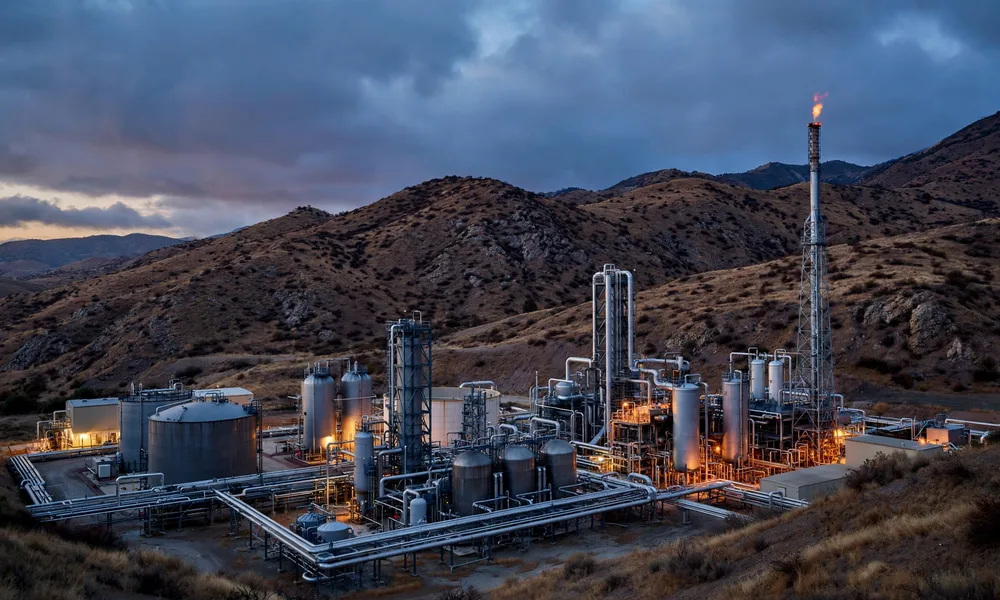
A drone struck the Khor Mor gas field in northern Iraq on Sunday night, November 8, 2026, at around 11pm local time. A single drone hit a storage tank for liquefied petroleum gas, known as LPG, and set it on fire. Production at the field stopped at once. The operator said on Monday that the fire had been put out and no staff were injured, but production would stay suspended until engineers could inspect the site. The regional electricity ministry said the strike removed between 2,500 and 2,800 megawatts from the grid. More than 70 percent of the Kurdistan region lost reliable power. Gas supply to power plants in Erbil, Sulaimaniyah, Bazian, Chamchamal and Duhok was suspended, leaving millions waiting for a clear date for full service to return.
Quick Facts
| Detail | What happened |
|---|---|
| Date and time | Sunday night, November 8, 2026, at around 11pm local time |
| Location | Khor Mor gas field, Chamchamal district, Sulaymaniyah province, Kurdistan region of northern Iraq |
| Weapon | A single drone |
| Target hit | An LPG storage tank, which caught fire |
| Operator | Dana Gas, a UAE-based company, runs the field through the Pearl Petroleum consortium with Crescent Petroleum |
| Production | Halted after the strike and still suspended pending an engineering inspection |
| Staff injuries | None reported |
| Power lost | Between 2,500 and 2,800 megawatts removed from the grid |
| Area affected | More than 70 percent of the Kurdistan region lost reliable power |
| Cities with gas supply suspended | Erbil, Sulaimaniyah, Bazian, Chamchamal and Duhok |
| Responsibility | No group has claimed responsibility and no perpetrator has been publicly identified |
| Official description | The Kurdistan Region’s ministries of Natural Resources and Electricity called it a terrorist attack |
| Previous attack | The same facility was hit by a drone strike in November 2025, with no claim of responsibility |
What happened at Khor Mor on Sunday night
The attack came late on a Sunday night, when most people in the Kurdistan region were at home. At around 11pm local time, a drone reached the Khor Mor gas field in Chamchamal district, in Sulaymaniyah province. Reports said a single drone hit an LPG storage tank at the site. The tank caught fire, and emergency teams moved to deal with the blaze.
Production was halted right after the attack. That was the standard response when a gas facility suffers a fire and a direct hit. Engineers must check pipes, tanks, valves and control systems before any restart, because a restart without that check could put staff at risk. Dana Gas, a UAE-based company, runs Khor Mor through the Pearl Petroleum consortium with Crescent Petroleum. The company said on Monday that the fire had been extinguished and no staff were injured. It also said production would stay suspended until engineers could inspect the site.
Power cuts spread across Kurdistan
The effect of the strike reached far beyond the fence of the gas field. Khor Mor is the main domestic gas source for Kurdish power plants. When production stopped, gas supply to power plants in Erbil, Sulaimaniyah, Bazian, Chamchamal and Duhok was suspended. Those plants depend on a steady flow of gas to make electricity. Without gas, they cannot run at full capacity.
The regional electricity ministry said the strike removed between 2,500 and 2,800 megawatts from the grid. That is a very large loss for a regional power system. More than 70 percent of the Kurdistan region lost reliable power. Homes, shops, hospitals, schools and offices felt the cut at once. Lights went out in cities and towns. Fans and heaters stopped. Water pumps and lifts stopped in many buildings. Small businesses that work at night lost hours of trade. Families turned to generators where they had them, and many others simply waited in the dark. Officials did not give a firm time for power to return to normal, because the return of power depends on the return of gas.
Who is blamed and what the investigation will look at
No group has claimed responsibility for the attack. No perpetrator has been publicly identified. That fact was clear in the first reports on Monday. Iraqi Prime Minister Ali al-Zaidi ordered a joint investigative committee with the Kurdish regional authorities. The committee will look at what happened, how the drone reached the site, and who may have been behind it. No casualties were reported in the initial assessment, according to the prime minister.
The Kurdistan Region’s ministries of Natural Resources and Electricity called the incident a terrorist attack. That wording shows how the regional government views a strike on a civilian energy site. A gas field that powers homes and hospitals is not a military target in the eyes of the regional authorities. An attack on it hits ordinary people first, through lost power and lost cooking fuel. The United States also spoke out. US Presidential Envoy to Iraq and Syria Tom Barrack described the strike as an attack on the Iraqi people and expressed support for finding the attackers. His words placed the focus on the people affected, not only on the facility. Support for finding the attackers is a clear statement, but it does not name a suspect.
Why Khor Mor matters so much to daily life
Khor Mor is the region’s largest natural gas field. It is the main domestic gas source for Kurdish power plants and for household cooking fuel. That dual role makes it central to daily life. Power plants use its gas to make electricity for homes, schools, hospitals and businesses. Households use its gas for cooking. A shutdown at Khor Mor therefore hits two basic needs at once, light and heat, and it does so across a wide area rather than in one town.
A pattern of attacks and a fragile pause
The strike on November 8, 2026, did not happen in isolation. The same facility was hit by a drone strike in November 2025, and no group claimed that attack either. The lack of a claim in both cases has left a gap in public knowledge. People know what was hit and what was lost, but they do not know who ordered the strike or why that target was chosen at that time.
The new strike ended a roughly four-month pause in direct hits on Khor Mor. That pause followed a string of incidents during and after the regional escalation tied to the United States and Israel’s war with Iran earlier in 2026. The pause may have given people a sense that the worst had passed, at least for this site. The return of a direct hit breaks that sense of calm. It shows that a pause is not the same as a solution. The strike also came at a moment of high tension in the wider region. The regional impact of the reported decision by Iran to lift a missile range limit shows how fast a single policy shift can change the security picture. Reports of Houthi missiles intercepted near Riyadh, with damage to an Aramco building show that energy sites across the region have faced threats in the same period. The reported movement of Task Force Iron Gate toward Iran by land and across the Caspian shows that military forces have been moving in the region as well. For people in Kurdistan, the most pressing question is practical. When will the gas flow again, and when will power return to normal.
Wider tensions on the same day
The strike on Khor Mor happened on a day of wider tension for Iraq. On the same day, Iraqi Foreign Minister Fuad Hussein told Al Jazeera that Washington has asked Baghdad to shut almost all commercial border crossings with Iran, leaving only two operational. He also said that disruptions and the maritime blockade in the Strait of Hormuz have cost Iraq about 60 billion dollars. These are reported claims, not confirmed facts.
On the same day, Iranian Foreign Minister Seyed Abbas Araghchi warned the United States to accept Tehran’s proposal to end hostilities or face severe military retaliation. That warning was also reported, not confirmed as a fact about what will happen next. It shows the tone of the public exchange between Tehran and Washington, and it helps to explain why the region feels tense. The wider context should not distract from the core facts. A drone hit a gas field, a tank caught fire, production stopped, and millions of people lost reliable power.
FAQs
What happened at the Khor Mor gas field on November 8, 2026?
A drone struck the field at around 11pm local time on Sunday, November 8, 2026. A single drone hit an LPG storage tank and set it ablaze. Production was halted at once. The operator said on Monday that the fire had been extinguished and no staff were injured, but production would stay suspended until engineers could inspect the site.
How much power was lost after the attack?
The regional electricity ministry said the strike removed between 2,500 and 2,800 megawatts from the grid. More than 70 percent of the Kurdistan region lost reliable power. Gas supply to power plants in Erbil, Sulaimaniyah, Bazian, Chamchamal and Duhok was suspended.
Has anyone claimed responsibility for the drone strike?
No. No group has claimed responsibility, and no perpetrator has been publicly identified. Iraqi Prime Minister Ali al-Zaidi ordered a joint investigative committee with the Kurdish regional authorities. The Kurdistan Region’s ministries of Natural Resources and Electricity called the incident a terrorist attack.
When will production and power return to normal?
There is no firm date yet. Dana Gas said production would stay suspended until engineers could inspect the site and judge the damage. Power depends on the return of gas to the plants, so the timetable for full power will follow the inspection and any repairs that are needed.
Sources
Final Thoughts
The drone strike on Khor Mor was a single hit with a very wide effect. A tank caught fire, production stopped, and more than 70 percent of the Kurdistan region lost reliable power. The fire is out and no staff were injured, but the return of gas and power will depend on a careful inspection and on repairs that have not yet been fully assessed. No group has claimed the attack, and an investigation is now under way. For millions of people in Kurdistan, the next update from the operator and the electricity ministry will matter most, because it will tell them when the lights, the heat and the cooking gas will return to normal.