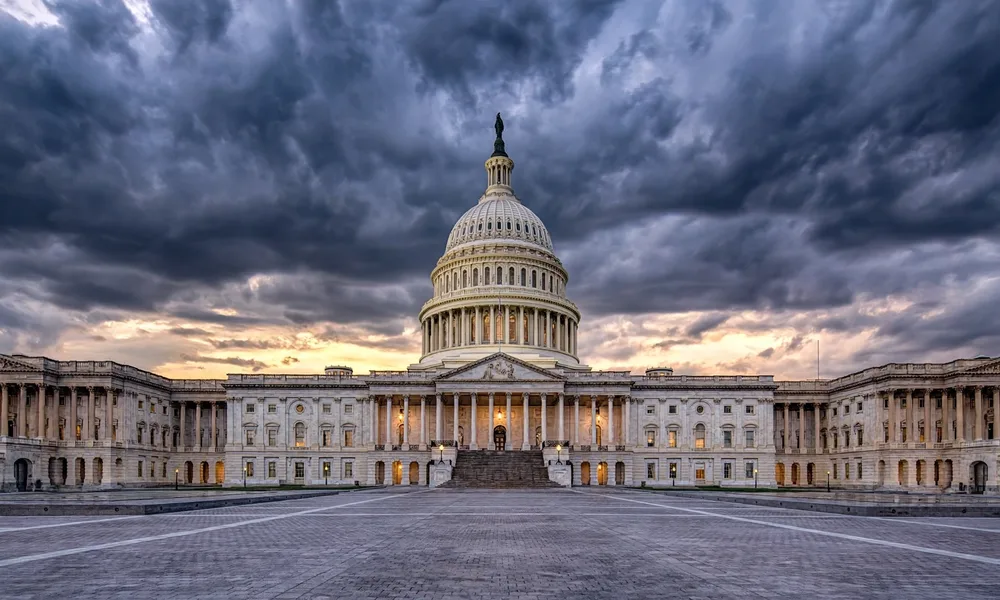
Congress is back in Washington on Monday, November 9, 2026, for the lame-duck session, the short stretch between the November 3 midterm elections and the start of the new Congress on January 3, 2027. Federal funding runs out on December 11, 2026, so avoiding a shutdown is the most urgent job. Leadership races are under way in both parties, and the outgoing Republican majorities still control both chambers until January. Democrats are projected to have won both the House and the Senate, but the final seat counts remain provisional.
Quick Facts
| Fact | Detail |
|---|---|
| Congress returns | Monday, November 9, 2026 |
| Last election | November 3, 2026 midterms |
| Funding ends | December 11, 2026 |
| Lapse would begin | December 12, 2026, if Congress does not act |
| Stopgap law | H.R. 6500, signed September 2, 2026 |
| New Congress convenes | January 3, 2027 |
| Control until January 3 | Outgoing Republican majorities |
| Projected Senate result | Democrats, at least 54 seats, provisional |
| Projected House result | Democrats, 251 to 268 seats, provisional |
| Senate races uncalled | Alaska and Mississippi |
| Senate working days left | About 16 |
| Session length | About five weeks, with a Thanksgiving break |
| Defense bill | About 1.15 trillion dollars |
| Debt ceiling deadline | Looms in January |
| House GOP leader race | Steve Scalise and Jim Jordan |
| Senate GOP leader | John Thune, unopposed for now |
| Next Democratic leaders | Hakeem Jeffries and Chuck Schumer |
What the lame-duck session is and why it matters
A lame-duck session is the period after an election when the current Congress keeps working until the next Congress takes office. Here it runs from the November 3 midterm elections to January 3, 2027. Members who lost their races and members who are retiring still take part and still vote. That is normal, but it can make the politics more complicated, because some members are finishing their service while others prepare for new roles in January.
Time is tight. Congress has about five weeks, split into two weeks now, a Thanksgiving break, and then two or three more weeks. The Senate plans only about 16 working days before the end of the year. Democrats are projected to have won both chambers, according to CBS News projections cited in the reporting on this return: at least 54 Senate seats, and an estimated 251 to 268 House seats. Those numbers remain provisional, because the Senate races in Alaska and Mississippi were still uncalled. For now, Republicans keep control of both chambers until January 3, 2027. If an item is not finished now, the new Congress will have to take it up again in January, under new leadership and with a different balance of power.
The December 11 funding deadline
Federal funding runs out on December 11, 2026. The stopgap keeping the government funded is a continuing resolution, H.R. 6500, signed on September 2, 2026. If Congress does not act before the deadline, a funding lapse would begin on December 12. That is why the shutdown deadline is at the center of almost every discussion about what Congress must do first.
A continuing resolution is a short-term funding measure. It keeps the government running at existing funding levels while Congress works on longer-term spending bills. The current stopgap was signed in September and was always meant to be temporary. One House Republican expects another short-term extension through February or March 2027, which would push the funding question into the early months of the new Congress. Congress could also try longer-term funding bills instead. The reporting does not settle which path Congress will take, but the deadline is fixed, and there is not much room for delay, with a Thanksgiving break in the middle of the session.
The rest of the agenda: defense, farm bill, and more
Funding is the top priority, but it is not the only item on the agenda. The National Defense Authorization Act is also on the list. That bill is about 1.15 trillion dollars in size, and the House and Senate versions are still being melded into one final bill. A farm bill is also on the agenda, along with college sports regulation and permitting reform. They were not finished before the election, and this session is the last chance for the current Congress to act on them in this form.
A debt ceiling deadline also looms in January. That is not a December deadline, but it is close enough to shape the mood of the session, because the new Congress will have to deal with it soon after taking office. Senate Republicans also plan to use the remaining weeks to confirm as many of President Trump’s pending judicial and executive nominees as possible. That uses the same limited floor time as the bills. Senator Bernie Moreno compared the lame-duck session to a closet where everybody throws things in at the last minute. A lot of unfinished business gets pushed into this short period, and not everything can fit.
Leadership races on both sides
In the House, Speaker Mike Johnson announced he will not seek to remain House Republican leader. That set up a race between Steve Scalise of Louisiana and Jim Jordan of Ohio. The outcome will decide who leads House Republicans into the next Congress, when they will be in the minority. Readers can follow that story in our report on Mike Johnson stepping down and the race between Scalise and Jordan.
In the Senate, Majority Leader John Thune is running for minority leader unopposed for now. Senator Mike Lee is pushing to delay Thune’s leadership election. On the Democratic side, Hakeem Jeffries is poised to become Speaker in January, and Chuck Schumer is poised to become Senate Majority Leader in January. Democrats hold their leadership elections the week after Republicans. Our report on Jeffries and the Hegseth impeachment question covers a related development, and our report on Stephen Miller taking over as White House chief of staff covers a major change in the White House as this session begins.
How the next five weeks are likely to unfold
The session runs about five weeks: two weeks now, a Thanksgiving break, then two or three more weeks. The work will come in two blocks, with a break in the middle. The first block is the time to set the agenda, start talks on funding, and hold the early leadership votes. The second block, after Thanksgiving, is when the final decisions on funding and other bills are most likely to be made.
The Senate calendar is the tightest part of the picture. The Senate plans only about 16 working days before the end of the year. Funding, the defense bill, a farm bill, college sports regulation, permitting reform, and nominations all need time. The funding deadline is the fixed point: funding runs out December 11, and a lapse would begin December 12 if Congress does not act. A short-term extension through February or March 2027 would move the next deadline into the new Congress. The leadership elections will also unfold during these weeks, with Republicans first and Democrats the week after.
What to watch as December 11 approaches
As December 11 gets closer, the clearest sign to watch is whether leaders agree on a funding path. A short-term extension through February or March 2027 would signal that Congress has chosen to buy time. A longer-term package would signal a broader deal. A lack of agreement in the final days before December 11 would signal that the risk of a lapse is rising. The reporting on this return does not predict which path will be taken, and the final seat counts remain provisional, so the story is still open.
The leadership races are another clear sign to watch. The House Republican race between Steve Scalise and Jim Jordan will show how House Republicans are choosing their next leader. The Senate Republican process, with John Thune running unopposed for now and Mike Lee pushing to delay the election, will show how Senate Republicans are handling their own transition. The Democratic elections the week after will complete the picture, with Hakeem Jeffries poised to become Speaker and Chuck Schumer poised to become Senate Majority Leader in January.
FAQs
When does federal funding run out?
Federal funding runs out on December 11, 2026. The stopgap is continuing resolution H.R. 6500, signed on September 2, 2026. If Congress does not act, a funding lapse would begin on December 12.
What is a lame-duck session?
A lame-duck session is the period between Election Day and the start of the new Congress. Here it runs from the November 3 midterm elections to January 3, 2027. Members who lost or are retiring still vote during this period.
Who is running for House Republican leader?
Speaker Mike Johnson announced he will not seek to remain House Republican leader. The race is between Steve Scalise of Louisiana and Jim Jordan of Ohio.
Who is poised to lead Congress in January?
Hakeem Jeffries is poised to become Speaker in January, and Chuck Schumer is poised to become Senate Majority Leader in January. Democrats are projected to have won both chambers, but the final seat counts remain provisional.
Sources
Final Thoughts
Congress is back for a short, crowded, and important stretch. The return on November 9 starts about five weeks of work, split by a Thanksgiving break, with only about 16 Senate working days left in the year. The December 11 funding deadline is the first test, and the leadership races are the second. The other agenda items sit behind those two tests, waiting for time that may or may not be there.
The outcome is not settled. The final seat counts remain provisional, two Senate races were still uncalled, and the funding path has not been chosen. What is settled is the calendar: funding ends December 11, a lapse would begin December 12 if Congress does not act, and the new Congress convenes January 3, 2027. The next five weeks will show whether this lame-duck Congress can finish its most urgent work, choose its next leaders, and hand over a clean slate to the Congress that follows.