Saudi air defences intercepted five missiles over Riyadh and other parts of Saudi Arabia early on Sunday morning, November 8, 2026. The Saudi-led coalition said the missiles were fired by Yemen’s Houthis. The coalition said it stopped two ballistic missiles heading toward Riyadh, two cruise missiles over Riyadh and the southern region, and one ballistic missile heading toward the Eastern Province. Falling debris from one interception damaged an administrative building belonging to Saudi Aramco in the King Abdullah Financial District in Riyadh. The Saudi Energy Ministry said the damage was limited and there were no injuries or deaths. There was no indication of disruption to Saudi oil production or exports. The Houthis had not claimed responsibility for the launches at the time of the reports.
| Detail | Fact |
|---|---|
| Date | Sunday morning, November 8, 2026 |
| Location | Riyadh and other parts of Saudi Arabia |
| Total interceptions reported | Five missiles |
| Missiles heading toward Riyadh | Two ballistic missiles |
| Missiles over Riyadh and the southern region | Two cruise missiles |
| Missile heading toward the Eastern Province | One ballistic missile |
| Group named by the coalition | Yemen’s Houthis |
| Building damaged | An administrative building belonging to Saudi Aramco in the King Abdullah Financial District in Riyadh |
| Injuries or deaths reported | None, according to the Saudi Energy Ministry |
| Effect on oil production or exports | No indication of disruption |
| Claim of responsibility | None from the Houthis at the time of the reports |
| Coalition spokesman | Maj. Gen. Turki al-Maliki |
What Happened Over Riyadh on Sunday Morning
Residents in Riyadh heard a loud explosion on Sunday morning. The sound came as Saudi air defences were active over the capital. An alert was issued to nearby residents, and that alert was later lifted. Emergency services attended the site where debris had fallen. The reports did not describe a direct strike on a target in the city. They described interceptions in the air and damage caused by falling debris after an interception.
The Saudi-led coalition said the missiles were fired toward Saudi Arabia by Yemen’s Houthis. Coalition spokesman Maj. Gen. Turki al-Maliki announced the interceptions. According to the coalition, two ballistic missiles were heading toward Riyadh, two cruise missiles were over Riyadh and the southern region, and one ballistic missile was heading toward the Eastern Province. The reports did not give flight paths in detail, and they did not give the exact time of each interception beyond the early Sunday morning timing.
How the Interceptions Were Reported
The main public account came from the Saudi-led coalition. Maj. Gen. Turki al-Maliki, the coalition spokesman, announced that the missiles had been intercepted. The coalition said the launches came from Yemen’s Houthis. That statement is the basis for the description of the source of the missiles in the reports. It is important to keep that attribution clear, because the Houthis had not claimed responsibility at the time of the reports, and there was no immediate statement from the Houthis.
The coalition gave a clear count of five interceptions, broken down by missile type and by area. That breakdown was repeated in the reports of the incident. It gives readers a way to understand the scale of the event without adding detail that was not provided. The reports did not say how many missiles may have been launched in total beyond the five that the coalition said it intercepted. They also did not say whether any missile reached its intended target.
The Damage in the Financial District
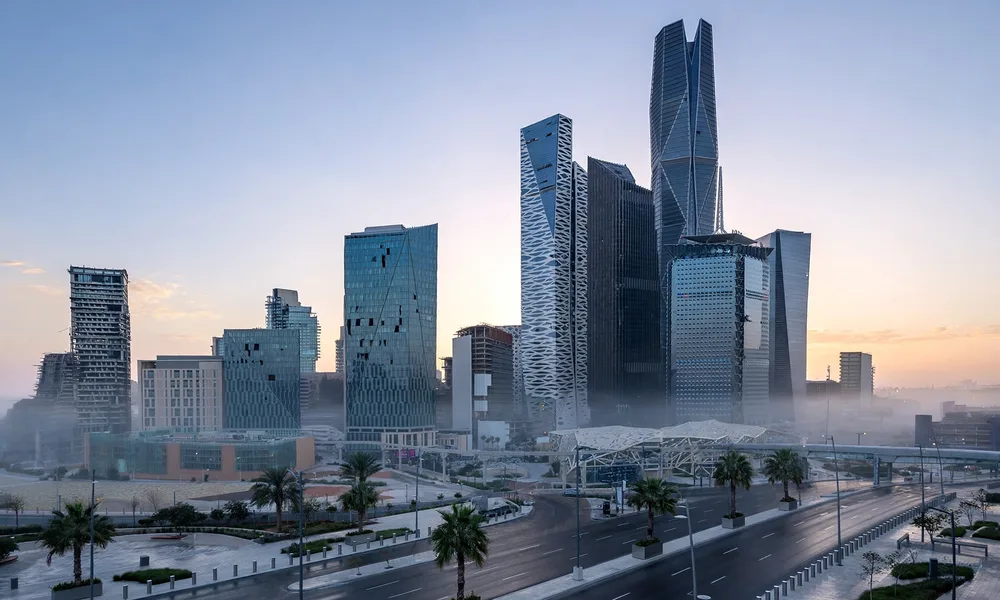
Falling debris from an interception damaged an administrative building belonging to state oil company Saudi Aramco in the King Abdullah Financial District in Riyadh. A Reuters witness saw blown out windows across several floors of the Aramco Tower. The Saudi Energy Ministry said the damage was limited and there were no injuries or deaths. That statement sets the official position on the scale of the damage and on the human impact.
The location matters because the King Abdullah Financial District is a central business area in Riyadh. An administrative building in that district is a workplace, not an oil facility. The reports did not describe damage to oil production sites or to export facilities. There was no indication of disruption to Saudi oil production or exports. The damage was limited to the building described, according to the ministry. The alert to nearby residents was later lifted, which suggests that the area was assessed and the immediate risk was judged to have passed.
What We Know About the Day Before
The attacks came a day after Houthi-run authorities said Saudi strikes near Sanaa killed at least 33 people and wounded 39 in Bani Hushaysh district. Most of them were women and children, according to the Houthi-run health ministry. That account came from Houthi-run authorities and from the Houthi-run health ministry. It is important to present it in those terms, because Reuters could not independently verify that account. Saudi Arabia’s Center for International Communication said it was investigating.
The timing links the two days in sequence, but the reports did not state a direct link between the Sanaa area incident and the missile launches toward Saudi Arabia. The missile attacks happened on Sunday morning. The reported strikes near Sanaa happened the day before. The reports present those events in that order. They do not say that one caused the other. The facts show a sequence of events over two days, not a confirmed statement of cause and effect from either side.
Regional Reaction and the Wider Weekend
Qatar condemned the Houthi attacks on Saudi Arabia and reaffirmed its support for Saudi measures to protect its security. That response was the regional reaction named in the reports. It shows that at least one neighbouring state issued a public statement on the incident. The reports did not list other regional reactions in the same detail, and they did not describe any wider diplomatic steps that followed the condemnation.
This happened on the same weekend as US military action in the Gulf of Oman and the Strait of Hormuz, but no party has linked the Riyadh missile attacks to those incidents. The timing was the same weekend and the locations were in the same wider region, but the reports did not say that the events were connected. Readers should not treat the shared timing as proof of a link. For context on other events from the same weekend, readers can follow our report on the rescue at sea in UAE Rescues 22 Crew From Burning Cargo Ship in Gulf of Oman. Our coverage also includes Task Force Iron Gate and Iran Land Forces Near the Caspian and Two Missiles Strike Iran Qeshm Island.
What Remains Unconfirmed
Several key points were still unconfirmed at the time of the reports. The Houthis had not claimed responsibility for the launches, and there was no immediate statement from the Houthis. That means the description of the source of the missiles rests on the coalition statement alone. The coalition said the missiles were launched by Yemen’s Houthis. The Houthis had not confirmed that account in a public statement at that time. Readers should note that gap, because a claim of responsibility is often a separate step from an announcement of an interception.
The account of the strikes near Sanaa also remains unverified. Houthi-run authorities said Saudi strikes near Sanaa killed at least 33 people and wounded 39 in Bani Hushaysh district, most of them women and children according to the Houthi-run health ministry. Reuters could not independently verify that account. Saudi Arabia’s Center for International Communication said it was investigating. That leaves the figures as claims from Houthi-run sources, not as independently confirmed facts. The reports also did not give a detailed list of the damage inside the Aramco building, and they did not describe repairs or a timeline for them.
Frequently Asked Questions
What happened in Riyadh on November 8, 2026?
Saudi air defences intercepted five missiles early on Sunday morning, November 8, 2026. The Saudi-led coalition said the missiles were fired by Yemen’s Houthis. Falling debris damaged an Aramco administrative building in the King Abdullah Financial District. The Saudi Energy Ministry said the damage was limited and there were no injuries or deaths.
How many missiles were intercepted?
The coalition said it intercepted five missiles in total. It said two ballistic missiles were heading toward Riyadh, two cruise missiles were over Riyadh and the southern region, and one ballistic missile was heading toward the Eastern Province.
Was anyone hurt in the incident?
No. The Saudi Energy Ministry said there were no injuries or deaths. The damage was described as limited, and the main visible damage reported was blown out windows across several floors of the Aramco Tower, seen by a Reuters witness.
Did the incident affect Saudi oil production or exports?
There was no indication of disruption to Saudi oil production or exports. The building damaged was an administrative building belonging to Saudi Aramco, not an oil production site, according to the reports.
Sources
Final Thoughts
The reports from Sunday morning give a clear core account. Five missiles were intercepted, debris damaged an Aramco building in Riyadh, and no injuries or deaths were reported. The source of the missiles was named by the coalition, but the Houthis had not claimed responsibility at the time of the reports. The account of the previous day near Sanaa remains unverified, and the Saudi side said it was investigating. Readers should follow future official statements for confirmation of the points that remain open.