Mitsui Chemicals buys JSR for $11.6 billion in a deal announced on Monday, November 9, 2026. Mitsui Chemicals will acquire the chipmaking materials maker JSR from Japan Investment Corp, the state-backed fund known as JIC, for 1.84 trillion yen. The Development Bank of Japan, known as DBJ, will also invest in the deal. It is the largest deal ever in Japan’s chemicals sector. Mitsui will make JSR a core business in its ICT solutions area.
Quick Facts
| Fact | Detail |
|---|---|
| Buyer | Mitsui Chemicals |
| Target | JSR, a chipmaking materials maker |
| Seller | Japan Investment Corp (JIC), a state-backed fund |
| Total deal value | 1.84 trillion yen ($11.61 billion) |
| Equity value | 1,392.1 billion yen ($8.8 billion) |
| Assumed net debt | 447.9 billion yen ($2.8 billion) |
| Other investor | Development Bank of Japan (DBJ), investing 200 billion yen |
| Announcement date | Monday, November 9, 2026 |
| Expected close | Second half of fiscal 2027 (October 2027 to March 2028) |
| JSR revenue, fiscal year ended March 2026 | 440.72 billion yen ($2.8 billion) |
| JSR core operating profit, fiscal year ended March 2026 | 62.3 billion yen |
| JSR employees | 6,951 |
| JSR semiconductor materials sales, fiscal 2025 | 196.0 billion yen, up from 157.9 billion yen in fiscal 2024 |
| Previous JSR sale | JIC took JSR private in 2024 for about 900 billion yen ($5.7 billion) |
| Extra annual operating profit expected by fiscal 2035 | About 40 billion yen |
What the Deal Is Worth and How Mitsui Will Pay for It
The headline number is 1.84 trillion yen, or about $11.61 billion. That total has two parts: equity value of 1,392.1 billion yen, or about $8.8 billion, plus assumed net debt of 447.9 billion yen, or about $2.8 billion. It is far bigger than the last landmark deal in the sector, when Showa Denko paid $4.55 billion for Hitachi Chemical in 2020. The price is also about 2.3 times Mitsui’s own market capitalisation. LSEG data cited by Reuters put that figure at about 664.6 billion yen, while another report put it at about 800 billion yen.
Mitsui will fund the purchase with a 1.64 trillion yen bridge loan from its main banks. A bridge loan is short-term financing that covers the purchase now, with longer-term funding arranged later. Mitsui also plans a share sale worth up to 150 billion yen. It filed a shelf registration for that sale on November 9, and the registration becomes effective on November 17. DBJ will invest 200 billion yen and hold non-voting preferred shares. Mitsui will get all of the voting rights, so it will control JSR.
Why JSR Matters in the Chip World
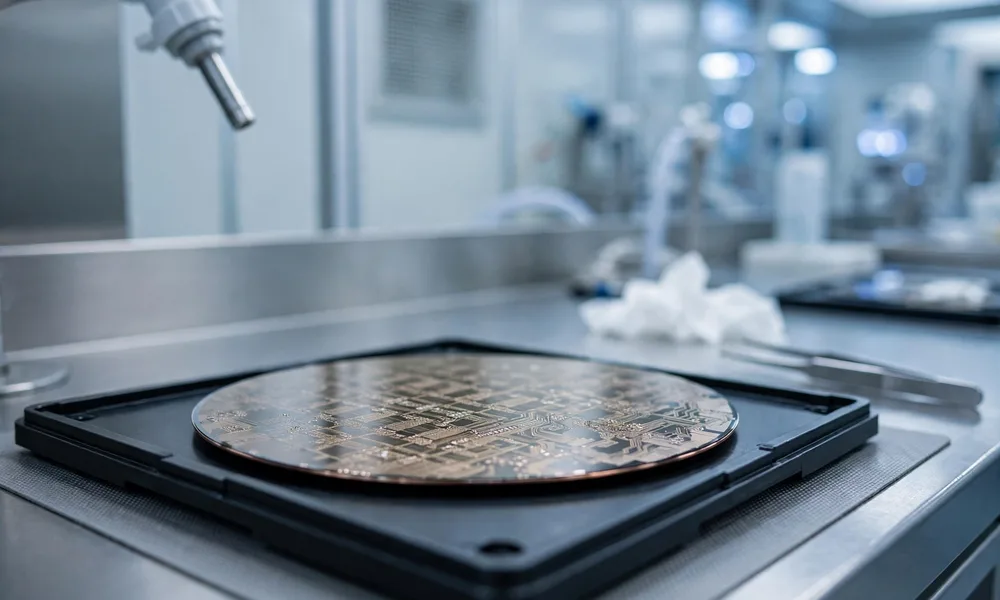
Most people never see the materials that go into a computer chip, but those materials decide what a chip can do. JSR makes photoresists, which are light-sensitive coatings spread over a silicon wafer. When a lithography machine shines light through a pattern, the photoresist records that pattern on the wafer, and the pattern becomes the tiny circuits inside the chip. JSR is the second-largest producer of advanced logic photoresists in the world, with about 30 percent of the global market. Only Tokyo Ohka Kogyo is ahead of it.
JSR’s semiconductor materials sales rose from 157.9 billion yen in fiscal 2024 to 196.0 billion yen in fiscal 2025. For the fiscal year ended March 2026, JSR reported revenue of 440.72 billion yen, or about $2.8 billion, and core operating profit of 62.3 billion yen. JIC took JSR private in 2024 for about 900 billion yen, or about $5.7 billion, after an auction. The new price of 1.84 trillion yen is roughly double that figure, which reflects the growth in JSR’s semiconductor business. Mitsui’s board approved the deal on November 9 after the JIC Capital auction process.
What Mitsui Brings to the Combination
Mitsui is the world’s top maker of EUV pellicles. A pellicle is an ultra-thin membrane that protects a mask used in extreme ultraviolet lithography. Extreme ultraviolet lithography, or EUV, uses very short wavelength light to print the finest circuit patterns. The mask holds the pattern, and the pellicle keeps dust and other particles off the mask so the pattern stays clean. JSR supplies the light-sensitive coating that records the pattern, while Mitsui supplies the membrane that keeps the mask clean. Both products sit at the heart of lithography. Together they form Japan’s largest integrated supplier of advanced lithography chemicals.
Mitsui plans to position JSR as a core business in its ICT solutions area. ICT stands for information and communication technology. Making JSR a core business means this is not a side investment. It is meant to sit at the center of Mitsui’s plans for technology materials. Mitsui expects about 40 billion yen in additional annual operating profit by fiscal 2035 from the combination. That is a long-term target, but it shows Mitsui sees real value in combining the two product lines.
Why This Deal Is Happening Now
The timing fits a wider push in Japan, since the deal fits Japan’s government push to boost chip competitiveness. Materials are a key part of that effort. Demand for advanced chips has stayed strong as computing, artificial intelligence, and data centers keep growing. Chipmakers need reliable supplies of photoresists and pellicles to keep their factories running, and a bigger supplier can invest more in research, capacity, and quality.
Reuters first reported on November 4 that JIC planned to sell JSR to Mitsui and that the deal could be worth more than 1.3 trillion yen. Five days later, the deal was announced at 1.84 trillion yen, above the figure in that early report. The chip supply chain is global, so this is news for chipmakers in many countries. Readers following other big business stories may also want to catch up on Apple’s Singapore tax case.
What Happens Next Before the Deal Can Close
An announcement is not the same as a completed deal. The deal still needs competition and foreign-investment clearances in Japan and other countries. Competition clearance checks that a merger will not harm fair competition, and foreign-investment clearance checks national security and other public interests. Mitsui aims to close in the second half of fiscal 2027, which runs from October 2027 to March 2028, with the fiscal year ending in March 2028.
Investors will also watch the funding steps. The bridge loan from Mitsui’s main banks covers the purchase in the short term, the share sale of up to 150 billion yen is part of the longer-term picture, and DBJ’s 200 billion yen investment is another piece of the plan. For a sense of how quickly sentiment can shift, see how chip stocks rebounded in premarket trading. Large funding news has also featured, including OpenAI’s $11 billion funding round.
What the Deal Means for Japan’s Chip Industry
This deal is about more than two companies. It is about Japan’s place in the global chip supply chain. The combination creates a larger, more complete supplier in lithography, one of the most sensitive steps of chipmaking. A supplier that can offer both photoresists and pellicles has a stronger position with chipmakers. The deal also shows how much value is now placed on materials companies. JSR was taken private for about 900 billion yen in 2024 and is now being sold for 1.84 trillion yen, a clear signal that advanced chip materials are seen as a growth business.
Mitsui Chemicals buys JSR as a bet on the future of its ICT solutions business. By making JSR a core business, Mitsui is tying a large part of its future to chips and advanced materials. The expected extra operating profit of about 40 billion yen a year by fiscal 2035 is the financial target. Regulatory approvals must still come through, and the funding plan must be completed. Until the deal closes in the second half of fiscal 2027, the two companies will remain separate. Even so, the announcement is already a landmark for Japan’s chemicals sector.
FAQs
How much is Mitsui Chemicals paying for JSR?
Mitsui Chemicals will pay 1.84 trillion yen, or about $11.61 billion, to acquire JSR from Japan Investment Corp. The total includes equity value of 1,392.1 billion yen, or about $8.8 billion, plus assumed net debt of 447.9 billion yen, or about $2.8 billion. DBJ will invest 200 billion yen and hold non-voting preferred shares, while Mitsui gets all voting rights.
What does JSR make, and why does it matter for chips?
JSR makes photoresists, light-sensitive coatings that let lithography machines print circuit patterns onto silicon wafers. It is the second-largest producer of advanced logic photoresists in the world, with about 30 percent of the market, behind Tokyo Ohka Kogyo. Its semiconductor materials sales rose from 157.9 billion yen in fiscal 2024 to 196.0 billion yen in fiscal 2025.
What does Mitsui Chemicals bring to the deal?
Mitsui is the world’s top maker of EUV pellicles, ultra-thin membranes that protect the masks used in extreme ultraviolet lithography. Together they form Japan’s largest integrated supplier of advanced lithography chemicals.
When will the Mitsui and JSR deal close?
Mitsui aims to close the deal in the second half of fiscal 2027, which runs from October 2027 to March 2028. The deal still needs competition and foreign-investment clearances in Japan and other countries before it can close.
Sources
Final Thoughts
Mitsui Chemicals buys JSR in a deal that is large by any measure. The price of 1.84 trillion yen, or about $11.61 billion, makes it the largest deal in Japan’s chemicals sector and the largest in Japan’s domestic chemical industry. It is more than twice the size of the Showa Denko deal of 2020. JSR’s photoresists record the circuit pattern, and Mitsui’s EUV pellicles protect the mask that carries it. Together they give chipmakers a stronger, more complete supplier in Japan. Closing is aimed at the second half of fiscal 2027. The announcement is a clear sign of where Japan’s chip materials industry is heading.