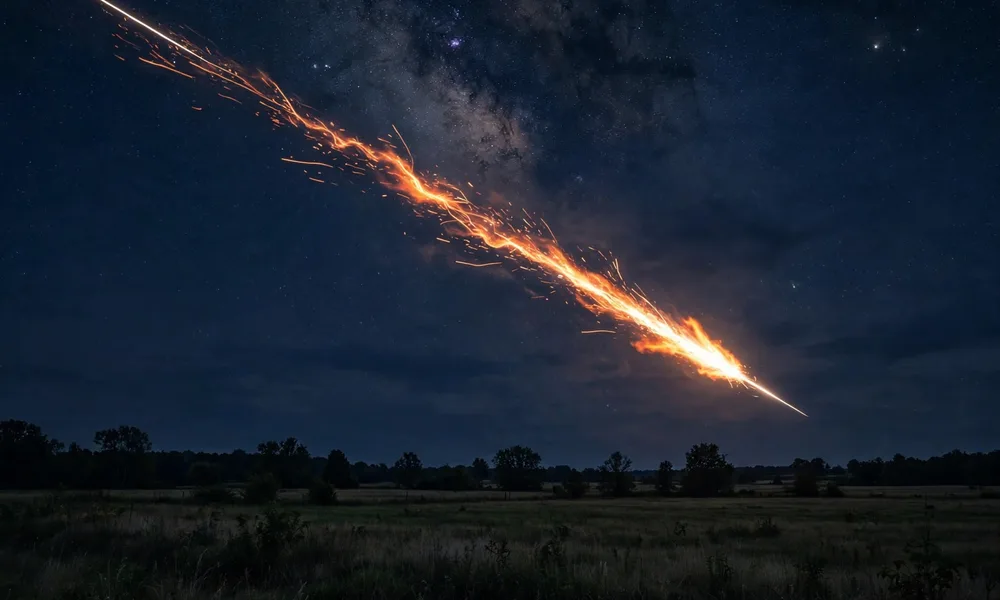
Tonight, Monday November 9, 2026, is a good night to watch for Southern Taurid fireballs because the new moon leaves the sky dark. The Southern Taurids peaked on the night of November 4 into the morning of November 5, so tonight is not the peak. Still, the shower is active, and the dark sky gives every meteor a better chance to stand out. The Northern Taurids peak on the night of November 11 into the morning of November 12, so the whole week is worth watching. Find a dark spot, look up, and give your eyes time to adjust. One bright fireball can make the whole wait worthwhile.
Table of Contents
Quick Facts
| Fact | Detail |
|---|---|
| Shower | Southern Taurids and Northern Taurids |
| Parent comet | 2P/Encke |
| Season | September 20 through December 10, 2026 |
| Southern Taurids peak | Night of November 4 into the morning of November 5, 2026 |
| Northern Taurids peak | Night of November 11 into the morning of November 12, 2026 |
| New moon | Monday November 9, 2026 |
| Meteor speed | About 17 to 18 miles per second, about 27 km per second |
| Typical rate | About five meteors per hour under ideal conditions |
| Best viewing time | About 9 p.m. until 2 a.m., often best after midnight |
| Visible from | Both the northern and southern hemispheres |
What Are the Taurid Meteor Showers
The Taurids are a pair of meteor showers that share one source: debris left behind by comet 2P/Encke. As Earth moves through that trail of dust and small rock each year, tiny pieces hit our atmosphere and burn up as meteors. The season runs from September 20 through December 10, 2026, so the Taurids are active for weeks rather than a single night.
The two branches peak about a week apart. The Southern Taurids peaked on the night of November 4 into the morning of November 5, 2026. The Northern Taurids peak on the night of November 11 into the morning of November 12, 2026. Both showers remain active around November 8 and 9, so tonight still counts as a good night to watch.
Taurids are slow movers by meteor standards. They enter the atmosphere at about 17 to 18 miles per second, about 27 km per second. That slow speed is part of their charm: a Taurid often crosses a large part of the sky instead of flashing past in a blink, and the brightest ones leave a glowing trail visible for several seconds. No meteor swarm is expected in 2026. Observers passed through a swarm last year, and the next predicted swarm encounter is in 2032. Fireballs are still possible, and the new moon gives them a dark stage.
Why Southern Taurid Fireballs Are Worth Watching Tonight
The main reason tonight stands out is the moon, or rather the lack of it. The new moon of November 2026 falls on Monday November 9, overnight Sunday November 8 into early Monday November 9 for most of North America. A bright moon can wash out faint meteors, so a new moon is the best gift a meteor watcher can get.
Dark skies matter even more for the Taurids than for busier showers. Taurids are not prolific: on a typical night you might see only about five meteors per hour under ideal conditions. The American Meteor Society estimates total hourly rates this week of about 4 per hour in the evening at mid-northern latitudes and about 20 per hour in the morning hours, from dark-sky sites. Urban viewers will see fewer.
The weather is the one thing no one can control. A clear sky is essential, so check your local forecast before heading out. Cold air is common in November, and clear nights are often the coldest ones. If clouds cover your area tonight, the Northern Taurid peak on November 11 into November 12 gives you another chance only two nights later. A recent polar vortex disruption that could bring an early cold snap is a reminder to dress for the cold even if the evening feels mild.
When to Watch on November 9
The best time to watch is from about 9 p.m. until 2 a.m., and often after midnight when Taurus is higher in the sky. The radiant, the point the meteors appear to come from, is near Taurus. Taurus rises in the east in the evening and climbs overnight, and the morning hours tend to bring the highest rates.
Meteors can appear anywhere in the sky, so do not stare directly at the radiant. Looking straight at Taurus makes it harder to see meteors, because the ones near the radiant have short trails. Look about halfway up the sky, away from the radiant, and let your eyes take in a wide area. Plan for at least an hour outside: Taurids are few and slow, and a short look may show you nothing at all.
How to Watch for Fireballs
You need no special gear to watch the Taurids. No telescope or binoculars are needed: their narrow field of view makes it easier to miss meteors. Your eyes are the best tool for this shower, and they work best when they have had time to adjust.
Find a dark place with a broad view of the sky, away from city lights. A park, an open field, or a quiet rural road can work well. Choose a safe, legal spot with clear access. Do not stop on highway shoulders, enter restricted land, or trespass, and check park hours before you go.
Give your eyes 20 to 30 minutes to adjust to darkness. A single glance at a bright phone screen can undo that adjustment, so dim your phone screen or use a red filter if you need light. Red light affects night vision far less than white light.
A reclining chair or blanket helps, because looking up for an hour strains the neck. Lie back, relax, and keep your whole field of view open. Dress warmly, with layers you can add as the night cools.
The showers are visible in both the northern and southern hemispheres because the radiant sits fairly close to the celestial equator. Wherever you are, the same advice applies: dark sky, wide view, patient eyes, and no bright screens. While the world talks about the COP31 climate summit opening in Antalya, the night sky offers a quieter kind of news.
What to Expect and How to Stay Safe
Be honest with yourself about what a Taurid night looks like. This is not a shower that fills the sky with dozens of meteors per minute. You may see only a handful in an hour, then catch a fireball so bright it outshines Venus. That uneven pace is normal for the Taurids. The wait is part of the experience, and one bright fireball can make it worthwhile.
A fireball is easy to recognize when it happens. It is unusually bright, slow, and long, often crossing a large part of the sky. Some leave a glowing trail that hangs in the air for several seconds after the meteor itself has gone. If you see one, stay still and keep watching the same area, since a second bright one may follow the first.
Safety comes first, before any meteor. Choose your spot in daylight if you can, so you know the ground and the way in and out. Tell someone where you are going and when you expect to be back. Bring a charged phone, but keep its screen dim. Dress warmly: standing still in cold air feels much colder than walking in it.
Do not chase a meteor by driving while looking up, and do not park in unsafe places to get a better view. A dark sky is never worth a risky roadside stop. A safe spot with a slightly less perfect sky is always the better choice. Nature has a way of reminding us to stay grounded, as the recent magnitude 5.7 earthquake in central Japan showed.
FAQs
Is tonight the peak of the Southern Taurids?
No. The Southern Taurids peaked on the night of November 4 into the morning of November 5, 2026. Tonight, November 9, is still a good night to watch because the shower is active and the new moon leaves the sky dark. The Northern Taurids peak on the night of November 11 into the morning of November 12.
How many meteors will I see tonight?
Taurids are not prolific: on a typical night you might see only about five meteors per hour under ideal conditions. The American Meteor Society estimates about 4 per hour in the evening at mid-northern latitudes and about 20 per hour in the morning hours, from dark-sky sites. Urban viewers will see fewer, but one bright fireball can still make the night worthwhile.
Do I need a telescope to see Taurid fireballs?
No. No telescope or binoculars are needed. Their narrow field of view makes it easier to miss meteors. Your eyes, given 20 to 30 minutes to adjust to darkness, are the best tool for watching this shower.
Where should I look in the sky?
The radiant is near Taurus, which rises in the east in the evening and climbs overnight. Meteors can appear anywhere in the sky, so do not stare directly at the radiant. Look about halfway up the sky and take in a wide area. The best time is from about 9 p.m. until 2 a.m., often after midnight.
Sources
Final Thoughts
Tonight is a quiet kind of opportunity. There is no guarantee of a sky full of meteors, and anyone who promises that is not being honest about the Taurids. What tonight offers is a dark sky, an active shower, and a fair chance at a fireball bright enough to remember. The new moon does its part by staying out of the way. The rest is up to you: a dark spot, warm clothes, patient eyes, and an hour or two under the stars. If the clouds win tonight, remember that the Northern Taurids peak on November 11 into November 12, with more clear nights still ahead. The Taurids are a slow shower for patient people, and patience is exactly what they reward.