NASA has named eight companies to compete for lunar delivery missions under its new Commercial Lunar Payload Services 2 contract, a ten year master contract with a combined ceiling of $10 billion. The awards were announced on Saturday, November 7, 2026, at the MAX POWER aerospace expo and air show at Kennedy Space Center in Florida. The list includes Blue Origin, Firefly Aerospace, Intuitive Machines, ispace-U.S., Lockheed Martin Space, Northrop Grumman Space Systems, SpaceX, and Voyager Technologies. The $10 billion figure is a ceiling for future task orders, not money already paid out, and the pool can grow to $15 billion if NASA exercises a five year extension.
Quick Facts
| Detail | Fact |
|---|---|
| Announcement date | Saturday, November 7, 2026 |
| Announcement venue | MAX POWER aerospace expo and air show, Kennedy Space Center, Florida |
| NASA release number | 26-095 |
| Contract name | CLPS 2, the next phase of Commercial Lunar Payload Services |
| Contract type | Multiple-award, indefinite-delivery, indefinite-quantity master contract |
| Contract length | 10 years, base ordering period through September 30, 2036 |
| Combined ceiling | $10 billion, rising to $15 billion with a five-year extension |
| Guaranteed minimum | $25,000 under each base contract, about $200,000 across all eight |
| Companies selected | Blue Origin, Firefly Aerospace, Intuitive Machines, ispace-U.S., Lockheed Martin Space, Northrop Grumman Space Systems, SpaceX, Voyager Technologies |
| Headline task order | Blue Origin, $94 million base plus $140 million option, PROMISE rover delivery |
| PROMISE rover launch target | Late 2028, followed by an 18-month mission |
| CLPS 1.0 ceiling | Raised from $2.6 billion to $4.2 billion, in place through November 2028 |
| Launch services task orders | Six orders worth about $1.3 billion to Arrow Science and Technology, Blue Origin, and Impulse Space |
What the $10 Billion Really Means
The headline number is the part of this story most likely to be misunderstood, so it is worth getting right at the start. The $10 billion is a ceiling. It is the maximum combined value of all task orders NASA may issue under the CLPS 2 master contract over its ten year life. It is not a payout, not a budget, and not money that any company has received.
Under the model contract, each of the eight companies is guaranteed only $25,000 under its base contract, about $200,000 across all eight. No company gets a set share of the $10 billion until NASA issues a specific task order for a specific mission, and then only the company that wins that order gets paid for it. A firm that wins no task orders earns nothing beyond its small guarantee. The real competition starts after the award, when companies bid against each other for each delivery mission NASA needs. The pool can also grow. If NASA exercises a five year extension, the ceiling rises to $15 billion.
The Eight Companies on the List
The eight firms NASA picked cover the full range of the modern American space industry, from new commercial startups to long standing defense contractors. Blue Origin, Firefly Aerospace, Intuitive Machines, ispace-U.S., Lockheed Martin Space, Northrop Grumman Space Systems, SpaceX, and Voyager Technologies will each be eligible to bid on future lunar surface delivery missions. Their job, when they win a task order, is to manage, build, and operate landers that carry NASA payloads to the Moon. Those payloads include science instruments, technology demonstrations, and infrastructure hardware that the Moon Base program needs at the South Pole. NASA Administrator Jared Isaacman spoke about the awards in the release, announced at the same MAX POWER expo covered in the Trump Kennedy Space Center remarks.
The list covers the full range of the industry. Firefly Aerospace and Intuitive Machines have already flown missions to the Moon under the first CLPS contract. Blue Origin and SpaceX are the two largest private space companies in the country. Lockheed Martin Space and Northrop Grumman Space Systems are traditional aerospace giants with decades of NASA work behind them. ispace-U.S. is the American arm of a Japanese lunar company, and Voyager Technologies is a newer entrant building space infrastructure. Together, they give NASA a bench deep enough to survive a failure by any single provider, which is exactly the point of a multiple award contract.
Blue Origin and the PROMISE Nuclear Rover
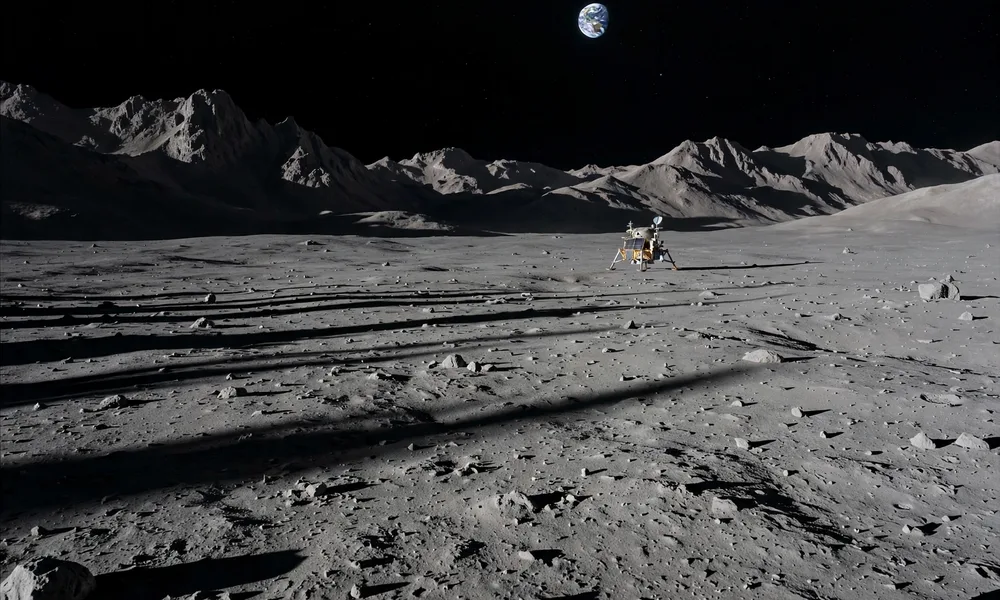
The first concrete mission from the CLPS 2 announcement already has a name, a price, and a date. Blue Origin won a $94 million base contract, plus a $140 million option tied to performance, to deliver the PROMISE nuclear powered rover to the lunar South Pole on its Blue Moon Mark 1 lander. Launch is targeted for late 2028, followed by an 18 month mission on the surface.
PROMISE is a six wheeled rover built partly from Mars rover components. What makes it different is its power source. A nuclear powered rover does not depend on sunlight, so it can keep working through the long lunar night at the South Pole, where darkness can last about two weeks at a time. The permanently shadowed craters there may hold water ice, a resource that could one day support astronauts.
For Blue Origin, the award is a major step. The company is already in the news for its New Glenn rocket program, and readers who follow that story may remember the recent reporting on the Blue Origin New Glenn delay into January 2027. The company also suffered a setback earlier this year when its New Glenn rocket was lost in an explosion during a static fire test on May 28, as reported by PBS NewsHour and CBS News. Winning the PROMISE delivery puts Blue Origin at the center of NASA’s lunar plans despite those troubles, and the $140 million option tied to performance gives NASA a lever to hold the company to its promises.
CLPS 1.0 Grows as CLPS 2 Begins
NASA is not replacing its old lunar delivery contract. It is expanding it. The agency also raised the existing CLPS 1.0 contract from $2.6 billion to $4.2 billion to pay for the first phase of Moon base work. That contract stays in place through November 2028, with five more years to finish awarded deliveries through November 2033.
This overlap is deliberate. The Moon Base program is NASA’s effort to build a lasting human outpost at the Moon’s South Pole, and it needs a steady pipeline of deliveries, not a gap while one contract ends and another begins. Raising the CLPS 1.0 ceiling by $1.6 billion gives NASA room to keep early Moon base work moving while the CLPS 2 companies prepare their landers.
The transport side of the program got its own awards as well. NASA awarded six task orders worth about $1.3 billion combined to Arrow Science and Technology, Blue Origin, and Impulse Space under its Venture-Class launch services contract. Those orders cover the rockets that will carry payloads toward the Moon. Separately, SpaceX was picked for a cislunar communications demonstration, launching communications satellites aboard Starship in 2028. A lasting Moon base will need reliable communications between the lunar surface, lunar orbit, and Earth, and this demonstration is an early step toward that network. The announcement also fits a week of big NASA reveals, including the recent unveiling covered in NASA X-70 fractal aircraft.
What Happens Next
The next phase of CLPS 2 is a quiet one, at least in public. The eight companies will now prepare their lander designs and wait for NASA to issue the first task orders. Each task order will be a competition, with companies bidding on price, schedule, and technical approach for a specific delivery. Over ten years, that rhythm of competition should keep prices honest and push companies to improve their landers with each flight.
The first mission to watch is the PROMISE rover delivery in late 2028. If Blue Origin hits that target, it will be an early proof that the CLPS 2 model works, and it will put a nuclear powered rover on the South Pole years before astronauts are expected to live there for long stays. Other missions will follow as NASA defines what the Moon Base needs and in what order. Science instruments will come first in many cases, because they answer questions about water ice, radiation, and the lunar environment that the outpost design depends on.
There are real risks. Lunar landings are hard, and even experienced companies have failed. Schedules in space programs slip, budgets change with politics, and a single failed landing can delay a program by a year or more. The CLPS model is designed to absorb those shocks by spreading missions across eight providers, but it cannot remove them.
FAQs
What is CLPS 2?
CLPS 2 is the next phase of NASA’s Commercial Lunar Payload Services program. It is a ten year, multiple award, indefinite-delivery, indefinite-quantity master contract that lets eight selected companies compete for task orders to deliver NASA science, technology, and infrastructure payloads to the lunar surface.
Is the $10 billion already paid to the eight companies?
No. The $10 billion is a ceiling, which is the maximum combined value of all future task orders under the contract. Each company is guaranteed only $25,000 under its base contract, about $200,000 across all eight. Companies earn money only when they win a specific task order for a specific mission.
Which companies were selected for CLPS 2?
The eight companies are Blue Origin, Firefly Aerospace, Intuitive Machines, ispace-U.S., Lockheed Martin Space, Northrop Grumman Space Systems, SpaceX, and Voyager Technologies. They will manage, build, and operate landers that carry NASA payloads to the Moon.
What is the PROMISE rover mission?
PROMISE is a six wheeled, nuclear powered rover built partly from Mars rover components. Blue Origin won a $94 million base contract, plus a $140 million option tied to performance, to deliver it to the lunar South Pole on the Blue Moon Mark 1 lander. Launch is targeted for late 2028, followed by an 18 month mission.
Sources
Final Thoughts
The CLPS 2 announcement is a big moment for lunar exploration, but its meaning is easy to get wrong. The $10 billion is a ceiling, not a check, and the eight companies on the list still have to earn their money one mission at a time. That competition is the real story. NASA has built a system where failure by one provider does not stop the program, and where each delivery is won on merit. If the model works, the next decade will see a steady flow of landers to the South Pole, carrying the science and hardware that a lasting Moon base needs. The PROMISE rover in late 2028 will be the first test.