Pomerusky: The Fluffy Designer Dog With Husky Looks and Loving Nature
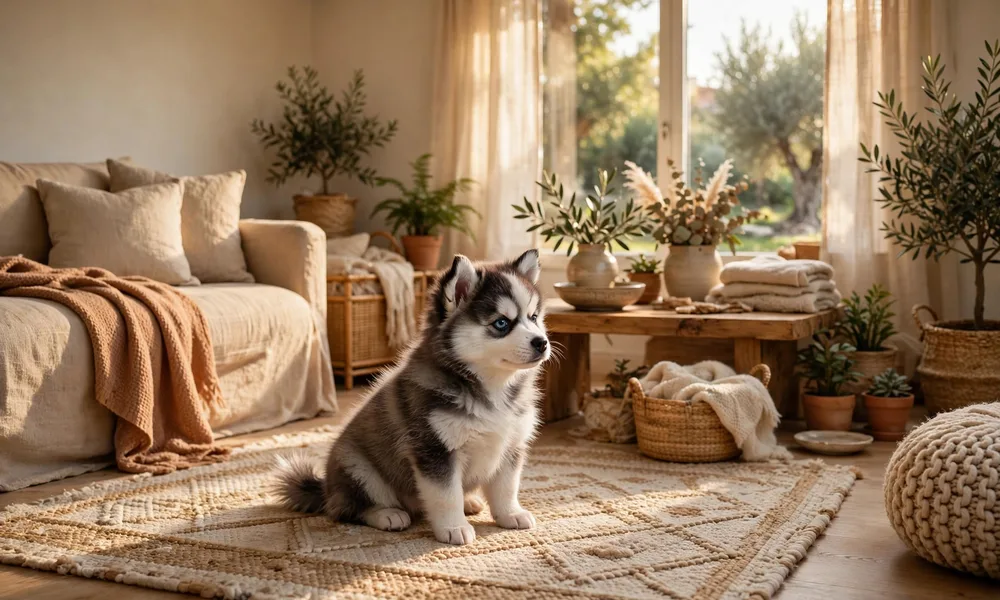
It looks like a Husky that never grew up. The Pomerusky has the mask, the pointed ears, the thick fluffy coat and sometimes the bright blue eyes of a Siberian Husky, all packed into a dog you can actually pick up. It is no surprise that photos of this designer cross stop thumbs on every feed they touch.
The Pomerusky, better known by its short name, the Pomsky, is a cross between a Pomeranian and a Siberian Husky. It is one of the newest and most talked about hybrid dogs in the world. But behind the famous face sits a clever, vocal and energetic dog with real needs. Here is what reputable pet sources actually document about it.
Quick Facts
| Item | Detail |
|---|---|
| Also known as | Pomsky, Pomeranian Husky, Huskeranian |
| The cross | Pomeranian crossed with Siberian Husky, both spitz breeds |
| Usual pairing | A female Siberian Husky with a male Pomeranian, bred by artificial insemination because of the size gap |
| Height | About 10 to 15 inches for typical adults, with wide variation |
| Weight | Commonly 20 to 30 pounds. Petfinder gives a full range of 7 to 38 pounds across all types |
| Lifespan | About 12 to 15 years |
| Coat | Thick double coat in three types: wooly, plush and standard. Sheds heavily, not hypoallergenic |
| Recognition | A crossbreed, not a breed recognised by the American Kennel Club or The Kennel Club |
A Dog That Went Viral Before It Existed
The Pomerusky has one of the strangest origin stories in the dog world: it became famous before it was real. In 2011, a BuzzFeed post asked whether a Pomeranian and Husky mix might be the cutest designer dog ever, using photos of dogs that were not actually this cross at all. One famous picture showed a Finnish Lapphund. The post spread everywhere, and suddenly thousands of people wanted a dog that breeders had not yet produced.
Demand created the dog. Breeders in the United States took on the challenge, and the first documented deliberate litters arrived in 2012, in Arizona according to recent breed guides. The pairing had an obvious problem: a tiny male Pomeranian and a much larger female Husky cannot mate naturally and safely, so breeders used artificial insemination, with the Husky as the mother.
Clubs formed to organise the new cross. The American Pomsky Kennel Club and the International Pomsky Association work on breed standards and breeder ethics, but the big kennel clubs have not followed. The American Kennel Club and The Kennel Club do not recognise the Pomsky as a breed, because it is a crossbreed whose puppies can vary a great deal. That status matters, and honest breeders say it plainly.
Generations explain much of the variety. An F1 Pomerusky has one purebred Husky parent and one purebred Pomeranian parent, a true half and half mix. An F1b is crossed back to a Pomeranian, making it three quarters Pomeranian and usually smaller. An F2 comes from two Pomsky parents. Each step changes the odds on size, coat and temperament, which is why two adult Pomeruskies can look like different dogs.
Looks: A Miniature Husky With Variations
The classic Pomerusky look is pure Husky in miniature: a dark facial mask, erect triangular ears, a plumed tail carried over the back and a face full of expression. Many inherit the Husky blue eyes, and some have two different coloured eyes, a trait called heterochromia that comes from the Husky side. Others have brown, hazel or amber eyes from the Pomeranian side.
Coat is where the fluff lives. Chewy describes three coat types: wooly, which is long and thick, plush, which is shorter and very fluffy, and standard, which is short and dense. Colours cover almost the whole spitz palette: black, grey, white, brown, cream and reddish shades, usually with Husky style markings. Every one of these coats is a double coat built for cold weather.
Size is the question every buyer asks, and the honest answer is a range, not a promise. Typical adults stand about 10 to 15 inches tall and weigh around 20 to 30 pounds, but Petfinder lists a full spread of 7 to 38 pounds across the cross. No breeder can guarantee an exact adult size, because genes from a toy breed and a working breed shuffle differently in every puppy.
Labels like teacup and miniature should be treated with care. Breed guides warn that these are sales labels, not official sizes, and that breeding for extreme smallness carries health risks. A healthy, honestly described Pomerusky from health tested parents is worth far more than a tiny label.
Temperament: Loving, Clever and Loud About It
Ask owners what a Pomerusky is like to live with and three words come back: affectionate, intelligent and vocal. The cross bonds hard with its family, often choosing one favourite person while still enjoying the whole household. Chewy quotes breed educators describing them as cuddlers who love to be loved, and that loyal, people focused streak is a big part of the appeal.
The intelligence is real, and so is the stubborn streak that rides with it. Both parent breeds think for themselves: the Husky is an independent working dog and the Pomeranian is a confident little watchdog. A Pomerusky learns commands fast, then decides whether to follow them. Consistent, positive training from puppyhood is not optional with this cross; it is the price of a polite adult dog.
Energy sits in the middle to high range. Most Pomeruskies do well with active daily exercise, often summed up as at least an active hour a day plus play and brain games, though needs vary by dog. They are adaptable and can enjoy everything from hiking and camping to a sofa evening, as long as the day included real activity and attention.
The honest warning is noise and boredom. This is a chatty cross that barks to announce visitors and opinions alike, sheds heavily, and cannot be left alone for long stretches without consequences. Chewy and Petfinder both flag the same picture: a wonderful family dog for prepared, present owners, and a handful for anyone expecting a quiet, low effort pet.
Care, Grooming and Health
Grooming is a standing appointment. That thick double coat sheds all year and blows out heavily about twice a year, in spring and fall, when the undercoat comes out in clouds. Regular brushing keeps it manageable and comfortable, and the coat should never be shaved, because the double layers insulate the dog in both cold and heat. A Pomerusky is not hypoallergenic, so allergy sufferers should spend time with one before committing.
Health needs respect from both family lines. Breed guides list the risks a Pomerusky can inherit: hip dysplasia and eye problems from the Husky side, and luxating patellas, a collapsing trachea and dental problems from the Pomeranian side, with epilepsy and heart issues also mentioned. This is why responsible breeders health test for hips, knees and eyes, and why buyers should always ask to see those results.
With that care, the cross is generally long lived. Sources put the lifespan at about 12 to 15 years, which means a puppy is a commitment well into the next decade. Food, exercise and weight control matter, because a small frame carrying extra pounds puts still more strain on those Pomeranian knees.
Choosing where your dog comes from is the biggest health decision of all. Look for breeders who health test, show you the mother, and answer questions without pressure. Consider rescue as well: Pomeruskies do appear in shelters and hybrid rescues when buyers fall for the photo and miss the dog behind it. Adopting one of those dogs gives a loving animal the prepared home it needed all along.
FAQs
What is the difference between a Pomerusky and a Pomsky?
There is none. Pomerusky is the full form of the name, built from Pomeranian and Husky, while Pomsky is the short version used by most clubs, breeders and pet sites. Both name the same Pomeranian and Siberian Husky cross.
How big does a Pomerusky get when fully grown?
Typical adults stand about 10 to 15 inches tall and weigh roughly 20 to 30 pounds, but the full documented range runs from 7 to 38 pounds depending on generation and parents. No breeder can guarantee an exact adult size.
Are Pomeruskies good family dogs?
Yes, for prepared families. They are affectionate, playful and loyal, and socialised dogs do well with children. They are also vocal, heavy shedding and strong willed, so they suit active owners who have time for training, grooming and daily exercise.
Is the Pomerusky a recognised breed?
No. It is a designer crossbreed, not a breed recognised by the American Kennel Club or The Kennel Club. Groups such as the American Pomsky Kennel Club and the International Pomsky Association promote standards and ethical breeding, but official breed recognition has not happened.
You may also read: What Does Peitner Mean? The Surprising History of an Alpine Family Name
Final Thoughts
The Pomerusky earns its fame honestly: Husky beauty in a handier size, with a loving heart and a big personality. But it is a real dog, not a photograph. It sheds, it sings, it tests the rules and it needs its people close for 12 to 15 years. For an active owner who wants all of that, fluff included, few dogs give back more joy per pound. Just buy or adopt with open eyes, from people who put the dog first.


