Pappedeckel: Meaning, Uses, Materials, and Helpful Facts
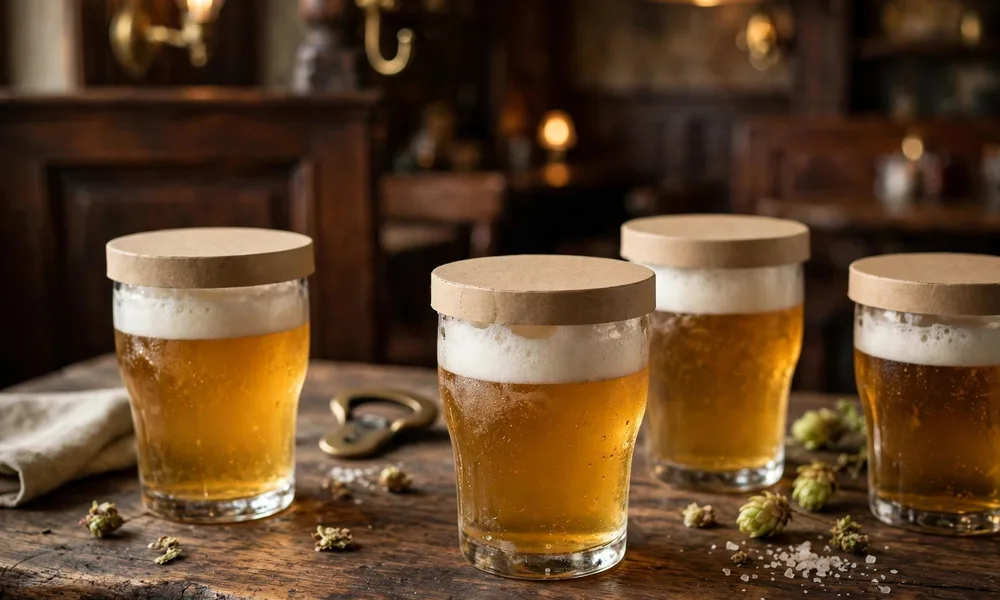
If you have ordered a coffee or a beer in Germany, you have probably met a pappedeckel without knowing its name. It is the simple flat piece of cardboard that sits on top of a drink, rests under a glass, or covers a takeaway cup.
The word sounds complex, but its meaning is plain and practical. This guide explains what pappedeckel means, what it is made of, where it is used, and why this small object has become part of a big modern conversation about plastic, waste, and smart design. Where facts are not firmly documented, this article says so honestly.
Quick Facts
| Detail | Information |
|---|---|
| Word origin | German, from Pappe meaning cardboard and Deckel meaning lid |
| Plain meaning | Cardboard lid or cardboard cover |
| Main material | Paperboard or thick cardboard, often from recycled fiber |
| Common forms | Flat cup lids, container covers, and round beer coasters |
| Typical use | Single use in cafes, pubs, markets, and food service |
| Key benefit | Light, cheap, printable, and easier to recycle than plastic |
| Documentation note | No single official standard defines the term, uses vary by region |
What the Word Pappedeckel Means
Pappedeckel is a compound German word, the kind German speakers build by joining simple words together. The first part, Pappe, means cardboard or stiff thick paper. The second part, Deckel, means a lid or a cover, the same word used for the lid of a pot or the cover of a jar. Put together, pappedeckel means a cardboard lid, nothing more and nothing less.
In daily German life, the word is used loosely. It can describe the flat cardboard disc placed on top of a beer glass in a pub garden, the cardboard cover on a takeaway coffee, or the thick round mat that sits under a drink. English speakers sometimes translate it as cardboard lid, paperboard cover, or, when it sits under a glass, beer coaster or beer mat.
That loose use is worth understanding. There is no single product, company, or official standard behind the word. It is an everyday term for a family of simple objects, not a brand name. Websites that present pappedeckel as one patented invention with one inventor are going beyond what can be verified. The honest picture is a common word for a common and useful thing.
Deckel also has a fun second life in German pub culture. The word can refer to the running tab in a bar, because in the old tradition, a waiter marked each drink as a line on the cardboard mat under your glass. At the end of the night, your deckel was your bill. That small tradition shows how deeply this piece of cardboard is woven into German drinking culture.
History in Pubs and Daily Life
The history of cardboard drink mats goes back to the late 19th century in Germany. As beer halls and gardens grew, owners needed a cheap way to protect wooden tables from heat, moisture, and rings, and to keep dust and insects out of open glasses outdoors. Early mats were made of felt. By the 1880s and 1890s, German printers were producing mats from molded wood pulp and cardboard, which were cheaper, absorbed more liquid, and could be thrown away after use.
Printers quickly saw the second use of the mat. A blank disc is wasted space, but a printed disc is an advertisement that sits in a customer’s hand all evening. Breweries began printing their names, logos, and pictures on coasters, and pubs used them as a normal part of service. Collecting printed beer mats later became a hobby of its own in Germany and beyond.
The lid use grew beside the coaster use. A flat cardboard disc on top of a glass kept the drink clean in busy halls and outdoor gardens. In markets and street stalls, simple cardboard covers did the same job for cups and small containers long before plastic lids existed. When takeaway coffee culture spread across Europe in recent decades, the same simple answer returned, now shaped and cut as a fitted lid for paper cups.
Exact dates and names attached to the first pappedeckel vary from source to source, and many online articles copy each other without proof. The safe history is the broad one: thick paper products spread in the 19th century, German beer culture adopted cardboard mats early, and the word came to cover both the mat under the drink and the lid on top of it.
Materials and How It Is Made
A pappedeckel starts as paperboard. Paperboard is thicker and stiffer than normal paper and is made from pressed layers of paper fiber. Makers use two main fiber sources. The first is recycled fiber from collected paper and card, which saves new trees and fits the object’s throwaway nature. The second is fresh fiber from managed forests, which gives a cleaner and stronger board for food contact uses.
For beer mats, the board is left thick and absorbent, a little like blotting paper, so it can soak up spills and condensation from a cold glass. For cup lids and container covers, the board is cut to a tight shape and often given a light coating so it resists moisture and grease for the short life of a hot drink or a soup. Modern coatings may be water based or plant based, and makers market some of them as compostable. Those claims depend on the exact coating, so readers should treat broad green claims with care unless a maker provides a certificate.
Making the product is a simple factory process. Large sheets or rolls of paperboard are printed first if the customer wants branding. Then a die cutting machine stamps out the round or shaped pieces, much like a cookie cutter through dough. Edges for fitted lids are pressed or folded so the lid grips the rim of the cup. The finished pieces are stacked, packed flat, and shipped. Flat packing is one of the object’s quiet strengths, since thousands of lids take up little space and weigh very little.
Online guides often list exact figures for thickness, weight, and bulk price. Those numbers describe typical products, not an official standard, and they change with size and order volume. The fair general picture is that a single piece is very light, only a few grams, thin enough to stack in tall piles, and cheap enough in bulk for cafes to give away with every drink.
Common Uses Today
The most visible use today is in food and drink service. Cafes and bakeries place cardboard lids on takeaway coffee and tea. Food trucks and market stalls use them on soup bowls, noodle cups, and ice cream tubs. At Christmas markets in Germany, a simple cover on a hot drink helps keep heat in and spills down while people walk.
In pubs and beer gardens, the classic uses continue. A pappedeckel under a glass protects the table and absorbs drips. A pappedeckel on top of an unfinished glass signals that the drinker is coming back, keeps insects out on summer evenings, and in traditional houses still carries the tally marks of the running tab.
Businesses also use these pieces as small tools beyond drinks. Flat cardboard discs appear as protective inserts in packaging, as separators between stacked items, and as backing or stiffening in light parcels. At events, printed coasters work as cheap and cheerful promotion, carrying a logo, a date, or even a code that guests can scan. Because the surface prints well in full color, the object doubles as both a tool and a tiny billboard.
At home and in craft work, people reuse them in simple ways, as plant pot saucers for small pots, as paint mixing discs, as game pieces for children, or as practice material for printing and stamping. None of these uses needs a manual. That is the charm of the object: anyone who picks one up can see what it can do.
Benefits, Limits, and the Plastic Question
The modern fame of the pappedeckel comes from the search for plastic alternatives. Plastic lids are light and strong, but they are made from oil based material, they are hard to recycle in many local systems, and they last for centuries in the ground and in water. A paperboard lid, by contrast, is made from a renewable plant fiber, and plain uncoated board breaks down naturally and fits normal paper recycling.
Honesty matters here. A coated cardboard lid is not always recyclable in every town, and a lid soaked with food may belong in compost or general waste under local rules. The green value of the product depends on its coating, on local collection systems, and on correct disposal. It is better to describe pappedeckel as a lower impact choice in most cases, not as a perfect one.
There are practical limits too. Cardboard softens when it stays wet for a long time, so it suits short trips and quick service better than long storage. It does not seal as tightly as a molded plastic lid, and it is not right for every hot or liquid food. Makers keep improving coatings and shapes, but the material will always ask for a balance between strength and easy breakdown.
Even with those limits, the direction of travel is clear. Rules in the European Union and in many cities now push food service away from single use plastic, and customer demand points the same way. A simple German cardboard lid, with more than a century of quiet service behind it, fits that future well.
You may also read: Who Is Melanie Lynn Clapp? All About Johnny Knoxville’s Ex-Wife
FAQs
What does pappedeckel mean in English?
It means cardboard lid. The word joins Pappe, meaning cardboard, with Deckel, meaning lid or cover. In practice, it can also describe the cardboard beer mat used under or on top of a glass.
What is a pappedeckel made of?
It is made of paperboard, which is thick pressed paper fiber. The fiber may be recycled or fresh from managed forests. Some lids carry a light coating for moisture and grease resistance.
Is a pappedeckel recyclable?
Plain uncoated paperboard can usually go into paper recycling or compost. Coated or food soaked pieces follow local rules, which differ by town, so check your local guidance before sorting.
Why do German pubs put cardboard on beer glasses?
The disc protects the drink from dust and insects outdoors, protects tables when used as a mat, and in the old tradition carried tally marks for the customer’s running tab, which is also called a Deckel.
Final Thoughts
The pappedeckel proves that good design does not have to be complex. Two plain German words, a disc of pressed paper, and more than a hundred years of daily use add up to an object that still earns its place on cafe counters and pub tables today.
Whether you meet it as a coffee lid, a soup cover, or a beer mat with tally marks, you now know its name and its story. In a world looking for simpler and cleaner answers to waste, the humble pappedeckel is a small fact worth knowing.