What Does Peitner Mean? The Surprising History of an Alpine Family Name
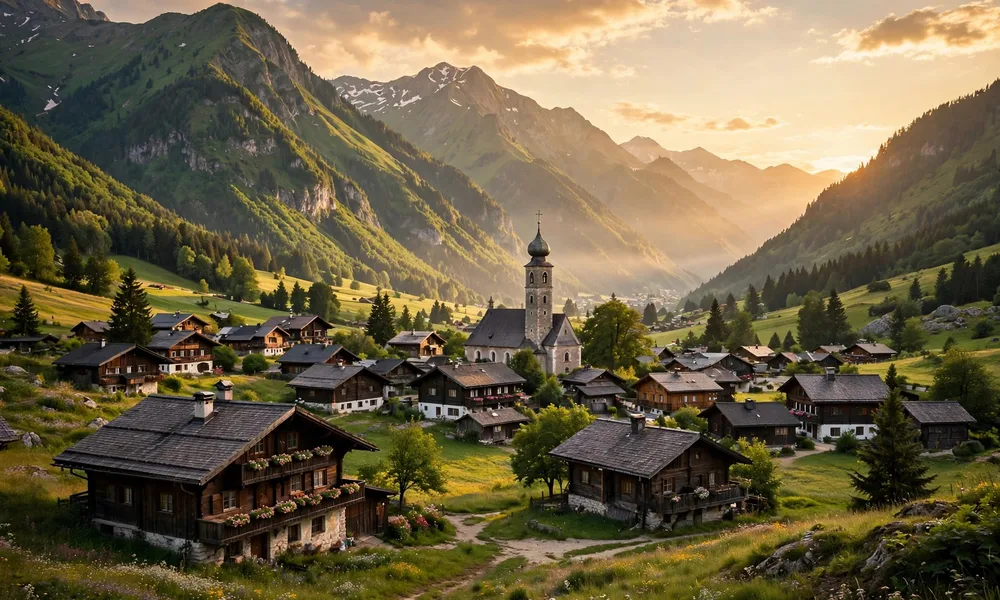
Some family names are carried by millions of people. Peitner is not one of them. It is a very rare surname, and that is exactly what makes it so interesting. When a name is this uncommon, every record matters, and every family that carries it holds a small piece of a much older story.
So what does peitner actually mean, and where did it come from? The honest answer is that the name has more than one possible root, and no single dictionary settles the question. In this guide, we look at what records and published surname research actually show, which theories are repeated most often, and which points are still unconfirmed.
Quick Facts
| Item | Detail |
|---|---|
| Surname | Peitner |
| Type | German language family name |
| Region most linked to it | Bavaria in Germany and Alpine Austria |
| Rarity | Very rare. Forebears surname data lists only about 10 people worldwide under the exact spelling Peitner |
| Close spelling | Peintner, a much more common related spelling with about 849 bearers, mostly in Italy and Austria |
| Leading theory | A topographic name for a person who lived on or near a mountain slope |
| Second theory | An occupational name linked to soldering or metal work in Yiddish speaking communities. Unconfirmed |
| Status of the meaning | No major surname dictionary gives a settled definition, so all meanings should be read as theories |
What the Name Might Mean
The most repeated explanation for peitner is a topographic one. Topographic surnames described the land where a person lived, and they were very common in the German speaking Alps. Published surname explainers link the first part of the name to the Middle High German word lite, which meant a mountain slope or a hillside. The ending, er, was a common way of saying a person who lives at a place. Put together, the name would describe someone who lived on or beside a steep slope.
That reading fits the landscape well. In Bavaria, Tyrol and Salzburg, villages sit on hillsides and valley edges, and families were often known by the ground they farmed. A name that means, in simple words, the person from the slope would have been a practical label in a small mountain community.
A second theory takes the name in a very different direction. Some explainers link peitner to the Yiddish word leytn, meaning to solder, with an ending that marks the person who does the work. Under this reading, the name would have belonged to a metal worker, perhaps a tinsmith or pewter worker, in an Ashkenazic Jewish community. Occupational names were just as common as place names in that world.
It is important to be clear about the limits here. Neither theory comes with a single proven source that all experts accept. Surname websites repeat them, but no major historical dictionary entry for the exact spelling Peitner has been published. The safest summary is this: the name is German in form, Alpine in its strongest associations, and its exact root is not confirmed.
The Alpine Home of the Name
Whatever the exact root, the geography around the name is easier to trace than its meaning. Names of this shape belong to the German speaking south, the region that covers Bavaria in southern Germany, Austria, and the South Tyrol area of northern Italy. This is high country, shaped by the Alps, where small farming towns grew up around churches, mills and trade routes over mountain passes.
In the 1500s and 1600s, this region kept careful parish records. Births, marriages and deaths were written down by local priests, and those books are now the main source for early surname history. Families with names built like Peitner appear in this world of parish registers, tax lists and land rolls, usually as farmers, small landholders and craftsmen.
The Habsburg lands, ruled from Vienna, covered much of this area for centuries. People moved within that empire for work, marriage and military service, which is one reason Alpine names turn up across Austria, northern Italy, Bohemia and beyond. A name born in one valley could, within two or three generations, be living in a town hundreds of miles away.
Daily life also shaped spelling. Local Bavarian and Austrian dialects pronounce sounds differently from standard German, and clerks wrote what they heard. That is why researchers warn that clusters like Peit, Peitn and Peidl may have overlapped in old records, and why one family can appear under more than one spelling in the same parish book.
Peitner or Peintner: Why the Spelling Matters
One of the biggest surprises in this story is a single letter. Peitner, with no n after Pei, is extremely rare. Forebears, a large surname distribution database, lists only around 10 people in the world with that exact spelling. A family history search for Peitner alone will therefore be very short.
Peintner, with the extra n, is a different picture. The same database counts about 849 people with that spelling. Most of them live in Italy, where the name is strongest in South Tyrol, followed by Austria with about 272 bearers and Germany with about 104. A smaller group, about 73 people, lives in the United States, with a few more in Australia, Switzerland, Czechia and Norway.
Wikipedia also has a page for Peintner, listing notable bearers such as the Austrian artist Elmar Peintner, born in 1954, the Austrian ice hockey player Markus Peintner, born in 1980, and the Italian luger Paula Peintner. The exact spelling Peitner has no such page, which again shows how much heavier the record is on the Peintner side.
For anyone researching their own family, the lesson is simple. Search both spellings, and search wider variants too. A clerk in 1750 did not worry about matching a modern database, and a family that is Peitner in one record may be Peintner in the next. Treating the spellings as completely separate names is one of the most common mistakes in surname research.
How the Name Travelled
Between about 1840 and 1914, large waves of people left German speaking Europe for the Americas. Most carried common names, but rare names travelled too, tucked into ship lists and naturalization papers. That movement explains how Alpine surnames, including the Peintner group, appear in the United States and, in smaller numbers, in Canada, Argentina, Brazil and Australia.
Emigration often changed names again. English speaking clerks simplified spellings, some families shortened or adjusted their names to fit in, and others kept the old form exactly. Because the Peitner group started so small, each of these choices had an outsized effect. One family keeping the spelling could be the reason it survives in a country at all.
Today, the name remains concentrated where it began. The centre of gravity for this name family is still the Italy and Austria border region and southern Germany, with a thin scatter across the English speaking world. It has never been a common name at any point in its recorded history, and modern databases give no sign that this is changing.
That rarity has a certain charm. People with very common surnames share their name with strangers on every street. A Peitner, by contrast, has a real chance that most other bearers of the exact name are actual relatives, even if the paperwork to prove it takes time.
Tracing a Peitner Family Today
If your own name is Peitner, or it appears in your family tree, start with the records closest to home. Birth, marriage and death certificates, church books and census pages will usually give you places as well as dates, and the places are the key that unlocks older European records.
Work with a wide net on spelling. Search Peitner, Peintner and older looking variants, and note every form you find, because the variant itself can tell you which clerk, parish or country produced the record. Parish registers from Bavaria, Austria and South Tyrol are increasingly digitized, and many are free to search.
Be careful with ready made family crests and instant surname histories sold online. For a name this rare, and with no settled dictionary meaning, those products are mostly decoration, not research. The documented path is slower but real: records first, theories second, and every unconfirmed step clearly marked in your notes.
Finally, talk to the oldest relatives you can. For rare names, oral history often carries the one detail, a village name, a trade, a migration story, that no database holds. Written down and checked against records, those memories are where a surname stops being a word and becomes a family story again.
FAQs
What does the surname Peitner mean?
There is no confirmed single meaning. The leading theory is topographic: a person who lived on or near a mountain slope, built from a Middle High German word for a slope plus an ending meaning an inhabitant. A second, unconfirmed theory links it to a Yiddish word for soldering and metal work.
Is Peitner the same name as Peintner?
They are very close and often confused, but records treat them as separate spellings. Peintner is far more common, with about 849 bearers listed by Forebears, mostly in Italy and Austria, while the exact spelling Peitner lists only about 10 people worldwide. Researchers should search both.
Where does the Peitner name come from?
The name family is associated with the German speaking Alpine south, above all Bavaria, Austria and South Tyrol in northern Italy. Parish and census records from this region hold the earliest traces of names in this group, and the largest share of bearers still lives there.
How rare is the name Peitner?
Extremely rare in its exact spelling. Surname distribution data records only around 10 bearers worldwide for Peitner itself, which places it among the rarest documented surnames. The wider name family is bigger once Peintner and other variants are counted.
You may also read: PLG Supplies: The Hidden Tools and Products Helping Businesses Grow
Final Thoughts
Peitner is a small name with a big landscape behind it. Its strongest roots sit in the Alpine south of the German speaking world, in slope side farms, parish books and the careful handwriting of clerks who spelled by ear. Its exact meaning is still open, and honesty about that is part of its story. For the few families who carry it, that open question is not a problem. It is an invitation to dig into the records and find out which valley, trade and journey made the name theirs.


