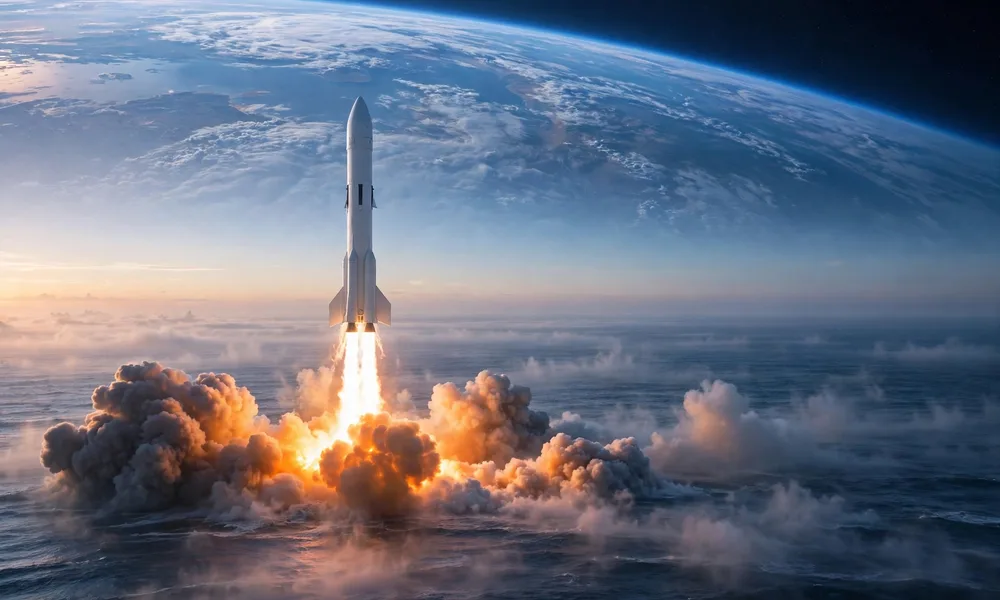
NASA Artemis II Moon Launch Tore a Temporary Hole in the Upper Atmosphere
A new study says the NASA Artemis II Moon launch left a temporary disturbance in the upper atmosphere that was wide enough to stretch across North America. Artemis II launched on April 1, 2026, on the Space Launch System rocket and splashed down on April 10, 2026, after sending four astronauts around the Moon. Researchers found two disturbances in the ionosphere, the electrically charged layer of the upper atmosphere. Each one stretched about 5,000 kilometres, or 3,100 miles, from east to west. The disturbances were regions where free electrons were temporarily depleted, not a literal permanent hole. Ground stations measured changes equal to GPS positioning errors of several metres. No GPS outage or navigation failure was recorded, and no vehicles or drones were reported affected.
| Detail | Fact |
|---|---|
| Mission | NASA Artemis II, four astronauts around the Moon |
| Launch date | April 1, 2026, on the Space Launch System rocket |
| Splashdown date | April 10, 2026 |
| Researchers | National Cheng Kung University in Taiwan |
| Data used | About 3,500 ground based GPS receivers |
| Study reported | Preprint for the journal Geophysical Research Letters, reported by Space.com on November 4, 2026 |
| Disturbances found | Two disturbances in the ionosphere |
| Size of each disturbance | About 5,000 kilometres, or 3,100 miles, east to west across North America |
| What happened | Free electrons were temporarily depleted, not a literal permanent hole |
| GPS effect measured | Positioning errors of several metres |
| Outage recorded | No GPS outage or navigation failure was recorded |
| Vehicles affected | No vehicles or drones were reported affected |
| Comparison | Up to 10 times stronger than disturbances after SpaceX Starship test launches |
| Upper stage burns | Two burns at about 185 kilometres altitude |
What Artemis II Did and Why the Launch Matters
Artemis II was a crewed flight around the Moon. It launched on April 1, 2026, on the Space Launch System rocket, carried four astronauts around the Moon, and splashed down on April 10, 2026. The mission was a major step in the Artemis program, and it drew wide attention because it sent people back toward the Moon for the first time in more than 50 years. The new study does not change that story. It adds a second story about what a very large rocket can do to the sky above it on the way up.
The researchers who studied the launch came from National Cheng Kung University in Taiwan. They used data from about 3,500 ground based GPS receivers to track changes in the ionosphere after launch. Their findings were reported in a preprint for the journal Geophysical Research Letters, and Space.com reported the study on November 4, 2026. That date matters, because the launch itself was in April, but the detailed picture of what happened in the upper atmosphere only reached the public months later, once the researchers had time to work through the data.
Two Disturbances in the Ionosphere, Not One
The study found two separate disturbances in the ionosphere, the electrically charged layer of the upper atmosphere. One trailed the SLS core stage after liftoff. The second came from two upper stage burns at about 185 kilometres altitude. That split is important, because it shows that the effect did not come from a single moment in the flight. It came from two different parts of the launch, at two different heights and at two different times.
Each disturbance stretched about 5,000 kilometres, or 3,100 miles, from east to west across North America. That is a very wide area, and it helps explain why so many ground receivers picked up the change. The disturbances were regions where free electrons were temporarily depleted. In simple terms, the charged particles that normally fill that layer were thinned out for a time in those regions. The ionosphere refills over time, so the effect was temporary. It was not a literal permanent hole in the sky, and it should not be described as one.
How the Disturbance Could Shift GPS by Several Metres
GPS signals pass through the ionosphere on their way from satellites to receivers on the ground. When the number of free electrons in that layer changes, the signal can be delayed or bent in a slightly different way. Ground stations in the study measured changes equal to GPS positioning errors of several metres. That does not mean that phones stopped working or that maps went blank. It means that a position fix could have been off by a few metres in the affected area at the time.
Study co-author Charles Lin, an Earth science professor, told Space.com that an error of a couple of metres could affect a self-driving car lane choice or drone positioning. That is the real world concern behind the study. A few metres may not matter much when you are walking down a street and checking a map, but it can matter a lot when a machine needs to know exactly which lane it is in or exactly where it should hover. The study does not say that any car or drone was actually affected. No vehicles or drones were reported affected, and no GPS outage or navigation failure was recorded. The point is about what could happen in theory, not about what did happen in April.
Ten Times Stronger Than Starship, But Still Short Lived
The researchers found that the effect was up to 10 times stronger than disturbances seen after SpaceX Starship test launches. That comparison puts the size of the Artemis II effect in context. The Space Launch System is a very large rocket, and a larger rocket can leave a larger mark on the upper atmosphere. The comparison also shows that this is not a new kind of effect. Rockets have disturbed the ionosphere before. Artemis II simply did it on a much larger scale than the Starship tests that came before it.
Rocket effects fade fast, and that is an important part of the story. The disturbance from a launch is much shorter lived than the effect of a severe solar storm, which can disrupt GPS for days. A solar storm comes from the Sun and can hit the whole planet at once, while a rocket effect is tied to one flight path and fades as the ionosphere refills. That difference matters for anyone who worries about GPS. A launch is a brief event with a brief effect. A severe solar storm is a longer event with a longer effect, and it is the bigger risk for GPS users over time.
What This Means for Future Launches and GPS Users
The study is a reminder that spaceflight and everyday technology are linked in ways that are easy to miss. A rocket that leaves Earth can change the air above it, and that change can touch the signals that phones, cars, and drones rely on every day. As more large rockets fly, researchers will want to keep watching the ionosphere after each launch. The data from about 3,500 ground based GPS receivers shows that this kind of study is possible, and it gives scientists a clear way to measure what happens next time.
For most people, the practical message is calm and simple. There was no GPS outage after Artemis II, and there was no navigation failure. The effect was temporary, it faded, and the ionosphere refilled. The study is about understanding a real but limited effect, not about a broken system. It is also a useful warning for the future. As self-driving cars and drones become more common, even small GPS errors will matter more, and the people who build those systems will need to plan for days when the sky is disturbed, whether by a rocket or by the Sun. For more on how the upper atmosphere is changing, read about the ozone hole in 2026, the largest in a decade according to NASA and NOAA. For more on recent space launches, read about the ISRO NVS-03 NavIC launch success.
Did Artemis II really tear a hole in the atmosphere?
The study found two regions in the ionosphere where free electrons were temporarily depleted. That is often described as a hole, but it was not a literal permanent hole. The ionosphere refills over time, so the effect was temporary.
Did GPS stop working after the Artemis II launch?
No. No GPS outage or navigation failure was recorded, and no vehicles or drones were reported affected. Ground stations measured changes equal to GPS positioning errors of several metres, which is a shift in accuracy, not a loss of service.
How wide was the disturbance?
Each of the two disturbances stretched about 5,000 kilometres, or 3,100 miles, from east to west across North America. One trailed the SLS core stage after liftoff, and the second came from two upper stage burns at about 185 kilometres altitude.
How does this compare to solar storms?
Rocket effects fade fast. They are much shorter lived than severe solar storms, which can disrupt GPS for days. The Artemis II effect was up to 10 times stronger than disturbances after SpaceX Starship test launches, but it still faded quickly as the ionosphere refilled.
Sources
Tech Times: Artemis II ionosphere GPS disturbances North America
Tech Insider: Artemis II launch ionosphere GPS errors 5000 km 2026
Hittazos: Your phones GPS can drift several meters when rockets and solar storms stir the sky
Final Thoughts
The Artemis II study is a clear example of how a single launch can be studied long after the splashdown. The mission itself sent four astronauts around the Moon in April 2026, and the science that followed found two wide but temporary disturbances in the ionosphere, each about 5,000 kilometres across. The effect was strong enough to equal GPS errors of several metres, and up to 10 times stronger than the effect seen after Starship tests. Yet there was no outage, no navigation failure, and no reported effect on vehicles or drones. The ionosphere refilled, and the effect faded fast, far faster than a severe solar storm would. The lesson is not that GPS is broken. It is that large rockets leave a mark on the sky, and as more of them fly, scientists, engineers, and GPS users will need to keep watching that mark and planning for it.