Israel swears in its 26th Knesset on Tuesday, November 10, 2026, in a ceremony that opens a new chapter in the country’s politics. The 120 lawmakers elected on October 27 take their oaths in Jerusalem at 4:00pm local time, with President Isaac Herzog, Prime Minister Benjamin Netanyahu and Knesset Speaker Amir Ohana in attendance. On the same day, the opposition bloc agreed on its candidate for the next speaker: former minister Matan Kahana of Gadi Eisenkot’s Yashar party. Kahana has not been elected yet. The vote to replace Ohana has not taken place, and it is expected within about a week if the opposition submits a valid request.
Table of Contents
Quick Facts
| Fact | Detail |
|---|---|
| Event | Swearing-in of Israel’s 26th Knesset |
| Date | Tuesday, November 10, 2026 |
| Time | 4:00pm local time |
| Place | Knesset, Jerusalem |
| Lawmakers sworn in | 120, including 46 first-time members |
| Election date | October 27, 2026 |
| In attendance | President Isaac Herzog, Prime Minister Benjamin Netanyahu, Speaker Amir Ohana |
| Performer | Singer Harel Skaat |
| Opposition speaker candidate | Matan Kahana of the Yashar party |
| Current speaker | Amir Ohana of Likud |
| Seats won by opposition bloc | 67 of 120 |
| Signatures needed to replace speaker | At least 61 lawmakers |
| Committee for Avigdor Liberman | Foreign Affairs and Defense Committee |
| Next step | Arrangements Committee finalises committee memberships on Wednesday |
The Swearing-In Ceremony in Jerusalem
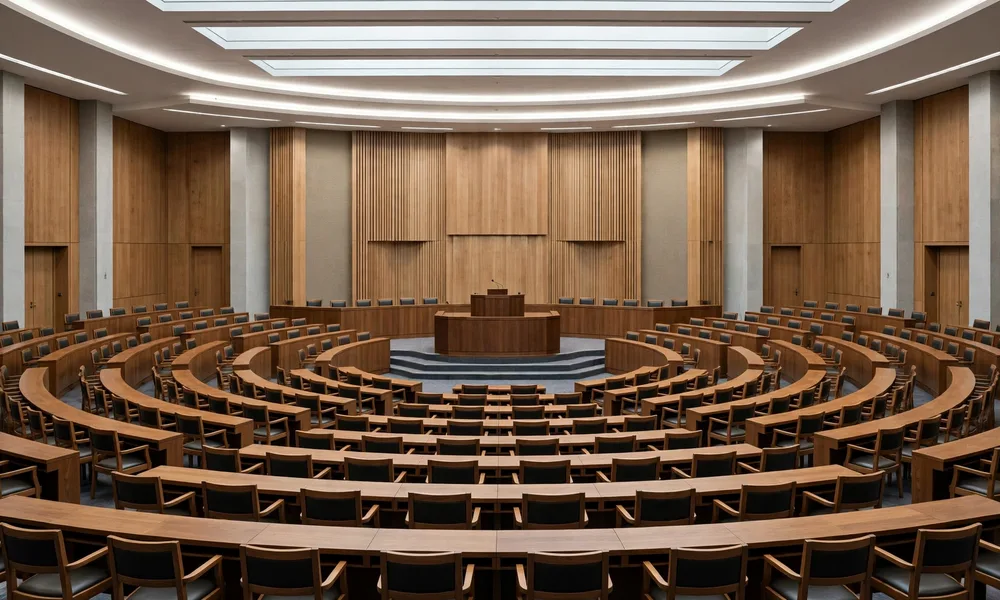
The inaugural session begins at 4:00pm local time and follows a format Israelis know well from past Knessets. President Isaac Herzog formally opens the session, then Speaker Amir Ohana takes over and presides over the ceremony. The Knesset secretary-general calls all 120 lawmakers by name, one after another, and each one stands and declares “I pledge.” That short declaration is the oath of office, and it marks the formal start of the new parliament.
Singer Harel Skaat performs during the event, adding a cultural touch to the formal afternoon. For the 46 lawmakers serving for the first time, the day carries extra weight. Nearly four in ten members of the new Knesset have never sat in the chamber before.
The new members arrive after an election held on October 27, 2026, which changed the balance of power in the country. Prime Minister Benjamin Netanyahu and his allies lost their parliamentary majority, while the opposition bloc won 67 of the 120 seats. That result is why the swearing-in feels different from a routine ceremony: the next big fight is over who will control the Knesset from the speaker’s chair.
Who Is Matan Kahana
Matan Kahana is the opposition bloc’s agreed candidate for Knesset speaker, and his name was settled on the same day as the swearing-in. Kahana is a former minister and a member of Yashar, the party led by Gadi Eisenkot. He is not a newcomer to Israeli politics, and his backers present him as a steady figure who can run the chamber fairly.
The agreement on Kahana was reached by the leaders of the opposition parties. Yashar chairman Gadi Eisenkot led the talks, and the deal brought together Naftali Bennett of B’Yachad, Avigdor Liberman of Yisrael Beytenu, Yair Golan of the Democrats and Yair Lapid. Their parties come from different parts of the political map, so agreeing on one name shows how much they want to use their new majority quickly.
Kahana would replace Amir Ohana, who belongs to Netanyahu’s Likud party. Ohana has held the speaker’s chair through a period of intense political conflict, and the opposition has long argued that the speaker’s office should change hands now that the voters have changed the makeup of the Knesset. For the opposition, putting Kahana in the chair is a first step toward turning an election win into real control of the parliament.
How the Speaker Vote Works and the 61-Signature Rule
The vote to replace the speaker has not happened yet, and it will not happen on the day of the swearing-in. Ohana has said he will not hold the vote on the day of the inaugural session. Instead, he will schedule it within the following week if a valid request is submitted. That means the earliest the opposition can expect a vote is in the coming days, and the exact date depends on the formal request reaching the speaker’s office.
The rules are clear about what the opposition needs. At least 61 lawmakers must sign a request or vote to replace the speaker. Sixty-one is the magic number in a 120-seat Knesset, because it is a majority of one. The opposition bloc won 67 seats in last week’s election, so it has the numbers on paper if it stays united. The challenge for the bloc is keeping all of its parties together, because the deal depends on leaders who have very different views holding the same line. The Joint List, an alliance of Arab parties, has also submitted a similar request to replace the speaker.
Right-wing groups, including Im Tirtzu, planned a protest outside parliament under the slogan “We do not replace a Knesset speaker with the votes of Hamas supporters.” The deal that picked Kahana also settled another important job. Avigdor Liberman, the leader of Yisrael Beytenu, is set to head the Foreign Affairs and Defense Committee under the same agreement. That committee also handles IDF conscription legislation, one of the most sensitive issues in Israeli politics.
Why the Speaker Job Matters So Much
The speaker of the Knesset is far more than a ceremonial figure. The speaker controls the Knesset agenda, decides which bills come to a vote, and shapes how committees run. In a parliament where every vote can decide the fate of a government, that power is enormous. The speaker can speed up a bill or slow it down, set the order of debates, and influence which issues get attention in the chamber.
That is why the opposition wants the job now instead of waiting. Normally, electing a speaker is done when a government is formed, a process that could take weeks or months. The speaker vote is separate from government formation, and the opposition is using that separation to move early. By taking the speaker’s chair now, the bloc can control the flow of legislation while the longer talks about a new government continue in the background.
Control of the committees matters just as much. The Arrangements Committee will finalise committee memberships for submission to the plenum on Wednesday, and those memberships decide who runs the detailed work of the Knesset. Committees are where bills are shaped, budgets are examined, and ministers are questioned. For Netanyahu and Likud, losing the chair would be a clear sign that power has shifted.
What Happens Next: Government Formation and Committees
The speaker vote is only the first step in a longer process. Gadi Eisenkot has already received the mandate to form a government, a step that President Herzog took on November 8. That mandate gives Eisenkot the task of building a coalition that can win the support of the Knesset, but it does not mean a government exists yet. Forming a government in Israel often takes weeks, and sometimes months, because it requires deals between parties that disagree on many issues. We covered the details in our earlier report on how Herzog tapped Eisenkot to form the next government. Those talks will now run alongside the speaker fight, and the two processes will shape each other. A speaker from the opposition bloc would give Eisenkot a parliament that is ready to back his government when it is formed.
On Wednesday, the Arrangements Committee finalises committee memberships for submission to the plenum. That is the next formal step after the swearing-in. Beyond the Knesset, the wider region is also watching. Our recent coverage of Trump’s comments on Iran strikes and Qatar talks shows how closely the outside world is following events in the region. Tuesday brings the oath and the ceremony. Wednesday brings the committee memberships. Within about a week, the speaker vote should follow, if the opposition submits its request as expected. Then the government formation talks will decide who actually runs the country.
FAQs
When is the 26th Knesset sworn in?
The 26th Knesset is sworn in on Tuesday, November 10, 2026. The inaugural session and swearing-in ceremony begin at 4:00pm local time in Jerusalem. President Isaac Herzog formally opens the session, and Speaker Amir Ohana presides. The Knesset secretary-general calls all 120 lawmakers by name, and each one declares “I pledge.”
Who is Matan Kahana and why was he picked?
Matan Kahana is a former minister and a member of Yashar, the party led by Gadi Eisenkot. The opposition bloc agreed on Kahana as its candidate for Knesset speaker on November 10, 2026. The deal was reached by Eisenkot and party leaders Naftali Bennett, Avigdor Liberman, Yair Golan and Yair Lapid. Kahana would replace Amir Ohana of Likud if he wins the vote.
Has Matan Kahana been elected Knesset speaker?
No. Kahana is the opposition bloc’s candidate, and the vote has not happened yet. Ohana has said he will not hold the vote on the day of the inaugural session, but he will schedule it within the following week if a valid request is submitted. At least 61 lawmakers must sign the request or vote to replace the speaker.
Why does the Knesset speaker matter so much?
The speaker controls the Knesset agenda, decides which bills come to a vote, and shapes how committees run. That power can decide how fast legislation moves and which issues get debated. The opposition wants the chair now because the speaker vote is separate from government formation, which could take weeks or months.
SOURCES
Final Thoughts
The swearing-in of the 26th Knesset is a day of ceremony, but it is also a day of real political change. One hundred and twenty lawmakers take their oaths, 46 of them for the first time, and the parliament they join looks very different from the one that came before it. The opposition bloc won the election, and it is now moving to turn that win into control of the chamber, starting with the speaker’s chair.
Matan Kahana may soon become the next speaker, but the vote is still ahead of him, and the opposition will need to hold together to get it done. If Kahana wins, the Knesset will have a new speaker, new committee chairs and a clear signal that power has shifted. Either way, the ceremony on November 10 is only the beginning of a new chapter in Israeli politics.