France’s fourth consecutive Saturday of protests drew 146,000 people across the country on November 7, 2026, according to the Interior Ministry. That figure was far below the 575,000 people the ministry counted on Thursday, November 5, and it continued a steady fall in Saturday turnout since the movement began in mid-September. A youth inter-union coalition gave a higher estimate of 250,000 people nationwide, including 75,000 in Paris. Police in Paris counted 46,000 marchers in the capital. The marches were called over the cost of living, wages, public services and education, and the day passed mostly peacefully, although police reported tension in Paris during dispersal and arrests in several cities.
Quick Facts
| Detail | What happened on November 7 |
|---|---|
| Date | Saturday, November 7, 2026 |
| Nationwide turnout, Interior Ministry | 146,000 people |
| Nationwide turnout, youth inter-union coalition | 250,000 people |
| Paris turnout, police prefecture | 46,000 people |
| Paris turnout, youth inter-union coalition | 75,000 people |
| Thursday, November 5, for comparison | 575,000 people, according to the Interior Ministry |
| Police and gendarmes deployed | 70,000 across France |
| Arrests by 2 p.m. | 18 |
| Preventive checks by 2 p.m. | More than 15,600 |
| Main demands | Action on the cost of living, a 10 percent pay rise, protection of public services and education, and cancelling the budget-cut package |
| Next steps | A social conference on Monday, November 9, and a new day of mobilization on Tuesday, November 10 |
A march across Paris, and a banned rally nearby
The main march in Paris was organized by an inter-union coalition. It set off at 2 p.m. local time from Place de la Republique and made its way to Place de la Nation, following a familiar route through the east of the capital. For much of the afternoon the march was calm, with demonstrators walking behind union banners and calling for action on pay and public services.
A separate rally had been planned by the Yellow Vests at Place de la Concorde, in the centre of Paris. The prefecture banned that gathering, and police moved in when people assembled there anyway. About 30 fines were issued at the banned gathering, and two movement spokespeople, Azelma Sigaux and Benjamin Ball, were detained near the National Assembly. The ban and the detentions became one of the main talking points of the day in the capital, even though the main march itself had stayed peaceful for most of its route.
The mood changed during dispersal, after the main march reached its end point. The prefecture said about 200 violent individuals were present at that stage, and bin fires were reported as the crowds broke up. Police moved to clear the area, and the calm of the afternoon gave way to a tense end to the day. Even so, the Paris march as a whole was far quieter than the scenes seen on some earlier days of the movement.
The protests came at the end of a tense week in Europe, which also saw hoax bomb threats disrupt flights across the continent. In France, though, the focus stayed firmly on the cost of living and on the talks planned for the days ahead.
Turnout fell in city after city
The fall in turnout was not limited to Paris. Figures from cities across France told the same story, with marches smaller than those seen on earlier Saturdays. Lille drew the largest crowd outside the capital, with 10,000 people. Bordeaux followed with 9,100, while Rennes counted about 6,000 and Grenoble counted 6,000 as well.
Marseille drew 5,200 people, and Angers drew about 4,500. Lyon drew up to about 3,300, while Caen and Brest each drew about 3,000. In Nice, the prefecture counted 2,300 people, while unions claimed 5,000, a gap that reflects the different counting methods used by police and organizers at almost every protest. Rouen counted 1,880 people, Nantes counted about 1,000 to 1,200, Nancy counted about 700, and Clermont counted 600.
The picture at 2 p.m. showed the same pattern. By that hour, about 7,000 people had turned out outside Paris in 68 actions. On Saturday, October 31, the same point in the day had seen 15,000 people at 65 actions. The number of actions stayed roughly the same, but the number of people at each one had fallen by more than half.
That pattern matters because the Saturday marches were meant to keep pressure up at the weekend, when workers and families could join more easily. A smaller Saturday crowd does not end the dispute, but it gives the government room to argue that momentum is fading.
How Saturday compared with earlier days
The comparison with earlier Saturdays is stark. On October 17, the Interior Ministry counted about 550,000 people across France. On October 24, that figure fell to 410,000. On October 31, it fell again to 320,000. November 7, at 146,000, was less than half of the October 31 figure and less than a third of the October 17 figure.
Thursday, November 5, told a different story. That day was the biggest since the unrest began in September, with the Interior Ministry counting 575,000 people and the CGT union counting 1.6 million. There were 448 arrests that day, and 53 police officers were injured. Thursday, November 5, was the biggest day of the movement so far, and it showed that the unions and student groups could still bring very large numbers onto the streets on a weekday, when strikes shut down schools, transport and public services.
The gap between Thursday and Saturday raises a clear question for the movement. Weekday action, backed by strikes, still draws big crowds. Saturday marches, without the same strike behind them, are drawing fewer and fewer people. Organizers will need to decide whether the Saturday marches are still worth the effort, or whether their energy is better spent on the weekday days of action that have produced the largest turnouts.
The movement began in mid-September, led by students and unions. Its demands have stayed consistent since then: a 10 percent pay rise, action on the cost of living, protection for public services and education, and cancelling the budget-cut package put forward by the government. Those demands are now at the centre of the talks planned for the coming week, and the turnout figures will shape how much pressure the unions can bring into the room.
Arrests and tension in several cities
Police reported arrests in several cities beyond Paris. Lyon saw 13 arrests, with tear gas used during the day. Nantes saw 25 arrests, the highest number reported outside Paris. Caen saw 7 arrests, with tear gas used, and Nancy also saw 7 arrests, with tear gas used there as well.
By 2 p.m., police across France had made 18 arrests and carried out more than 15,600 preventive checks. A total of 70,000 police officers and gendarmes had been deployed nationwide, a large presence that reflected concern about trouble after the scale of the Thursday protests. The final arrest figures for the day were expected to be higher than the mid-afternoon snapshot, as incidents during dispersal were counted.
The incidents were limited in scale when set against the size of the marches. Most of the demonstrations passed off without serious trouble, and the largest crowds in Lille, Bordeaux, Rennes and Grenoble marched peacefully. But the use of tear gas in three cities, and the tension in Paris at the end of the main march, showed that the day was not free of conflict.
Saturday was a violent day elsewhere in Europe too. In Poland, a shooting in Krakow left six people dead, a separate tragedy that had nothing to do with the French protests but added to a sombre mood across the continent on the same day.
What happens next
All eyes now turn to Monday, November 9, when Prime Minister Sebastien Lecornu will hold a social conference with unions and employers. The meeting is expected to focus on the cost of living, pay and public services, the same issues that have driven the protests since mid-September. Interior Minister Laurent Nunez has been the public face of the government response to the demonstrations, and his ministry has published the official turnout figures throughout the movement.
The unions will go into that meeting with two very different numbers behind them. Thursday showed they can still mobilize hundreds of thousands of people on a strike day. Saturday showed that weekend marches are losing support. The government will point to the Saturday figures as a sign that the public mood is shifting. The unions will point to Thursday as proof that the dispute is far from over.
A new day of mobilization has already been announced for Tuesday, November 10, the day after the social conference. That timing is deliberate. If the talks on Monday produce little, the unions will want to show their strength again on Tuesday. If the talks produce movement, the Tuesday action could become a way of keeping pressure on while negotiations continue.
For now, the movement stands at a crossroads. The demands have not changed, and the anger over the cost of living has not gone away. But the falling Saturday turnout shows that keeping people on the streets week after week is hard, and the next few days will show whether Thursday’s big numbers can become lasting pressure.
Frequently Asked Questions
How many people took part in the France protests on November 7?
The Interior Ministry counted 146,000 people across France. A youth inter-union coalition gave a higher figure of 250,000 nationwide, including 75,000 in Paris. Police in Paris counted 46,000 people in the capital, against 65,000 on Thursday.
Why were people protesting in France?
The protests were called over the cost of living, wages, public services and education. The movement, led by students and unions since mid-September, is calling for a 10 percent pay rise and for the budget-cut package to be cancelled.
Was the protest in Paris peaceful?
The main march from Place de la Republique to Place de la Nation was calm for most of the afternoon, but there was tension during dispersal, with about 200 violent individuals reported by the prefecture and bin fires. A separate Yellow Vests rally at Place de la Concorde was banned, and about 30 fines were issued there.
What happens next in the dispute?
Prime Minister Sebastien Lecornu will hold a social conference with unions and employers on Monday, November 9. A new day of mobilization has been announced for Tuesday, November 10.
Sources
Gasbu live coverage, November 6 to 7, 2026
Nice Premium, demonstration on Saturday, November 7, in Nice
Pollar News, French cost-of-living protests shrink
Journal Arta, France protests, Yellow Vests, Paris police
Final Thoughts
November 7 was a quieter day than the movement had hoped for. The marches still took place in cities across France, from Lille to Marseille, and the demands behind them have not changed. But 146,000 people is a long way from the 575,000 counted on Thursday, and a long way from the Saturdays of mid-October. The unions still have the weekday strike, and the social conference on Monday gives both sides a chance to talk. Whether the falling Saturday numbers mark the start of a fade, or a pause before Tuesday, will become clear in the days ahead.
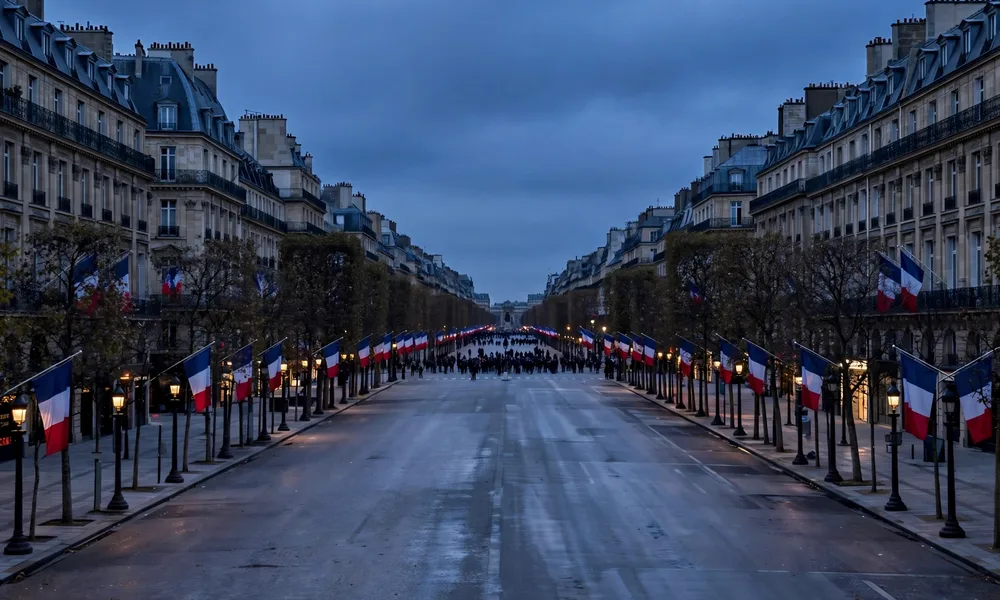
Featured image: an AI-generated editorial illustration.