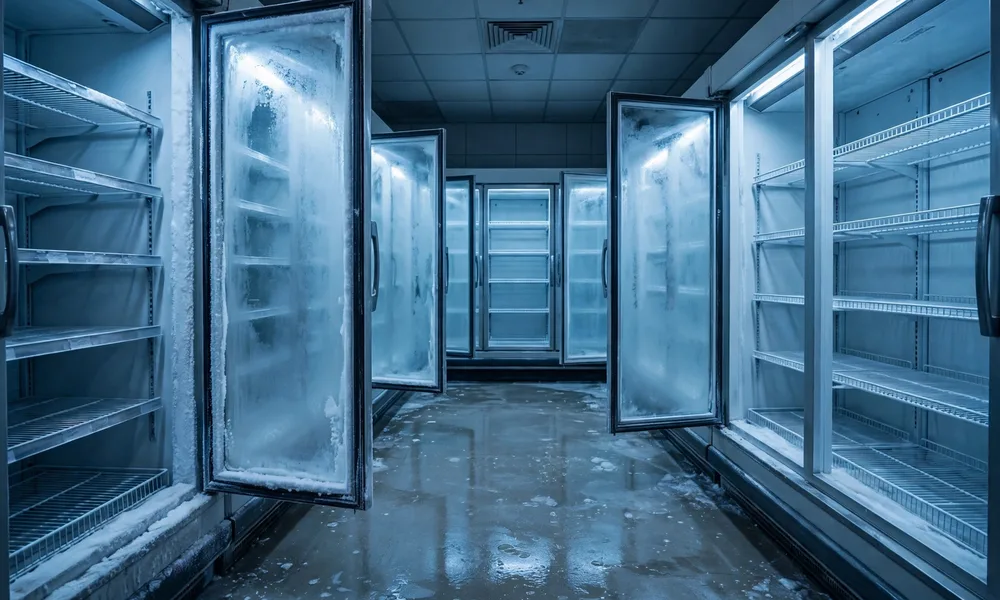
Hackers Hit Supermarket Freezers Across 10 European Countries as EU Warns of Food Supply Threat

Hackers targeted supermarket refrigeration systems in at least 10 European countries, forcing stores to throw away chilled and frozen food after freezer temperatures shot up to a reported 50 degrees Celsius. The attacks, first reported on Monday, November 2, 2026, hit stores in Belgium, Estonia, Finland, Ireland, Italy, Luxembourg, the Netherlands, Portugal, Germany and Sweden, and European Union officials have warned that the incidents may be a deliberate attempt to disrupt the food supply chain.
No group has claimed responsibility, and investigators have not publicly named the attackers. But the scale of the disruption, the timing across so many countries at once, and a similar attack on hundreds of French stores three weeks earlier have pushed food security to the top of the agenda in Brussels. Here is what happened, which stores were affected, and what shoppers and retailers should watch next.
| Quick Fact | Detail |
|---|---|
| What happened | Hackers targeted remotely managed supermarket refrigeration systems across Europe |
| Countries affected | Belgium, Estonia, Finland, Ireland, Italy, Luxembourg, the Netherlands, Portugal, Germany and Sweden |
| When reported | Monday, November 2, 2026, with warnings continuing through November 4 |
| Reported temperatures | Up to 50 degrees Celsius (122 degrees Fahrenheit) in some freezers |
| Stores hit | Dozens in Belgium, 13 SuperValu stores in Ireland, 7 Intermarche stores in Portugal, plus stores in Sweden and Germany |
| Who is blamed | No group has claimed responsibility and no attacker has been publicly identified |
| EU response | European Commission meetings with agencies and member states, plus warnings of further disruption |
| Earlier incident | A cyberattack about three weeks earlier disrupted as many as 700 grocery stores in France |
What Happened to the Freezers
According to reports from the BBC and other outlets, attackers got into refrigeration systems that retailers manage remotely and changed temperature settings. In some stores, fridges and freezers that should sit well below freezing warmed sharply, in at least one reported case to 50 degrees Celsius. Food kept at those temperatures cannot be sold safely, so stores had to remove chilled meat, dairy products and frozen goods from sale and discard them.
The equipment at the centre of several incidents was made by Danfoss, a company that supplies refrigeration controls. Danfoss confirmed its products were involved in the recent attacks, according to trade coverage, and retailers worked with their system providers to restore normal operation. In Germany, refrigeration at Rewe Busken returned to operation on Monday afternoon after an attack on its system provider.
What makes this attack different from an ordinary power cut or equipment failure is the pattern. Stores in many countries reported problems on the same day, and the failures involved connected systems rather than local faults. That pattern is why EU officials are treating the wave as a possible coordinated effort rather than a coincidence.
Which Countries and Stores Were Affected
Belgium appears to have been one of the hardest hit markets, with dozens of supermarkets reporting refrigeration failures and federal prosecutors opening an investigation. In Ireland, the Musgrave Group confirmed that 13 SuperValu stores were affected by what it described as a cyber incident, with chilled and frozen products removed from sale.
In Portugal, the Mosqueteiros group linked incidents at seven Intermarche stores to a cyberattack that appeared to target an external service provider managing refrigeration systems. In Sweden, retailers ICA and Coop reported refrigeration problems, and Reuters reported that one Swedish store said attackers had set its refrigerators and freezers to 50 degrees Celsius. Stores in Estonia, Finland, Italy, Luxembourg, the Netherlands and Germany also reported problems, though the scale varied from country to country.
Not every retailer has confirmed the same level of cyber involvement, and the full list of affected chains is still emerging. But the geographic spread alone is striking: ten countries, one day, one type of system. For a closer look at another major European story this week, read about Spain transport minister resigns after train crashes.
Why the EU Calls This a Food Supply Warning
The European Commission confirmed on November 3 that it had convened meetings involving European agencies and affected member states, with Commission spokesperson Thomas Regnier confirming the talks. The EU food and agriculture commissioner, Christophe Hansen, said the bloc is taking the incidents very seriously and warned that further disruption could occur in future.
The warning matters because supermarkets sit at the end of a long, connected chain. Farms, processors, cold storage depots, trucks and stores all depend on refrigeration, and much of that equipment is now managed online so engineers can monitor it from far away. That convenience is also a weakness: if attackers can reach the control system, they can spoil food without ever entering a store.
Officials also link this wave to the earlier French incident, in which a cyberattack disrupted as many as 700 grocery stores and caused food losses estimated in the tens of millions of euros. Two large waves in less than a month suggest that food retail systems are now a target in their own right, not just collateral damage in attacks on other sectors.
What the UK Cyber Chief Said
Dr Richard Horne, head of the UK National Cyber Security Centre, said hackers already targeting supermarket systems had exploited vulnerable technology at a small number of sites in the food supply chain. The UK impact is still being assessed, but the centre has told British retailers to update the software on their fridge temperature controls.
Horne also warned about the wider risk to critical national infrastructure, pointing to the likelihood of an AI powered cyberattack on such systems within two years. The message to retailers is practical rather than dramatic: patch the software, check who can access refrigeration controls remotely, and have a plan for pulling stock fast if temperatures rise.
For shoppers, the official advice so far is reassuring in one respect. Authorities have not reported widespread empty shelves or a general food shortage. The damage has been concentrated in chilled and frozen sections of affected stores, and most stores kept trading. The risk officials are flagging is about what could happen next if these systems stay exposed, not about a shortage today.
What Shoppers Should Know and Watch
If you shop at an affected store, the most visible effect is missing chilled and frozen items and, in some cases, clearance or removal of stock that warmed up. Retailers are discarding food that cannot be proven safe, which is the right call even though it wastes food. Do not buy chilled or frozen products that feel warm, look thawed, or sit in a unit that is clearly not cold.
At home, the same logic applies on a smaller scale. Keep fridge and freezer doors closed during a fault, throw away perishable food that has sat above safe temperatures for hours, and when in doubt, throw it out. Food poisoning from spoiled chilled goods is a real risk, and no bargain is worth it.
Watch for three developments in the coming days. First, whether investigators name a group or a method behind the attacks. Second, whether any new countries or chains report incidents, which would show the wave is still spreading. Third, whether the EU announces new rules for connected food equipment, since a second large wave in a month usually speeds up regulation. This story is still developing, and the next official update could change the picture fast.
Frequently Asked Questions
Which countries were hit by the supermarket freezer cyberattacks?
Belgium, Estonia, Finland, Ireland, Italy, Luxembourg, the Netherlands, Portugal, Germany and Sweden all reported refrigeration problems linked to the attacks, which were first reported on Monday, November 2, 2026.
How hot did the freezers get?
Some reports put temperatures in affected refrigeration units as high as 50 degrees Celsius (122 degrees Fahrenheit). At those temperatures, chilled and frozen food cannot be sold safely and had to be discarded.
Who carried out the attacks?
No group has claimed responsibility, and investigators have not publicly identified the attackers. EU officials have warned the incidents could be a deliberate attempt to disrupt the food supply chain, but attribution has not been confirmed.
Is there a food shortage because of the attacks?
Authorities have not reported a general food shortage. The damage has been concentrated in chilled and frozen sections of affected stores, while most stores kept trading. Officials warn of further disruption if vulnerable systems are not fixed.
Sources
Reporting for this article drew on the BBC coverage of the incidents, the UK National Cyber Security Centre warning, and trade and news coverage of the EU response. Readers can check the original reporting here: Cybersecurity News on the supermarket refrigeration attacks, UK cyber chief warning on supermarket systems, and EU warning on freezer attacks across 10 countries. For more international news, see Dapo Akande elected ICJ judge for nine year term and Iran claims four tankers destroyed near Strait of Hormuz.
Final Thoughts
The supermarket freezer attacks are a reminder that the systems we rarely think about can become targets overnight. Nobody expects a trip to buy milk to turn into a cybersecurity story, yet ten countries found out in one day how much modern food retail depends on connected refrigeration. The good news is that stores acted fast, discarded unsafe food, and kept trading. The worrying news is that this is the second large wave in a month, and officials are openly warning of more. Retailers now have a clear job: patch, lock down remote access, and prove their cold chain can survive an attack. Shoppers have a simpler job: trust your senses, skip anything that feels warm, and keep an eye on official updates as investigators close in on who did this and why.