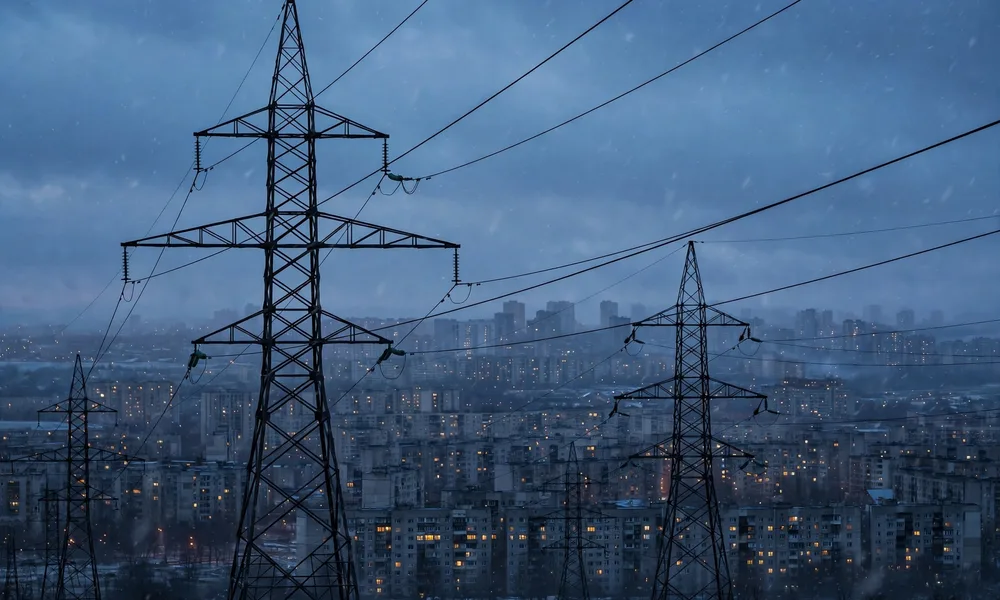
The European Union will activate a special emergency mechanism to fund Ukraine’s most urgent needs after Russian strikes on energy infrastructure. Ukrainian President Volodymyr Zelenskyy announced the move on Monday, November 9, 2026, after a phone call with European Commission President Ursula von der Leyen. The mechanism is meant to move money quickly for power, water and heating. No amount, timeline or project list has been published yet. The European Commission has not yet issued a formal decision.
Quick Facts
| Question | Answer |
|---|---|
| What | EU emergency mechanism to fund urgent needs in Ukraine |
| When | Monday, November 9, 2026 |
| Who | Zelenskyy, after a call with von der Leyen |
| Funding for | Power, water and heating |
| Why | Russian strikes on energy infrastructure |
| Worst affected | Kyiv, Dnipro, Sumy, Donetsk, Kherson |
| Without power, Nov 8 | About 850,000 people |
| Outages | 15 to 17 hours a day in some regions |
| Unknown | Amount, timeline, project list |
| Next | Talks in Abu Dhabi, November 10 and 11 |
What Zelenskyy Announced After the Call
Zelenskyy said the decision came out of his phone call with von der Leyen. He called the mechanism special and emergency in nature. Its purpose is to speed up funding for power, water and heating. He did not describe a new aid package with a fixed total. He described a faster route than normal procedures allow.
Normal EU funding takes time. It passes through budgets, approvals and project lists. An emergency mechanism is meant to cut through that delay. Zelenskyy said teams from both sides are already working on it. That does not mean money is already in Ukrainian accounts. It means the process to release it has begun.
No amount, timeline or project list has been published. The European Commission has not yet issued a formal decision. The political agreement is real. The urgency is real. The money, dates and project list are still to come. Any firm total or delivery date given today would be guessing.
Why Power, Water and Heating Come First
Power, water and heating are one linked system in Ukraine right now. When a power station is hit, homes lose light. Pumping stations lose power too, so water pressure falls or stops. Heating systems that need electricity or gas also stop. One strike can leave a neighbourhood cold, dark and without running water.
That is why the mechanism names all three together. Power alone would not fix a home with no water. Water alone would not help if pumps have no electricity. Heating is most time sensitive because the heating season is already under way. Cold weather does not wait for repairs.
Strikes on energy infrastructure have continued through the fall. Each round adds new damage while crews still fix the last round. On November 8, about 850,000 people were left without power. Some regions face outages of 15 to 17 hours a day. That is most of the day without power.
Where the Situation Is Worst
Zelenskyy named Kyiv, the Dnipro, Sumy and Donetsk regions, and Kherson. He said many cities and communities face a very difficult situation with power, water and heating because of Russian strikes. Those five names are the ones he singled out as worst affected.
Kyiv is a large city where a grid failure hits hundreds of thousands at once. Donetsk is a frontline region where fighting adds risk to every repair crew. Sumy sits near the border and has faced repeated attacks. Dnipro is a major hub where cuts hit homes and services together. Kherson has lived with damaged infrastructure for a long time.
The list does not mean other regions are safe. Other areas also face outages and repair backlogs. Naming the worst places shows where help is needed first. If the mechanism works as described, those areas should be near the front of the queue.
For background on the latest wave of strikes and the scale of the outages, see our report on Russian strikes leave 850,000 without power.
What the Emergency Mechanism Still Needs to Decide
Three questions will decide whether this announcement turns into real help. How much money will be released? How fast will it reach Ukraine? What will it pay for first? None of the three has a public answer yet.
The amount matters because the need is large. Repairing power stations, replacing transformers, fixing water pumps and restoring heating networks all cost money. Emergency repairs cost more than planned work. Crews work under pressure and parts must be found quickly. A small fund would help but would not cover damage across several regions.
The timeline matters just as much. An announcement in November helps only if money moves before the coldest weeks arrive. If approval takes weeks and delivery takes longer, families will face the worst of winter without the promised support. The value of an emergency mechanism is measured in days, not in months.
The project list matters because choices must be made. Should first money go to large power stations or local substations, to water pumps or heating plants, to Kyiv first or to smaller communities? Until the list is published, no one can say which cities benefit first. The European Commission has not yet issued a formal decision, so the legal basis is still to be confirmed. Only an official statement can confirm the real figure.
The Timing: Talks in Abu Dhabi and the Enlargement Report
US-mediated talks between Russia and Ukraine are due in Abu Dhabi on November 10 and 11, just days after the announcement. Even while diplomacy continues, Ukraine still needs power, water and heating today. The EU mechanism is about the immediate needs of civilians, not about the outcome of the talks.
This week the European Commission also published its annual EU Enlargement Package, which gave a positive assessment of Ukraine’s progress toward EU membership. It is separate from the emergency funding. One is about long term reform and membership. The other is about urgent help for winter. Together they show two sides of the EU relationship with Ukraine.
The timing also reflects the season. The heating season is already under way, and demand for heat is rising. A power cut in summer is hard. A power cut that also stops heating in November is dangerous, especially for older people, young children and anyone with a health condition.
For context on earlier strikes and support efforts this month, see our report on the November 4 strikes and aid centre damage.
What to Watch Next
The first thing to watch is a formal decision from the European Commission. It should confirm the mechanism, its legal basis and its funding source. Without it, the plan remains a statement of intent. The second thing to watch is a figure. Note who publishes it and whether it is new money or money moved from an existing programme. New money adds to total support. Repurposed money speeds up spending but does not increase the total.
The third thing to watch is the project list. It will show whether the worst affected areas are first in line, and whether money goes to large infrastructure, local repairs, or a mix of both. A mix is likely, because Ukraine needs both. Large stations keep the grid alive. Local repairs bring power back to individual streets.
The fourth thing to watch is delivery on the ground. The real test is whether crews receive equipment, substations come back online, and outage hours fall in the worst affected regions. That evidence will come from Ukrainian energy officials, local authorities and residents. The fifth thing to watch is the Abu Dhabi talks. Either way, the EU mechanism is about civilian needs that exist right now.
Recent progress shows recovery is possible even after serious damage. Our report on power restored at Zaporizhzhia nuclear plant is a reminder that grid repairs do happen, even in difficult conditions.
FAQs
What did Zelenskyy announce on November 9, 2026?
Zelenskyy announced after a call with Ursula von der Leyen that the EU would activate a special emergency mechanism to quickly fund power, water and heating in Ukraine. Teams from both sides are already working on it.
How much money will the EU provide?
No amount has been published yet. Neither Zelenskyy nor the European Commission has given a figure. Any total shared online before an official statement should be treated as unconfirmed.
Which areas are worst affected?
Zelenskyy named Kyiv, the Dnipro, Sumy and Donetsk regions, and Kherson. He said many cities and communities face a very difficult situation because of Russian strikes.
When will the funding reach Ukraine?
No timeline has been published yet. The European Commission has not yet issued a formal decision. Speed of delivery will be the key test of the mechanism.
Sources
Final Thoughts
The EU emergency mechanism is a clear promise at a hard moment. Zelenskyy asked for speed, and von der Leyen agreed to act through a special route. About 850,000 people lost power after strikes on November 8. Some regions face outages of 15 to 17 hours a day. The heating season is already under way. Families in Kyiv, Dnipro, Sumy, Donetsk and Kherson cannot wait for normal budget cycles.
Honesty matters too. No amount, timeline or project list has been confirmed. The European Commission has not yet issued a formal decision. The announcement is the first step, not the last one. The next step is a formal decision with numbers and dates. The step after that is money reaching repair crews and outage hours falling. If the mechanism moves fast, it could make a real difference this winter. The test is simple and public. Watch for the decision, watch for the amount, and watch for the lights coming back on.