Trump Says He Will Soon Decide Whether to Resume War With Iran After Midterm Elections
President Donald Trump says he will soon decide whether the United States should resume military strikes against Iran. He spoke on Thursday, November 5, 2026, after meeting his national security advisers for the first time on Iran since the November 3 midterm elections. In the Oval Office, Trump told reporters, “We will make a decision now” and added, “You will know soon enough.” He is weighing three options: new airstrikes, tighter economic pressure, or a deal that would require major concessions from Tehran. No decision has been announced yet, and no new military orders have been issued.
Quick Facts
| Detail | What We Know |
|---|---|
| Decision maker | President Donald Trump |
| Date of statement | Thursday, November 5, 2026 |
| Where it happened | The Oval Office, after a national security meeting |
| Key quote | “We will make a decision now” and “You will know soon enough” |
| Options under review | New airstrikes, tighter economic pressure, or a deal with Tehran |
| Carrier movement | USS Theodore Roosevelt expected in Singapore from Friday, November 6, and not in the region before mid-November |
| Mediation | Qatar is mediating a two day confidence building proposal |
| Background | The war began February 28, 2026. A ceasefire took effect April 8, was extended June 17, and collapsed in early July, when Trump declared it OVER on July 10 |
What Trump Said in the Oval Office
Trump met his national security advisers on Thursday as part of his weekly intelligence briefing. It was his first meeting on Iran since voters went to the polls on November 3. White House meetings on a possible resumption of military operations were also held on Wednesday, November 4, and Thursday, November 5.
After the meeting, Trump spoke to reporters and made clear that a choice is close. “We will make a decision now,” he said. “You will know soon enough.” The short statement was deliberate. It told the public that the review is active, while keeping the timing and the outcome private.
Trump also spoke about the scale of what another round of strikes could mean. “I would rather not destroy the rest of the country if possible, but maybe I will have to,” he said. The remark pointed to the central question in front of him. He asked whether the United States wants further airstrikes to ensure that Iran’s nuclear programme is eliminated and never recovers.
For context on the wider tensions in the Gulf, the recent incident in which a tanker was struck by two projectiles north of Qatar shows how quickly events at sea can raise the temperature in the region. The Strait of Hormuz, the narrow waterway at the centre of the current dispute, remains one of the most sensitive shipping routes in the world.
The Three Options on the Table
According to Axios, citing United States officials, Trump is weighing three options. The first is launching new airstrikes against Iran. The second is continuing to tighten economic pressure on Iran. The third is reaching an agreement that included significant concessions from Tehran. Each path carries different risks, costs, and chances of success, and each has supporters inside the administration.
New airstrikes would be the most direct military step. Supporters of this option argue that only force can make sure that Iran’s nuclear programme does not recover after the earlier bombing campaign. Critics argue that new strikes could restart a full war, draw in other countries, and cause heavy civilian harm. Trump himself raised that concern when he said he would rather not destroy the rest of the country if possible.
Tighter economic pressure would keep the focus on sanctions, trade limits, and financial controls. This option avoids new bombing, but it takes time to work. It also depends on other countries following the same rules. Supporters say it can weaken Iran without the risks of war. Critics say it has limits, and that Iran has learned to live under sanctions for many years.
A deal would require major concessions from Tehran. That could include limits on the nuclear programme, access for inspectors, and steps to reopen the Strait of Hormuz. Supporters say a deal is the only path that ends the cycle of strikes and threats. Critics say Iran cannot be trusted to keep its promises, and that a weak deal would leave the core problem in place.
Military Preparations and the Carrier Timeline
While the political decision is still open, the military is getting ready for either outcome. United States Central Command, known as CENTCOM, is completing preparations to be ready to resume major combat operations, a United States official said. The same official said that CENTCOM has not received new orders from Washington. In plain terms, the forces are preparing, but they have not been told to act.
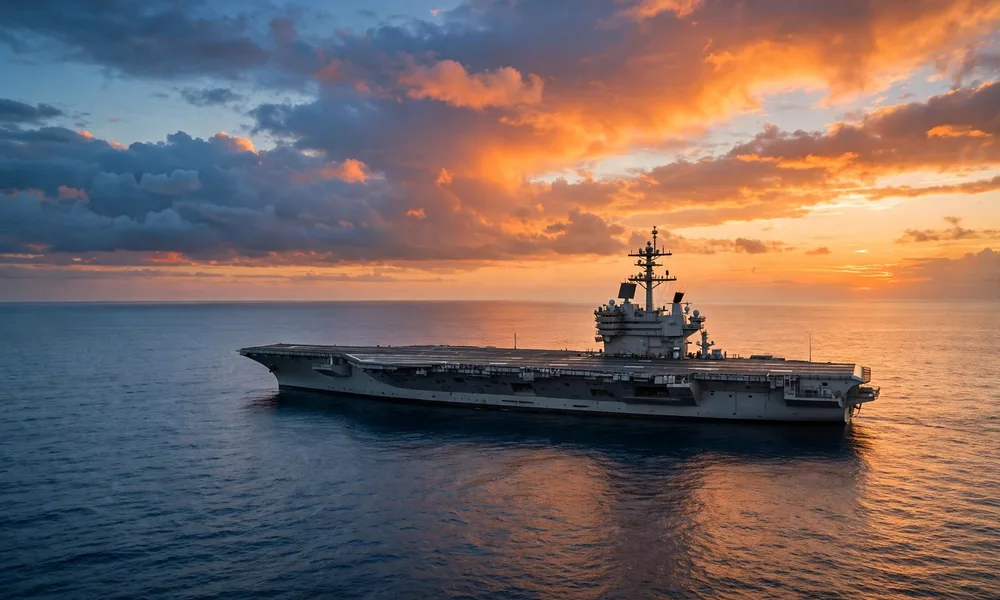
The movement of warships gives a sense of the timeline. The USS Theodore Roosevelt carrier strike group is expected to stop in Singapore for a few days starting Friday, November 6. It will not reach the Central Command area of responsibility before mid-November. Once it arrives, it would join two United States carrier strike groups already in the region. That build up would give Washington more options if Trump chooses military action.
The Diplomacy Track Through Qatar
Alongside the military planning, a diplomatic track is still active. Iran has sent the United States a nuclear proposal through Qatar, a senior Iranian official told Reuters. The proposal would only be discussed after the United States meets Iran’s seven demands to reopen the Strait of Hormuz. The detail shows how far apart the two sides still are. Each side wants the other to move first.
Qatar is mediating a two day confidence building proposal. Under that plan, the United States would lift its naval blockade and release some frozen Iranian funds. In return, Iran would invite inspectors from the International Atomic Energy Agency, known as the IAEA, to visit nuclear sites that were bombed. The idea is to create a small step of trust before tackling the larger issues.
Iranian Foreign Minister Abbas Araghchi held calls on November 5 with mediators from Qatar, Saudi Arabia, Turkey, the United Arab Emirates, Oman, and Egypt. The wide set of calls shows that several countries in the region are trying to keep the door open for talks. It also shows that the dispute is not only between Washington and Tehran. Neighbours have a direct interest in avoiding another war, because they would feel the effects first. On the same day, Mohsen Rezaei, secretary of Iran’s Supreme National Security Council, met Russian President Vladimir Putin at the Kremlin.
Allies, Advisers and the Political Backdrop
Inside the administration, views are split. Israeli Prime Minister Benjamin Netanyahu pressed Trump to resume strikes during a call over the weekend, Axios reported. Trump did not commit to military action on that call. The report shows that Israel wants a firm move against Iran, while Trump is still weighing his options. Vice President JD Vance has emerged as a leading advocate of diplomacy over renewed strikes. His position gives the diplomatic track a strong voice at the top of the administration.
The political setting has also changed since the last round of fighting. The decision comes after Democrats won control of the House and Senate in the midterm elections, an outcome widely seen as a repudiation of Trump’s second term. A new Congress will have more power to question military action, demand briefings, and shape public debate. That does not stop the president from acting as commander in chief, but it does change the political cost of a new war. Polling cited by Axios found that about 6 in 10 voters believed using military force against Iran was the wrong decision.
The midterm results also help explain the timing. Trump had ruled out further major strikes before the election, when voters were still deciding. Now that the election is over, the question is back on the table. The Mississippi Senate race, where Scott Colom leads Hyde-Smith in a contest still uncalled, is one of many races that shaped the new balance of power in Washington. The full results are still being counted in some places, but the direction of the election is clear.
What Happens Next
The next steps will depend on the choice Trump makes in the coming days. If he chooses airstrikes, the focus will shift to targets, timing, and the role of the carrier groups now moving into the region. If he chooses economic pressure, the focus will shift to sanctions, enforcement, and the response from other countries. If he chooses a deal, the focus will shift to Qatar and the mediators, and to whether Iran is willing to accept the terms on offer.
Has Trump decided whether to resume strikes on Iran?
No. On November 5, 2026, Trump said, “We will make a decision now” and “You will know soon enough.” He did not announce a decision, and CENTCOM has not received new orders from Washington. The choice between airstrikes, economic pressure, and a deal is still open.
What are the three options Trump is weighing?
According to Axios, citing United States officials, the options are launching new airstrikes, continuing to tighten economic pressure on Iran, or reaching an agreement that included significant concessions from Tehran. Each option has supporters and critics inside the administration, and Trump has not said in public which one he prefers.
When could the United States be ready for major operations?
CENTCOM is completing preparations to be ready to resume major combat operations, but it has not received new orders. The USS Theodore Roosevelt carrier strike group is expected to stop in Singapore from Friday, November 6, and will not reach the region before mid-November, when it would join two carrier strike groups already there.
Is there still a diplomatic path to avoid new strikes?
Yes, a diplomatic track is still active. Qatar is mediating a two day confidence building proposal under which the United States would lift its naval blockade and release some frozen Iranian funds, while Iran would invite IAEA inspectors to bombed nuclear sites. Iran has also sent a nuclear proposal through Qatar, but it says that proposal would only be discussed after the United States meets its seven demands to reopen the Strait of Hormuz.
Sources
StockBiz: President Trump Is About to Decide What Move to Make on Iran
El7: Trump Says US Ready to Finish the Job in Iran as Decision Looms
Political.org: Trump Says Decision on Renewed Strikes Against Iran Coming Soon as Qatar Pushes Deal
Final Thoughts
Trump’s statement on November 5 marks a turning point after the midterms. The pause on major strikes is over, and a decision is now being made. The three options in front of him are very different. Airstrikes would be the fastest and most forceful step, but also the most risky. Economic pressure would avoid new bombing, but it would take time and may not settle the nuclear question. A deal would need major concessions from Tehran.
Featured image: AI-generated editorial illustration.