Carlos Cuerpo Takes Over Spain Transport Ministry After Oscar Puente Resigns
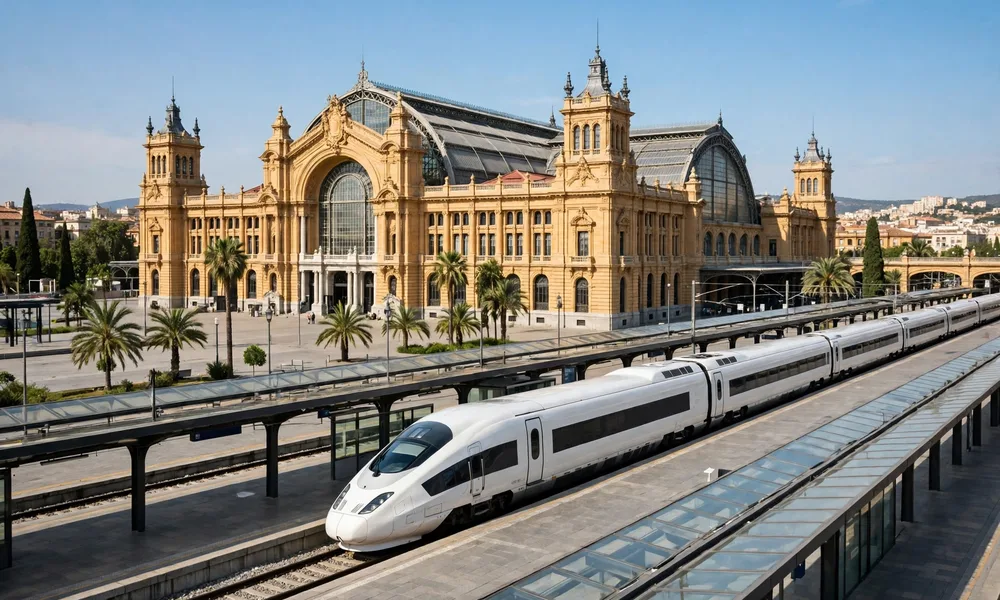
Carlos Cuerpo will provisionally run Spain’s Transport Ministry after Oscar Puente resigned over two deadly high-speed train crashes this year. Spanish Prime Minister Pedro Sanchez announced the move on Wednesday, November 4, 2026, saying his deputy and economy minister would take charge of the transport portfolio until a new government is formed after the November 29 general election.
Puente stepped down on Tuesday night, six days after the second deadly crash, near Urda in central Spain, which killed 69 people. Combined with an earlier crash this year, the two disasters have killed 115 people. Puente told lawmakers he had already decided to resign in the immediate aftermath of the Urda crash, and he will not stand as a candidate in the upcoming election. Here is what changed, why it matters, and what happens next for Spain’s rail network and its election campaign.
| Quick Fact | Detail |
|---|---|
| New transport chief | Carlos Cuerpo, first deputy prime minister and economy minister, on a provisional basis |
| Outgoing minister | Oscar Puente, resigned Tuesday night, November 3, 2026 |
| Trigger | Two deadly high-speed train crashes in 2026, killing 115 people combined |
| Latest crash | Near Urda, Toledo province, on October 28, 2026, killing 69 people |
| Next election | Spain general election on November 29, 2026 |
| Why provisional | Sanchez chose not to appoint a new minister so close to the election |
| Resignation effective | Once published in the official state gazette |
| Puente age | 57 |
How Sanchez Announced the Change
Sanchez made the announcement in Madrid on Wednesday, presenting the move as a steady hand rather than a full cabinet reshuffle. Cuerpo already serves as first deputy prime minister and minister of economy, trade and business, and Sanchez praised what he called an enormous capacity for management and integrity in this legislature. By handing Cuerpo the transport portfolio on a temporary basis, Sanchez avoided naming a brand new minister just weeks before voters go to the polls.
The choice also keeps the government intact during a caretaker period. Spain’s parliament is in caretaker mode ahead of the November 29 election, and Puente faced a tense four hour grilling by lawmakers from a caretaker parliament body on Tuesday. Most parties at that hearing demanded he face responsibility for the two rail disasters. Puente then quietly announced he was stepping down, surprising lawmakers who had expected him to fight on through the campaign.
Puente was one of the ruling Socialists’ most combative and polarising voices, and his departure leaves the party fighting an election campaign without a familiar front bench figure. At the same time, it removes a lightning rod from the campaign trail at a moment when rail safety dominates the news. Sanchez clearly decided that a calm, provisional handover was safer than a drawn out search for a permanent replacement.
What Puente Said About His Decision
Puente revealed that he had made his decision right after learning of the Urda tragedy, but told only his family at first, keeping even Sanchez in the dark. That detail matters because it shows the resignation was not a sudden reaction to Tuesday’s hearing, even though the hearing brought it into the open. He had carried the decision privately for days while the rescue and recovery work continued.
He also confirmed he would not stand as a candidate in the November 29 election, closing the door on a quick political comeback in the same campaign. His resignation only becomes fully effective once it is published in the official state gazette, a formal step that follows the announcement. Until then, the handover is political reality even if the paperwork is still catching up.
Colleagues moved quickly to praise him. Housing minister Isabel Rodriguez spoke of his love for Spain and his dignity, and said he had assumed his political responsibility after the two serious rail accidents recorded this year. That framing, taking responsibility rather than being pushed, is the version of events his party wants voters to remember. For a closer look at the resignation itself, read about Spain’s transport minister resigning after the train crashes.
The Two Crashes Behind the Resignation
The Urda crash on October 28 was the second deadly high-speed rail disaster in Spain this year, and it claimed 69 lives in Toledo province. It raised widespread concerns about railway safety and the management of the country’s rail network, questions that had already been asked after the first crash earlier in 2026. Together, the two disasters killed 115 people, a toll that made political accountability unavoidable.
Investigations into the causes of the crashes continue, and this article does not prejudge their findings. What is clear is the political sequence: a second disaster in the same year, a bruising parliamentary hearing, and a minister who decided his position had become untenable. Transport safety is now one of the central issues of the November 29 campaign, and every party will be asked what it would change about rail oversight.
The timing also matters for the victims’ families. A provisional minister taking over weeks before an election cannot rewrite rail safety rules overnight, but he can set the tone for how the government handles the investigations and the families’ questions. Cuerpo’s first test will be whether he treats the portfolio as a holding brief or uses it to push for visible safety action before polling day.
Who Is Carlos Cuerpo
Carlos Cuerpo is Spain’s first deputy prime minister and its economy minister, a role that puts him at the centre of government economic policy. He is known as a technocratic figure rather than a party street fighter, which is part of why Sanchez picked him for a sensitive handover. His reputation for management was the exact quality Sanchez highlighted when announcing the move.
Holding both the economy and transport portfolios at once is a heavy load, even on a temporary basis. It also gives him unusual authority across two areas that meet in infrastructure spending: the money for rail investment and the ministry that spends it. If he wants to signal change, he can link the two, for example by reviewing rail maintenance budgets or fast tracking safety spending already in the pipeline.
The provisional label is important. Cuerpo is not being presented as the long term transport minister, and the next government formed after November 29 will decide who holds the job permanently. That limits what he can promise, but it also frees him from the usual first weeks of a new minister learning the brief. He steps in with the full authority of the deputy prime minister’s office behind him.
What This Means for the November 29 Election
Puente’s resignation reshapes the campaign in two ways. First, it puts rail safety at the top of the agenda, an issue on which the government is on the defensive after two disasters. Opposition parties will press Sanchez on what went wrong and whether warnings were ignored, and Cuerpo will have to answer those questions in the weeks before the vote.
Second, it changes the Socialist campaign team. Puente was a prominent campaign voice, and losing him weeks before polling day forces the party to reorganise its message. Sanchez may benefit from the calmer image Cuerpo brings, but he also loses a fighter who could take the argument to opponents. How voters judge that trade off will only become clear on election night.
The broader European context adds pressure. The same week, Europe saw a wave of hoax bomb threats against flights, covered in our report on hoax bomb threats hitting flights across Europe, and Spain’s own transport system is under unusual scrutiny. Voters tend to judge governments on whether they keep people safe on the move, whether by air or by rail, and Spain now faces that test on both fronts.
Frequently Asked Questions
Who is Spain’s transport minister now?
Carlos Cuerpo, Spain’s first deputy prime minister and economy minister, will provisionally run the Transport Ministry after Oscar Puente resigned. The arrangement lasts until a new government is formed after the November 29 general election.
Why did Oscar Puente resign?
Puente resigned after two deadly high-speed train crashes in 2026 that killed 115 people combined. He said he decided to step down in the immediate aftermath of the Urda crash on October 28, which killed 69 people, and announced it after a tense parliamentary hearing on November 3.
Will Puente stand in the November 29 election?
No. Puente said he would not stand as a candidate in the upcoming general election on November 29, 2026.
Is Cuerpo the permanent transport minister?
No. His role is provisional. Sanchez chose to assign the portfolio to Cuerpo rather than appoint a new minister so close to the election, and the next government will decide the permanent holder.
Sources
Reporting for this article drew on Reuters coverage of the cabinet change and the resignation, plus Spanish government statements reported on November 4, 2026. Readers can check the original reporting here: Reuters on Spain’s deputy prime minister assuming the transport portfolio, Xinhua on Sanchez naming Cuerpo to take charge of transport, and Democrata on Isabel Rodriguez backing Puente’s resignation.
Final Thoughts
Puente’s resignation is the rare political exit that was decided in private grief and announced in public pressure. He knew after Urda that he could not stay, yet he waited until a parliamentary hearing forced the moment. That gap between decision and announcement will be debated, but the human fact underneath it is hard to argue with: 115 people died in two crashes, and a minister decided he should carry the political cost.
Cuerpo now inherits a portfolio defined by tragedy and an election defined by trust. He cannot undo the crashes, and he cannot finish the investigations before November 29. What he can do is show, in the next few weeks, that the government is treating rail safety as a duty rather than a campaign problem. If he does that, the provisional handover will look like good judgment. If he treats transport as a second job to be parked until after the vote, voters will notice, and the story that began with Puente’s resignation will not end with it.