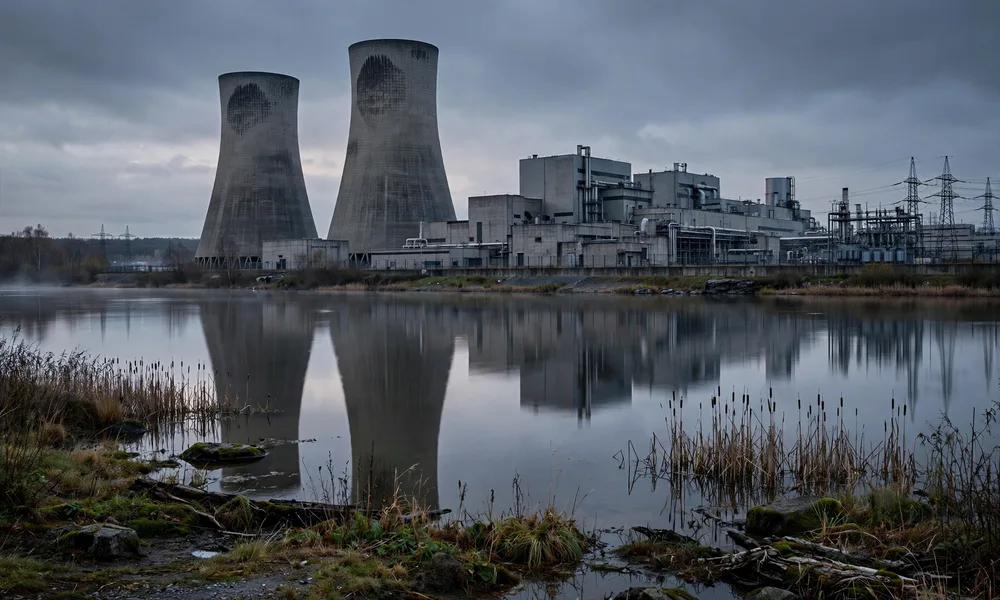
Zaporizhzhia nuclear plant power restored on the evening of Sunday, November 8, 2026, after the plant spent most of the day running on emergency diesel generators. The plant lost its only remaining external power line in the early hours of the morning, leaving it with no connection to the outside grid. Power came back later the same day, and the generators were placed on standby. The International Atomic Energy Agency counts this as the 27th complete loss of external power at the plant since the conflict began in 2022.
Quick Facts
| Detail | What happened |
|---|---|
| Plant | Zaporizhzhia Nuclear Power Plant in Enerhodar, southern Ukraine |
| Date of outage | Sunday, November 8, 2026 |
| Line lost | 330-kilovolt Ferosplavna-1 line, the only remaining external line |
| Time of disconnection | 02:36 Kyiv time, according to Energoatom |
| Automatic reconnection | Attempt failed, according to Energoatom |
| Backup used | Emergency diesel generators for cooling and safety systems |
| Time power returned | 17:41, according to Energoatom |
| IAEA confirmation | Restoration confirmed around 21:00 |
| Count by IAEA | 27th complete loss of external power since 2022 |
| Count by Energoatom | 16th such loss since the start of 2026 |
| Cause of disconnection | Not yet known, according to the IAEA |
| Diesel fuel on site | Enough for a limited number of generators for about two weeks |
What Happened on November 8
At 02:36 Kyiv time, the 330-kilovolt Ferosplavna-1 line disconnected, according to Energoatom, the state nuclear operator of Ukraine. The line was the plant’s only remaining link to the external power grid. An automatic attempt to reconnect it failed, so the plant was cut off from outside power in the middle of the night.
The International Atomic Energy Agency announced the loss around noon local time. By then, the plant had already switched to its emergency diesel generators to run reactor cooling and other essential safety systems. The plant generates no electricity for the grid, so it depends on outside power or on its generators to keep its nuclear fuel cool.
For most of the day, the situation stayed the same. The plant ran on diesel power while work went on to bring the line back. Then, in the evening, the picture changed. Energoatom said the Ferosplavna-1 line was switched back on at 17:41. The IAEA confirmed the restoration around 21:00. Once the line was back, the diesel generators were placed on standby.
The two times tell the same story from two sides. Energoatom, as the operator, reported the line back in service at 17:41. The IAEA later confirmed around 21:00 that the plant was again receiving power from the grid.
The outage ended the same day it began, which matters because every hour on diesel power uses fuel. For the wider energy picture that day, see our report on Russian strikes and Ukraine power outages on November 8.
Why External Power Matters So Much
A nuclear power plant that is not producing electricity still needs power. That simple fact sits at the heart of every blackout at Zaporizhzhia. The fuel inside the reactors keeps producing heat even when the plant is shut down. Without cooling, that heat builds up. Cooling pumps, monitoring systems, and other safety equipment all need electricity to work.
External grid power is the normal supply. It is steady and does not depend on fuel deliveries. Diesel generators are the backup. They can do the job, but they burn fuel, need maintenance, and can only run while the fuel lasts.
At Zaporizhzhia, the IAEA has said that fuel reserves allow a limited number of diesel generators to run for about two weeks. That is a real safety margin, but it is not open-ended. If an outage lasted longer than the fuel supply, the plant would face a much more serious problem. That is why the IAEA treats every loss of external power as a serious event, even when the generators work as planned.
Once grid power returned, the generators were placed on standby rather than switched off for good. Standby means they stay ready to start again at short notice, so the plant keeps a backup in place if the line fails again.
A Plant Running on a Single Line
The loss on November 8 did not come out of nowhere. The plant had depended on a single external line before the outage, because its main line was already out of service. The main Dniprovska power line has been disconnected since October because of combat damage. On November 6, the IAEA said further work was needed before it could be reconnected.
That left the Ferosplavna-1 line carrying the whole load. When a plant has only one line, there is no second route for power to take if that line fails. The plant becomes exposed to a single point of failure, and November 8 showed how quickly that risk can turn into a real outage.
In early September, a local ceasefire brokered by the IAEA allowed repairs after the plant had been without external power since August 20. On October 23, the IAEA said the main line remained unavailable.
The cause and location of the November 8 disconnection are not yet known, according to the IAEA. What is known is the sequence: one line left, that line disconnected in the early morning, an automatic reconnection failed, and power returned in the evening.
The IAEA counts November 8 as the 27th complete loss of external power at the plant since the conflict began in 2022. Energoatom counts it as the 16th such loss since the start of 2026 alone. Both point to the same conclusion. For background on the attacks earlier in the same week, see our report on Ukraine strikes on November 4 and the aid centre and power grid.
What the IAEA and Energoatom Said Next
Both the IAEA and Energoatom spoke about the outage on November 8, and their statements line up on the main facts. Energoatom reported the time of the disconnection and the failed automatic reconnection attempt. The IAEA announced the loss around noon and later confirmed the restoration in the evening.
IAEA Director General Rafael Mariano Grossi said restoring the connection to the external power grid and replenishing on-site diesel reserves are important for continued safe operation. That statement covers the two priorities in plain terms. First, get the plant back on grid power and keep it there. Second, make sure the diesel fuel stock is full enough to cover the next outage if one comes.
Generators are only as useful as the fuel that feeds them. If the fuel stock runs low, the safety margin shrinks with it.
The IAEA monitors the plant, reports power losses, and presses for repairs. The local ceasefire in early September that allowed repairs after the long August outage was brokered by the IAEA.
Why This Blackout Counts Differently
Every loss of external power at Zaporizhzhia is serious, but the November 8 outage stands out for a few clear reasons. The first is the count. Twenty-seven complete losses since 2022 is a high number for any nuclear plant. Sixteen of those since the start of 2026 shows that the pace has not slowed. The plant is not facing a one-off problem. It is facing a repeated problem. Sixteen losses so far in 2026 means the plant has returned to diesel power more than once a month on average this year. Each recovery has been followed, sooner or later, by another loss of the same kind.
The second reason is the single-line position. The plant went into November 8 with only one external line in service. Its main line was already down, and the IAEA had said on November 6 that more work was needed before it could return. That meant the plant had no spare route. The loss of the Ferosplavna-1 line therefore cut the plant off completely in a single step.
The third reason is the setting. The plant is in Enerhodar in southern Ukraine. It is Europe’s largest nuclear power plant, and it is under Russian control, so any safety problem there would draw wide attention.
November 8 ended without harm. The generators worked and power returned the same day. But a safe ending does not erase the risk. A plant that loses outside power 27 times needs a stable grid connection more than another test of its backups. See our coverage of the missile attack on Kyiv on November 7.
FAQs
What happened at the Zaporizhzhia nuclear plant on November 8, 2026?
The plant lost its only remaining external power line, the 330-kilovolt Ferosplavna-1 line, at 02:36 Kyiv time. It ran on emergency diesel generators until the line was switched back on at 17:41. The IAEA confirmed the restoration around 21:00.
How many times has the plant lost external power?
The IAEA counts November 8 as the 27th complete loss of external power at the plant since the conflict began in 2022. Energoatom counts it as the 16th such loss since the start of 2026. Both counts describe the same event from different starting points.
Why is a loss of external power dangerous at a nuclear plant?
The plant generates no electricity for the grid, but it still needs power to keep its nuclear fuel cool. Cooling pumps and safety systems need electricity. Diesel generators are the backup, and they can only run while the fuel on site lasts, about two weeks for a limited number of generators, according to the IAEA.
What is still unknown about the November 8 outage?
The cause and location are not yet known, according to the IAEA. The main Dniprovska line has been disconnected since October because of combat damage, and on November 6 the IAEA said further work was needed before it could return.
Sources
Final Thoughts
November 8 ended well for Zaporizhzhia. Power was lost in the early morning and restored the same evening. The diesel generators did their job, the cooling systems kept running, and the plant moved back onto grid power before the day was over. That is the outcome everyone wants to see.
The wider picture is less reassuring. Twenty-seven losses since 2022, and 16 in 2026 alone, show a plant that keeps losing the power it needs to stay safe. Until the main line is repaired and the grid connection is reliable, the risk of another outage stays close. The restoration on November 8 is good news for one day, and the test now is whether the connection holds.