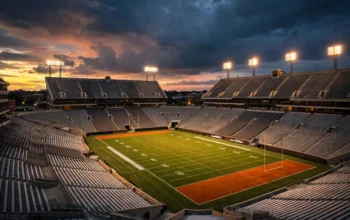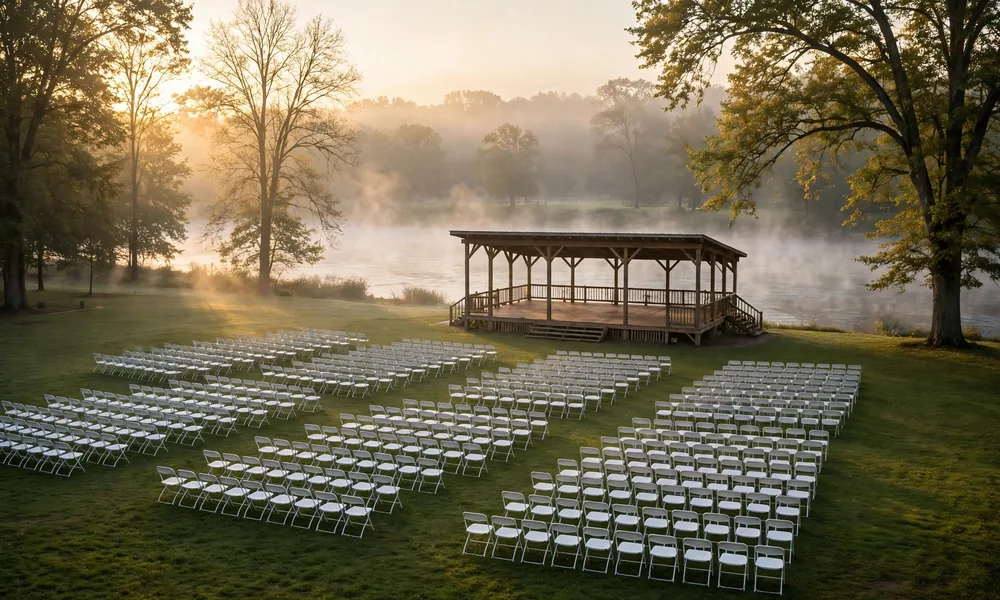
Pope Leo XIV celebrated his first Mass in the Americas since his election on Saturday, November 7, 2026, at Parque Paris Londres in Paysandu, Uruguay. About 40,000 people attended the open air Mass, a figure confirmed by the Vatican and local authorities. More than 30,000 people had registered in advance, and about 10,000 more arrived on the day despite morning rain and grey skies. The Mass opened a 12-day, three-nation South American tour that will also take the Pope to Argentina and Peru, and it marked the first papal visit to Uruguay since 1988 and the first ever papal visit to Paysandu.
Quick Facts
| Detail | Information |
|---|---|
| Event | First Mass of Pope Leo XIV in the Americas since his election |
| Date | Saturday, November 7, 2026 |
| Place | Parque Paris Londres, Paysandu, Uruguay |
| Attendance | About 40,000 people |
| Advance registrations | More than 30,000 people |
| Weather | Morning rain and grey skies |
| Tour | 12-day, three-nation tour, November 6 to 17, 2026 |
| Countries | Uruguay, Argentina and Peru |
| Mass dedication | Blessed Jacinto Vera, Uruguay first bishop |
| Last papal visit to Uruguay | John Paul II in 1988 |
| Paysandu population | About 80,000 people |
| Distance from Montevideo | About 375 kilometres, or 230 miles, to the west |
| Evening event | Prayer vigil at Centenario Stadium, Montevideo, about 60,000 expected |
A Crowd That Filled the Park Despite the Rain
The morning in Paysandu began with rain and a grey sky, but the weather did not keep people away. By the time the Mass began, the park was full. Organisers had expected a large crowd, because more than 30,000 people had registered in advance, yet the final number went well beyond that. About 10,000 more people arrived without registering, bringing the total to about 40,000.
For a city of about 80,000 people, a crowd of 40,000 is remarkable. It means the number of people in the park was equal to about half the population of Paysandu itself. Many of those present had travelled from other parts of Uruguay, and others had crossed the Uruguay River from Argentina, which lies just across the water from the city. Families arrived early, carrying umbrellas and rain jackets, and they stayed through the rain to take part in the Mass.
The First Mass of a 12-Day Tour
The Mass in Paysandu was the first Mass of a 12-day, three-nation tour of South America, and it was the longest trip of the papacy of Pope Leo XIV so far. The tour runs from November 6 to 17, 2026, and it takes the Pope through Uruguay, Argentina and Peru. Each country on the route has its own history and its own Catholic community, but the opening in Uruguay set the tone for the whole journey.
The Pope arrived in Montevideo on Friday, November 6, the day before the Mass. He was greeted by President Yamandu Orsi, and about 30,000 people turned out on Friday to welcome him. That first day already showed that the visit would draw large crowds. The Mass in Paysandu on Saturday then built on that welcome, with an even larger gathering in a much smaller city.
Twelve days across three countries is a demanding schedule, especially as the Pope underwent lung cancer surgery on October 13 and was cleared on October 26, only weeks before the trip.
For readers following the tour from the start, the arrival in Montevideo gives useful background to the Mass in Paysandu. The Pope arrived in Uruguay to begin his Latin America tour, and the journey itself began when he departed for his South America tour. Those first steps help explain why the Mass carried so much weight. It was not a single event on its own. It was the first full public Mass of a tour that will shape the next twelve days of his papacy.
Bridge Builders and a Community of Prayer
During the Mass, the Pope urged the crowd to be bridge builders and to share the joy of their faith. He also encouraged Uruguay to be a community of prayer. Those words were simple, but they carried a clear message. To be a bridge builder is to connect people rather than divide them, to listen, to reach across differences and to bring people together. In a country where Catholics are a minority and almost half the population professes no faith, that message had a special meaning. It was not a call to argue or to insist. It was a call to live faith in a way that others can see and understand.
The call for Uruguay to be a community of prayer was also a practical message. Prayer is not only a private act. It is something a community does together, and it gives that community a shared centre. In a secular country, where many people do not belong to any church, a community of prayer can still be a place of welcome. The three phrases together form a picture of what the Pope hopes the tour will achieve. Bridge builders connect people, people who share joy invite others in, and a community of prayer gives that welcome a home.
Blessed Jacinto Vera and the Gaucho Bishop
The Mass in Paysandu was dedicated to Blessed Jacinto Vera, Uruguay first bishop, a figure who holds a special place in the history of the Catholic Church in the country. Vera was appointed by Pope Leo XIII in 1878, and he is remembered as the gaucho bishop, a name that reflects his close connection to the people of the countryside and to the everyday life of Uruguay.
Vera served at a time when Uruguay was still building its national life, and when the Church had to find its place in a young and changing country. He travelled widely, visited small towns and rural parishes, and worked to bring the Church closer to people who lived far from Montevideo. The name gaucho bishop captures that style. A gaucho is a horseman of the South American plains, a figure tied to the land, to hard work and to a plain way of life. To call a bishop by that name is to say that he lived among the people he served and understood their lives.
A Secular Country Welcomes the Pope
Uruguay is the most secular country in the region. Catholics are a minority, and almost half the population professes no faith. That fact shapes everything about a papal visit to the country, and it makes the crowd of 40,000 in Paysandu even more striking. A visit by the Pope to a country where most people are not Catholic could have drawn a small crowd. Instead, it drew one of the largest gatherings the city has ever seen.
The Pope message at the Mass fitted that setting. He did not speak as if he were addressing a country where everyone shared his faith. He spoke to a mixed crowd, in a country where many people hold no faith at all, and he used language that was open and welcoming. The turnout on Friday in Montevideo pointed in the same direction. About 30,000 people turned out to greet the Pope on his arrival, even though many of them may not be regular churchgoers. Together, the two days show that a papal visit can still draw large numbers in a secular country, not because everyone agrees with the Church, but because the visit itself is seen as a moment of national importance.
That weekend also saw large public gatherings elsewhere, including protests in France where turnout fell. Our report on the France Saturday protests where turnout fell to 146,000 gives that wider context.
From Montevideo to Paysandu and Back Again
The journey from Montevideo to Paysandu is a long one, about 375 kilometres, or 230 miles, to the west, across the country toward the Uruguay River and the border with Argentina. The Pope made that journey on Saturday, after arriving in the capital on Friday and being greeted by President Yamandu Orsi. The greeting by the president was an important part of the arrival, because it gave the visit an official welcome in a secular country.
Why was the Paysandu Mass so important?
The Mass was important because it was the first Mass of Pope Leo XIV in the Americas since his election, the first Mass of a 12-day tour of three countries, the first papal visit to Uruguay since 1988, and the first ever papal visit to Paysandu. It drew about 40,000 people to a city of about 80,000, which made it a major event for the city and for the country as a whole.
How many people attended the Mass in Paysandu?
About 40,000 people attended. More than 30,000 had registered in advance, and about 10,000 more arrived on the day despite morning rain and grey skies. The figure was confirmed by the Vatican and local authorities.
Who was Blessed Jacinto Vera?
Blessed Jacinto Vera was Uruguay first bishop, appointed by Pope Leo XIII in 1878. He is remembered as the gaucho bishop because of his close connection to the people of the countryside and his work visiting small towns and rural parishes across Uruguay.
What happens next on the tour?
On Saturday evening, the Pope was due to lead a prayer vigil at Centenario Stadium in Montevideo, with about 60,000 people expected. The tour then continues to Argentina and Peru, running from November 6 to 17, 2026, as the longest trip of his papacy so far.
Sources
- Vatican Press Office bulletin, November 7, 2026
- National Catholic Register, report on the Pope Leo Paysandu Mass
- The Catholic Sun, Pope makes call for evangelization in secular Uruguay
Final Thoughts
The Mass in Paysandu will be remembered as a day when rain did not stop a crowd, when a small city welcomed a pope for the first time, and when 40,000 people stood together in a park to hear a simple message about building bridges. The numbers tell part of the story. More than 30,000 registered, about 10,000 more came anyway, and the total reached about half the population of the city. The message tells the rest. Be bridge builders, share the joy of faith, and build a community of prayer. Those words are easy to remember, and they are the words the Pope will carry with him to Argentina and Peru in the days ahead.
Image: AI-generated editorial illustration.