Pope Leo XIV Departs for 12-Day South America Tour Weeks After Lung Cancer Surgery
Pope Leo XIV left Rome on Friday, November 6, 2026, for a 12-day tour of South America that will take him to Uruguay, Argentina, and Peru. It is his first visit to Latin America since his election as pope, and the longest international journey of his pontificate so far. The trip comes just 24 days after surgery to remove part of his right lung. He is 71, and Vatican doctors cleared him to travel on October 26. His spokesman said on November 3 that he is in good health, with no special medical arrangements needed and the schedule unchanged.
Quick Facts
| Detail | Fact |
|---|---|
| Departure | Friday, November 6, 2026, at 7:05 a.m. Rome time from Rome Fiumicino Airport |
| Flight to South America | Chartered ITA Airways plane, 13 hours and 30 minutes, arriving in Montevideo at 4:30 p.m. local time |
| Trip dates | November 6 to 17, 2026 |
| Countries | Uruguay from November 6 to 8, Argentina from November 8 to 11, Peru from November 11 to 17 |
| Distance | About 31,000 kilometres, or about 19,000 miles |
| Cities | 10 cities across the three countries |
| Travel within the trip | About a dozen flights plus two helicopter journeys |
| Public schedule | 36 to 40 addresses, all in Spanish, nine public Masses, seven cathedrals, two stadium prayer vigils |
| Health background | Lobectomy on October 13, 2026, removing the lower lobe of his right lung for localized lung adenocarcinoma |
| Return to Rome | Morning of November 17, 2026 |
A Journey on a Scale No Pope Has Attempted This Soon After Surgery
The numbers behind this trip tell their own story. Over 12 days, Pope Leo XIV will cover about 31,000 kilometres, roughly 19,000 miles. He will visit 10 cities, take about a dozen flights, and make two helicopter journeys. He is scheduled to give 36 to 40 addresses, every one of them in Spanish. The program includes nine public Masses, visits to seven cathedrals, and two prayer vigils in stadiums. For a 71-year-old man less than a month removed from lung surgery, it is a remarkable test of stamina.
The flight itself set the tone. He left Rome Fiumicino Airport at 7:05 a.m. Rome time on a chartered ITA Airways plane. The journey to Montevideo, the capital of Uruguay, took 13 hours and 30 minutes. He was due to land at 4:30 p.m. local time, which is 2:30 p.m. Eastern Standard Time. From the moment he steps off the plane, the pace barely lets up.
What makes the trip historic is not only its length. It is the first time Pope Leo XIV has visited Latin America since becoming pope, and it is the longest trip of his pontificate to date. Argentina is the homeland of his predecessor, Pope Francis, who never returned to visit during his papacy. Peru is the country where Leo spent two decades as a missionary priest and later served as a bishop. Uruguay is the most secular country in Latin America, a place where the Church must speak to people who often keep their distance from organized faith.
Health First: Surgery, Recovery, and the Decision to Go
On October 13, 2026, Pope Leo XIV had surgery to remove the lower lobe of his right lung. Doctors call the operation a lobectomy. The reason was localized lung adenocarcinoma, a form of lung cancer found in one part of the lung. The cancer was localized, meaning it was contained in that area, and removing the lobe was the treatment. His recovery moved fast enough that the trip was never taken off the calendar.
On October 26, Vatican doctors cleared him to travel. Then, on November 3, just three days before departure, Vatican spokesman Matteo Bruni gave a public update. He said the pope is in good health, that no special medical arrangements are needed for the trip, and that the schedule is unchanged. There is no reduced program and no extra medical team travelling with him.
That decision tells us something about how Leo sees his role. A cautious leader might have cut the trip short or pushed the visit to next year. Leo chose the opposite path. He kept all three countries, all 10 cities, and the full run of Masses and addresses. The long flights, the high altitude in Cuzco, and the sheer number of public events will all ask a lot of him. The Vatican has made its judgment, and now the journey itself will show whether that judgment was right.
Uruguay: A Warm Welcome in Latin America Most Secular Country
The tour begins in Uruguay, the smallest of the three countries on the itinerary and, in many ways, the most unusual stop. Uruguay is widely described as the most secular country in Latin America. Church attendance is low, and many Uruguayans keep religion at arm’s length. That makes it an interesting place for a pope to start a tour. He is not preaching only to the convinced. He is speaking to a society that often looks elsewhere for meaning.
He will spend November 6 to 8 in Uruguay, visiting Montevideo, the capital; Paysandu, a city in the west of the country; and Florida, a town known for the National Sanctuary of Our Lady of the Thirty-Three. That sanctuary is the heart of Uruguayan Catholic devotion, and November 8 is the date of its annual pilgrimage. He will be welcomed by President Yamandu Orsi, who leads a left-wing government. For Leo, it is a chance to show that the Church still has something to say in a secular age.
Argentina: The Homeland His Predecessor Never Revisited
From Uruguay, the pope crosses to Argentina, where he will stay from November 8 to 11. The stops are Buenos Aires, the capital; Cordoba, a historic city in the centre of the country; and Lujan, a town famous for its basilica and its devotion to Our Lady of Lujan. Argentina is a country where Catholic faith runs deep in the culture, even among people who rarely go to Mass. The crowds are likely to be large, warm, and emotional.
Argentina also carries a story that hangs over the whole visit. It is the homeland of Pope Francis, the pope who came before Leo. Francis was born in Buenos Aires and led the Catholic Church for more than a decade. Yet he never returned to visit Argentina during his papacy. That absence was noticed and lamented by Argentines for years. Now Leo arrives in the country Francis never came back to, and that fact gives the visit a weight that goes beyond the schedule.
Peru: Six Days in the Country He Calls Home
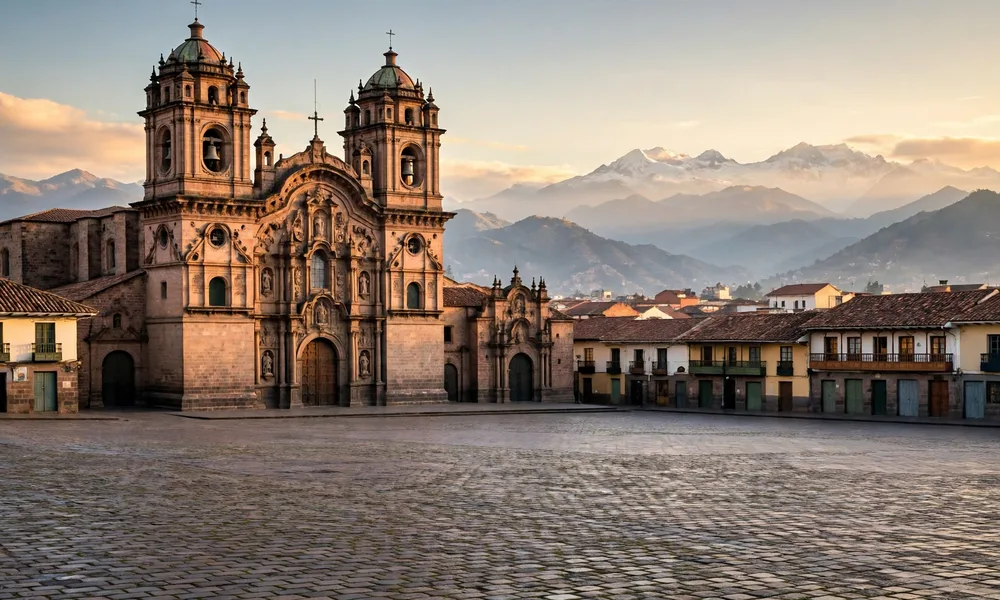
The longest leg of the tour is Peru, where the pope will spend six days, from November 11 to 17. The stops are Lima, the capital; Chiclayo, the northern city where he was bishop; Cuzco, the ancient Inca capital in the Andes; and Pucallpa, a city in the Amazon region. Peru is not just another country on the itinerary. It is the place where Leo spent 20 years of his life, and Peruvians see him as a native son.
His story in Peru began in 1985, when he first arrived as an Augustinian missionary priest. He stayed for two decades, learning the country and its people. Later, from 2015 to 2023, he served as bishop of Chiclayo. His return to Chiclayo will be one of the most emotional moments of the trip.
On November 11, the day he arrives in Peru, he meets the new Peruvian president, Keiko Fujimori, in Lima. On November 14, he takes a helicopter flight to Santa Cruz de Succhabamba, a town in the Andes. The next day, November 15, he visits the Inca site of Saqsaywaman near Cuzco. Cuzco sits about 3,500 metres above sea level, and the thin air at that height will be a real physical challenge for a man still recovering from lung surgery.
He also makes a foray into the Amazon, visiting Pucallpa. A visit there carries a message about care for creation and for the communities who live there. For Peruvians, this leg is the one that matters most. They watched one of their own become pope, and now he is coming home. When he returns to Rome on the morning of November 17, the Peru days are the ones people will remember longest.
Frequently Asked Questions
When did Pope Leo XIV leave for South America?
He departed Rome Fiumicino Airport at 7:05 a.m. Rome time on Friday, November 6, 2026, on a chartered ITA Airways plane. The flight to Montevideo, Uruguay, took 13 hours and 30 minutes, and he was due to arrive at 4:30 p.m. local time.
Which countries is the pope visiting, and for how long?
The trip runs from November 6 to 17, 2026. He spends November 6 to 8 in Uruguay, November 8 to 11 in Argentina, and November 11 to 17 in Peru. Peru is the longest leg, at six days. He returns to Rome on the morning of November 17.
Why is this trip significant for his health?
On October 13, he had surgery to remove the lower lobe of his right lung for localized lung adenocarcinoma. Vatican doctors cleared him to travel on October 26, and spokesman Matteo Bruni said on November 3 that he is in good health, with no special medical arrangements needed and the schedule unchanged. The trip comes just 24 days after the surgery.
Why does Peru matter so much to Pope Leo XIV?
He first arrived in Peru as an Augustinian missionary priest in 1985 and spent 20 years there. From 2015 to 2023, he was bishop of Chiclayo. Peruvians see him as a native son, and his return to Chiclayo, Cuzco, and the Amazon is the most personal part of the tour.
Sources
The facts in this article come from the following reports:
- Catholic Sun: Pope Leo XIV Departs for 12-Day Tour of South America
- Le Monde: In Peru, Leo XIV Seen as a Native Son
- Herald Malaysia: Vatican Presents Pope Leo Apostolic Journey to Latin America
For related reading on the pope recent public life, see our report on Bob Dylan meeting Pope Leo XIV at the Vatican in a private audience. Readers who want a simple guide to a Catholic Latin term can also read our guide to the meaning and history of Incfidelibus.
Final Thoughts
Pope Leo XIV left Rome on November 6 for a journey that is long, demanding, and deeply personal. In 12 days he will cross three countries, visit 10 cities, and speak to crowds in Spanish at Masses, vigils, and cathedrals across South America. He will do it all less than a month after lung surgery. Uruguay will test his message in a secular land. Argentina will welcome him to the homeland of his predecessor. Peru will welcome him home. When he lands back in Rome on the morning of November 17, the world will know whether this bold trip was also a wise one, and the people of South America will have memories that last far longer than 12 days.