Florida Learjet Crash: NTSB Finds Tail Pieces Miles Away as Investigation Deepens
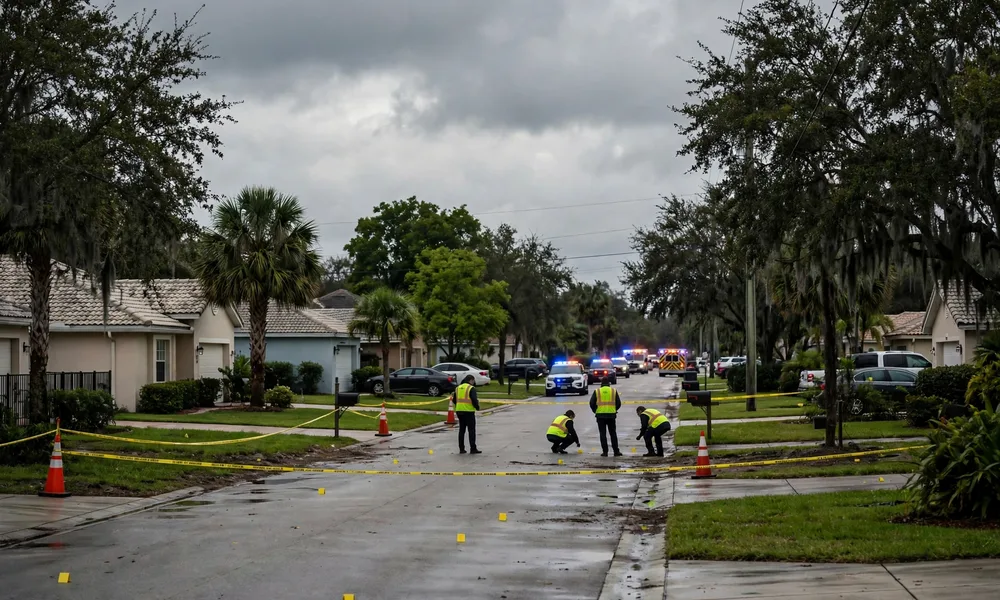
A small business jet that was headed from Texas to the Bahamas crashed into a residential area in South Florida on November 1, 2026, killing all nine people on board. In the days since, federal investigators have shared a striking early finding: major pieces of the aircraft tail were found miles away from the main crash site, which suggests the jet may have started breaking apart while it was still in the air.
The National Transportation Safety Board, known as the NTSB, has stressed that the cause of the crash is still unknown. Investigators are looking at weather, icing, and possible mechanical problems, and they have warned that a full investigation will take time. For the families of the victims and for residents of the neighborhood where the plane came down, the wait for answers is only beginning.
| Quick Facts | Details |
|---|---|
| Date and time | November 1, 2026, about 12:50 pm ET |
| Location | Near Military Trail and 10th Avenue North, Greenacres, Palm Beach County, Florida |
| Aircraft | Learjet 60 |
| Route | Austin-Bergstrom, Texas to North Eleuthera, Bahamas |
| People on board | Nine, all killed |
| People injured on the ground | One person with a leg injury |
| Key early finding | Majority of left tail elevator found in three pieces 1.3 to 3.8 miles from the crash site |
| Investigator | National Transportation Safety Board (NTSB) |
What Happened in Greenacres
The Learjet 60 went down in Greenacres, a community in Palm Beach County, in an area that includes mobile homes and other residences. The crash happened around lunchtime on a Sunday, and it quickly drew a large emergency response. Fire crews, sheriff’s deputies, and federal investigators arrived at a scene where wreckage was spread across the neighborhood.
Officials said about 600 people who live near the crash site were temporarily displaced while crews made the area safe and investigators began their work. For many residents, the crash turned an ordinary weekend afternoon into a frightening and sad day. Some homes were damaged, and the community was left dealing with road closures, emergency vehicles, and the shock of a fatal crash so close to home.
One person on the ground suffered a leg injury, according to officials. No other ground injuries were reported in the early briefings, though investigators and local authorities continued to check homes and properties around the site in the days that followed.
The Flight’s Final Minutes
The jet had taken off from Austin-Bergstrom International Airport in Texas and was bound for North Eleuthera in the Bahamas, a trip that would normally cross the Gulf of Mexico and then head toward the island chain. The flight reached a cruising altitude of about 35,000 feet before something went badly wrong.
According to information shared by investigators and flight tracking data, the pilots reported ice and turbulence during the flight. They then made a distress call, repeating the word mayday twice. Shortly after that, the aircraft plunged roughly 27,000 feet in about one minute. At one point, tracking data showed a descent rate of more than 32,000 feet per minute, an extremely steep and rapid fall.
That kind of descent leaves very little time for a crew to recover, and it helps explain why investigators are treating the breakup question so seriously. A plane that falls that fast may have suffered a major structural failure, a severe weather encounter, or a combination of factors. The NTSB has not said which of those possibilities applies here, and it has cautioned against jumping to conclusions.
What Investigators Found Miles From the Crash Site
NTSB board member Tom Chapman briefed reporters on November 2 and again on November 3, and his updates gave the public the clearest picture yet of the early evidence. Chapman said the aircraft likely started breaking apart in midair. The most important clue so far is the tail: the majority of the left elevator, a key control surface on the tail that helps a pilot control pitch, was found in three pieces between 1.3 and 3.8 miles from the main crash site.
When heavy parts of an airplane are found far from where the rest of the wreckage lands, investigators pay close attention. It can mean that those parts separated from the aircraft before impact, rather than breaking off when the plane hit the ground. That distinction matters a great deal, because it points investigators toward what happened in the air in the final minute of flight.
Chapman also noted that investigators are examining weather and icing conditions, along with mechanical factors. The pilots had reported ice and turbulence, so icing is one of the lines of inquiry, but the NTSB has not called it a cause. Icing can affect how a plane flies, especially on smaller jets, but only a detailed examination of the wreckage, flight data, and weather records can show what role, if any, it played here.
Investigators will also look at the aircraft’s maintenance history, its flight recorders if they are recovered and readable, radar and air traffic control recordings, and weather data from the time of the flight. Each piece of evidence has to be checked against the others before the agency can say what happened with confidence.
The People on Board
Families have publicly identified the nine people who died in the crash. They were tech entrepreneur Adam Robinson and Helen Sharp and their two young children, nanny Anita Maria Cetina, Rachael Reed and Charmi Fehr, and pilots Jeff Gregory and Nathalia Gadelha Filgueiras. Filgueiras, 20, was the co-pilot and made the final radio transmissions during the flight.
The loss of a whole family, including young children, has made this crash especially heartbreaking for those following the story. Out of respect for the families, this article will not dwell on their private lives. What matters most is that nine lives were lost, and that their loved ones are now grieving while also waiting for answers from the investigation.
The operator of the flight has been reported as Aurora Airlines doing business as Upper Jets. Investigators will review the operator’s records as part of their normal process, along with the aircraft’s history and the crew’s qualifications.
A Community Left to Recover
For residents of Greenacres, the crash is not only a national news story but a local trauma. Hundreds of people were moved out of their homes temporarily, and the neighborhood became the center of a major federal investigation. Local officials worked with federal teams to keep residents informed and to make sure damaged properties were checked.
Crashes in residential areas raise difficult questions for communities. People want to know how a plane ended up in their neighborhood, whether their homes are safe, and when life can return to normal. Investigators typically secure a crash site for days while they document wreckage, and that process can be disruptive even as it is necessary for finding the truth.
Local leaders and neighbors have also faced the emotional side of the event. A crash that kills nine people, including children, leaves a mark on a community long after the wreckage is cleared. Support for affected families and residents often continues quietly after the cameras leave.
Why This Crash Stands Out in 2026
Officials have noted that this is the second deadliest aviation accident in the United States in 2026, after a skydiving plane crash in Missouri in June that killed 12 people. It is also reported to be the deadliest accident involving a Learjet 60, a popular business jet model that has been in service for many years.
That context does not explain the cause, but it does explain why the investigation is drawing close attention from aviation watchers. Business jets fly thousands of trips every year, and when one crashes with no survivors, regulators, operators, and pilots all want to know whether there is a lesson that could prevent another tragedy.
The NTSB’s job is to find those lessons. Its final reports often include safety recommendations that can lead to changes in training, maintenance, or aircraft design. But those recommendations come only after months of careful work, not in the first days after a crash.
What Happens Next in the Investigation
The NTSB has said the investigation will take time, and that is normal for a crash of this complexity. In the coming weeks, investigators will continue to map the wreckage field, including the tail pieces found miles away, and to analyze any data they can recover. A preliminary report is usually released within a few weeks, but it will describe facts found so far rather than a final cause.
A final report, with a probable cause and any safety recommendations, can take a year or more. That timeline can feel frustrating to families and to the public, but investigators say rushing to a conclusion risks getting it wrong. Every theory has to be tested against the physical evidence.
For now, the most important confirmed facts are these: the jet crashed after a distress call and a rapid descent, tail pieces were found far from the main site, and nine people died. Everything else remains under examination, and the NTSB has asked the public to wait for verified findings rather than speculation.
Frequently Asked Questions
Where did the Florida Learjet crash happen?
The crash happened near Military Trail and 10th Avenue North in Greenacres, Palm Beach County, Florida, in a residential and mobile home area. The jet had been flying from Austin, Texas to North Eleuthera in the Bahamas.
How many people died in the crash?
All nine people on board died. They included two pilots, members of a family traveling together, and others traveling with them. One person on the ground suffered a leg injury, and about 600 nearby residents were temporarily displaced.
Why are tail pieces found miles away so important?
Investigators found the majority of the left tail elevator in three pieces 1.3 to 3.8 miles from the main crash site. That pattern suggests the aircraft may have started breaking apart in midair, which is a key clue about what happened during the final minute of flight. The NTSB has not yet determined the cause.
What caused the crash?
The cause is still unknown. The NTSB is examining weather and icing conditions, possible mechanical factors, and the aircraft’s final descent. Pilots reported ice and turbulence and made a mayday call before the jet plunged about 27,000 feet in about one minute. A final determination will take much longer.
Final Thoughts
The Florida Learjet crash is a tragedy that has left nine families grieving and a Florida neighborhood shaken. The early finding about tail pieces found miles away gives investigators an important lead, but it is not yet an answer. Weather, icing, and mechanical questions all remain open, and the NTSB has been clear that speculation will not help.
As the investigation continues, the focus should stay on the facts as they are verified and on respect for the people who died. Their families deserve both answers and privacy, and the community of Greenacres deserves a careful, honest account of what happened. That account will come piece by piece, as investigators do their work.
Read more on The Akron Magazine. For official investigation updates, see the National Transportation Safety Board.