What Is UVLack? A Simple Guide to This Popular Protective Coating
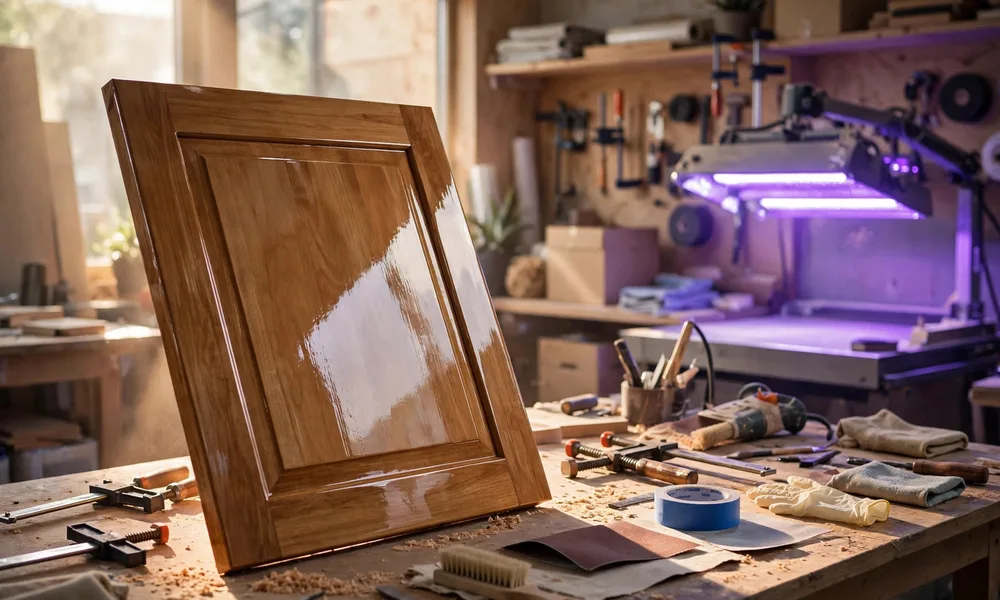
If you have read about printing, packaging, or furniture finishes, you may have met the word UVLack and wondered what it means. In simple terms, UVLack is a lacquer or varnish that hardens under ultraviolet light. Instead of waiting for a coating to dry in the air, makers shine UV light on it, and it sets hard in seconds.
This guide explains UVLack in plain language: what the name means, how the curing process works, where the coating is used, and what it does well. It also makes one honest point early. UVLack is best understood as a general type of coating, not as one single confirmed brand, so claims about one fixed formula, one inventor, or one set of prices should be treated with care.
Quick Facts
| Type | UV curable lacquer or varnish |
|---|---|
| Name origin | UV, for ultraviolet, plus Lack, the German word for lacquer or varnish |
| How it hardens | UV light triggers a chemical reaction that turns the liquid coating into a solid film |
| Curing time | Seconds under the right UV light, in typical industrial use |
| Common finishes | High gloss, matte, soft touch, and textured or raised effects |
| Common uses | Printing and packaging, furniture and wood, electronics, and vehicle interiors |
| Full or spot use | Can cover a whole surface or only chosen areas, known as spot varnish |
| Single brand? | No single maker or standard formula is confirmed; treat it as a coating type |
What The Name Means
The name UVLack is easier to understand once you split it in two. UV stands for ultraviolet, the part of the light spectrum used to set the coating. Lack is the German word for lacquer or varnish. Put together, the word simply means ultraviolet lacquer: a finish that is cured by UV light. In English language sources the same idea appears under names such as UV coating, UV varnish, and UV cured lacquer.
This matters because readers sometimes search for UVLack as if it were one product made by one company, with one data sheet. The research for this guide did not confirm that. Different makers produce UV curable lacquers with different recipes, aimed at paper, wood, plastic, or metal. They share the same basic method, light curing, but their strength, flexibility, gloss level, and chemical resistance can differ from one product to the next. If a seller uses the name UVLack, the useful question is not what the name promises, but what their specific coating is made for and how it was tested.
There is one more source of confusion worth clearing up. A few websites use similar names for completely different products, including skin care items that claim sun protection. No standard industry source confirms that those products are the same thing as UV cured lacquer, and the two ideas should not be mixed. In printing, coatings, and manufacturing, UVLack means a light cured surface finish, and that is the subject of this guide.
How UV Curing Works, Step By Step
The process has three simple stages. First, the liquid coating is applied to the surface. Depending on the job, it can be sprayed, rolled, or printed onto paper, board, wood, plastic, or another material. At this stage it is still a liquid layer, so it can be spread thinly and evenly, or placed only where the design needs it.
Second, the coated item passes under a UV light source, often a lamp built into the production line. Inside the coating are special ingredients called photoinitiators. When ultraviolet energy reaches them, they start a chemical reaction. The liquid molecules link together in a process called polymerization, forming a tight network known as cross linking. That network is what turns a wet layer into a hard, solid film.
Third, the item comes out cured and ready to handle. The whole reaction normally takes seconds, not hours. That speed is the heart of the technology. A traditional lacquer often dries because solvents leave it slowly in the air, or because heat is applied over time. A UV coating does not wait for evaporation. The light itself switches the reaction on, so pieces can be stacked, packed, cut, or moved to the next stage almost at once, with far less risk of smudging or dust settling into a wet surface.
The catch is that curing needs the light to reach the coating properly. Very thick layers, deep colours, or shaded areas can be harder to cure evenly, and the surface underneath still has to be prepared well so the coating can grip it. UV curing is fast, but it is not magic, and good results depend on the right coating, the right lamp, and the right material working together.
Spot Coating And Full Surface Coating
In the printing world, UVLack is used in two main ways, and knowing the difference explains most of the glossy packages and book covers you have ever picked up. The first way is full surface coating. The whole printed sheet is covered, giving it one even finish. A gloss coat can make colours look deeper and stronger, and it adds a protective skin over the ink. A matte coat gives a softer, calmer look while still protecting the page.
The second way is spot varnish, also called partial UV coating. Here the lacquer is applied only to chosen parts of the design: a logo, a product name, a photograph, or a pattern. The rest of the surface is left matte or uncoated. The contrast is the point. A glossy logo on a matte box catches the light when you tilt it, and your fingers can feel the slight raised edge. Designers use that effect on book covers, business cards, brochures, gift boxes, and premium packaging because it guides the eye to what matters most.
Spot coating needs accuracy. Printers prepare a mask or a separate plate that shows exactly where the varnish should go, so the glossy area lines up with the printed image beneath it. When it is done well, the effect looks simple and expensive at the same time. When the alignment slips, it is easy to spot, which is why spot UV work is usually handled by experienced print finishers rather than as a casual extra.
Where UVLack Is Used
Printing and packaging is the most visible home of UV cured lacquer. Magazine and book covers, labels, brochures, and boxes use it to protect ink from scuffs and handling while giving the product a richer finish. In a shop, that finish is often the quiet difference between a package that feels plain and one that feels premium.
Furniture and wood finishing is another major use. Table tops, cabinet doors, and flooring panels can be coated on fast production lines, cured at once, and moved on without long drying racks filling the factory. The hard film helps the wood surface resist scratches and everyday wear, which matters most on pieces that hands, cups, and keys touch every day.
Beyond those two areas, secondary industry sources describe UV cured coatings on consumer electronics, such as phone and laptop housings and remote controls, on the plastic parts inside cars, such as dashboards and control panels, and on home appliances. In each case the reasons repeat: a smooth finish, better resistance to scratches and cleaning chemicals, and a surface that keeps its colour and shine for longer. The exact product used in each industry is a specialist coating made for that material, not one all purpose liquid, so treat broad claims about any single UVLack product doing all of these jobs as unconfirmed.
Benefits, Limits, And Honest Unknowns
The benefits are easy to list because they follow from the method. Speed comes first: curing in seconds keeps production moving. Hardness follows: the cross linked film is known for strong scratch and abrasion resistance, and for standing up to moisture and many cleaning chemicals better than a simple air dried varnish. The finish is flexible in style, from mirror gloss to soft matte. Many UV coatings are also described as low in volatile organic compounds compared with older solvent based lacquers, because they do not rely on large amounts of solvent evaporating into the air. That last point depends on the exact formula, so it is fair to call UV curing a lower solvent route in general, not a promise that every product is free of concerns. Uncured coating is still an industrial chemical and must be handled with proper care and equipment.
The limits deserve equal space. A UV line needs lamps, controlled conditions, and trained handling, so the setup suits factories and print plants far more than a small home workshop. The coating bonds well to many materials but not equally to all, and a poor match can peel or crack. Repairs can be harder than with traditional finishes, because a cured film is tough to blend invisibly. And because UVLack is a type rather than one standard product, quality varies. Two coatings with similar names can perform very differently.
If you are choosing a coated product or a finishing service, a few questions cut through the marketing. What material is the coating made for? What finish and thickness will be used? How was scratch and chemical resistance tested? And can the maker share a data sheet for the exact product, not just the family name? A serious supplier can answer all four. A vague answer is useful information too: it tells you the name is doing the selling, not the evidence.
FAQs
Is UVLack a brand name?
It is best treated as a general name for UV cured lacquer, built from UV and the German word Lack, meaning lacquer. This research did not confirm one single maker, one standard formula, or one official product history behind the name, although individual companies may sell their own UV coatings under similar names.
How is UVLack different from normal lacquer?
Normal lacquer usually dries slowly as solvents leave it in the air, which can take hours. UVLack hardens when ultraviolet light triggers a reaction inside it, turning it into a solid, cross linked film within seconds. That speed changes how factories and printers can work.
Is UV coating the same as spot UV?
They are closely related. UV coating can cover a whole surface, while spot UV is the same kind of coating applied only to chosen areas, such as a logo on a matte box, to create contrast in shine and touch.
Is UVLack safe and eco friendly?
Many UV coatings are lower in solvent emissions than traditional lacquers, and the cured film is a hard, stable surface in normal use. But formulas differ, and uncured coating is an industrial material that needs proper handling. Check the data sheet of the exact product rather than relying on general claims.
You may also read: Murphy Claire Levesque: Everything to Know About Stephanie McMahon’s Daughter
Final Thoughts
UVLack is a simple idea with a big effect: a lacquer that turns hard the moment ultraviolet light hits it. That change makes printing faster, packaging tougher, and furniture finishes harder wearing. Remember what the name is and is not. It describes a family of light cured coatings, not one miracle product. Judge any coating by its data sheet, its fit for the material, and its test results.


