What Is Turaska? Exploring Its History, Culture, and Forgotten Roots
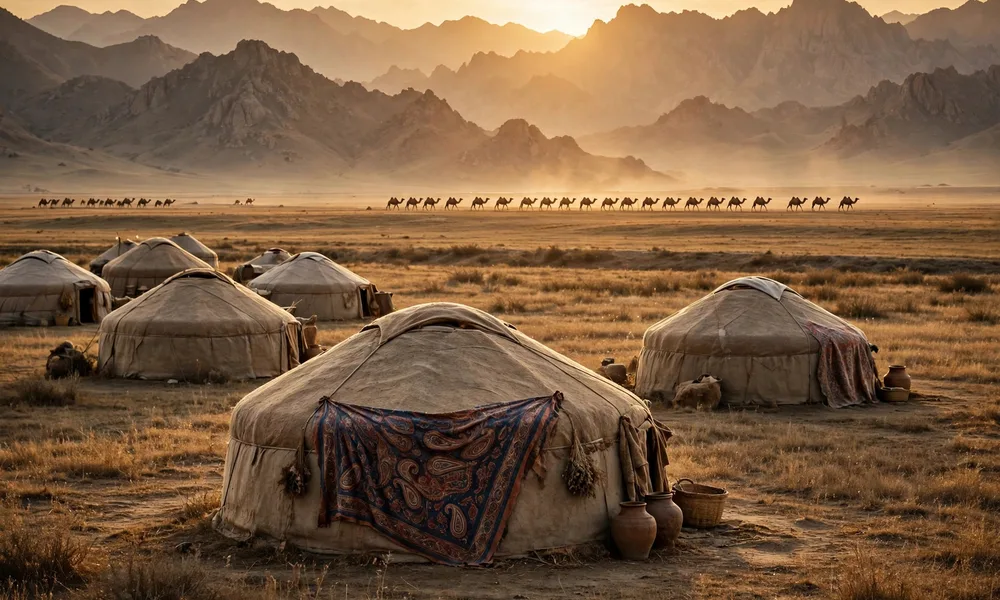
Some words carry a whole map inside them. Turaska is one of those words. It appears in old discussions about Sanskrit writing, Central Asia, and the foreign peoples who entered South Asian history through trade, travel, and rule. Readers meet the word online and often wonder if it is a place, a tribe, a language, or a country.
The honest answer is that turaska was never just one simple thing. It was a broad label, and its meaning changed with time, place, and the writer who used it. This article explains what historians and language writers say about the term, where its roots may lie, and why its story is really a story of cultures meeting, mixing, and changing each other.
Quick Facts
| Topic | Details |
|---|---|
| Word | Turaska, also written as Turushka and Turuska in different sources |
| Language roots | Linked to Sanskrit forms used in the Indian subcontinent |
| General meaning | A broad label for foreign groups, often linked to Central Asia |
| Common link | Often connected in texts with Turkic peoples and northern groups |
| Where it appears | Epics, Puranic writing, inscriptions, and medieval literature |
| Key regions | South Asia and Central Asia, linked by trade and migration |
| Important note | It does not always mean one tribe, one nation, or modern Turkey |
What Does Turaska Mean?
In simple words, turaska was a name that writers in South Asia used for people who came from outside their own known world. In many contexts, those people were linked to Central Asia and to Turkic speaking groups. In other contexts, the word was wider and could mean foreign rulers, northern warriors, or any powerful group whose language, dress, and customs felt different to the writer.
This kind of broad label was common in the ancient world. Writers did not have modern maps, census records, or exact ethnic science. They grouped distant peoples under one familiar name, even when those peoples were not the same as each other. That is why a modern reader should not look for one perfect definition. The meaning of turaska depends on the age of the text, the region it came from, and the event it describes.
It also helps to separate the word from modern Turkey. The names sound close, and both connect in a distant way to Turkic history, but turaska in old South Asian writing is not simply the name of the modern country. It could be used before that country existed in its present form, and it could cover groups living far from its borders. Reading it as a modern country name leads to many errors.
Think of turaska as a window word. When you see it in a text, it tells you less about the exact passport of a group, which did not exist then, and more about how the writer saw the world. The writer is marking a line between us and them, between the familiar home region and the powerful, mobile peoples beyond the northwestern routes.
The Sanskrit Roots and Different Spellings
Language writers trace turaska to Sanskrit forms such as Turushka and Turuska. The small changes in spelling come from transliteration, which is the work of writing sounds from one script into another. Sanskrit has sounds that do not match English letters in a perfect one to one way. One scholar may write a sound with an s, another with a sh, and a third may add a dot under a letter to show a special sound. The word looks different on the page, but the forms are connected.
Regional speech also changed the word over time. As a term traveled by mouth, by manuscript, and by translation, local speakers shaped it to fit their own tongues. Scribes copying old books by hand could also change letters, especially when a word was foreign to them in the first place. Foreign names are often the least stable words in old texts for exactly that reason.
Why did Sanskrit writers need such a word at all? Because contact was real and growing. Traders, soldiers, monks, and envoys moved between India, Persia, and Central Asia for centuries. Writers needed names for the peoples their kings fought, traded with, married into, or welcomed at court. A flexible label like turaska filled that need, even if it was not precise.
Turaska in Ancient and Medieval History
In early references, turaska type labels point to peoples beyond the familiar borders, often to the north and northwest. Those regions were not empty edges of the map. They held busy trade routes, horse cultures, and strong mobile groups whose movements could change the politics of a whole region. News of them reached South Asian courts through merchants and travelers long before armies did.
The medieval period gave the word sharper political meaning. From the eleventh century onward, Turkic and Central Asian powers entered northern India in force. Historical discussions of this age often name the Ghaznavids, who raided and later ruled parts of the northwest, and later the Delhi Sultanate, founded in the early thirteenth century by Turkic slave soldiers who became kings. To many local writers of the time, rulers like these were the turaska power in daily life, not a distant idea in a book.
Yet the story is not only one of war. New rulers needed clerks, builders, poets, and tax systems, and they often adopted local ways while bringing their own. Persian became a major language of court and administration. Local soldiers and officials served new kings. Markets sold goods from far away. Over generations, families mixed and loyalties changed. A word that began as a label for outsiders slowly attached itself to rulers who were becoming part of the land they ruled.
This is the forgotten root many short online summaries miss. Turaska is not only about invasion, even though conflict was real and often harsh. It is also about what happened after the battles, in the long peace of shared cities, shared food, shared music, and shared building styles. The label stayed in texts, but real life kept blurring the line the label was meant to draw.
Culture, Art, and Language That Grew From the Meeting
Architecture is the easiest place to see this mixing with your own eyes today. Indo Islamic building brought arches, domes, minarets, and fine geometric pattern work into South Asia. Local builders did not simply copy foreign designs. They joined them with regional stone craft, local plans, and older decorative habits. The result was a new style that belongs fully to neither side alone, and fully to the shared history of both.
Art and craft changed in the same slow way. Court painting, calligraphy, textile patterns, and metal work all absorbed ideas that traveled along the same routes as armies and merchants. A design born in one city could appear, changed and improved, in another city hundreds of miles away within a generation. When people search for the culture of turaska, this blended court and city culture is a large part of what they are really looking for.
Language may be the deepest change of all. Persian words entered daily speech in the north. Arabic words arrived through religion, law, and learning. Local languages gave as much as they took, supplying grammar, sounds, and everyday words. Over centuries, this mixing helped shape new literary languages, most famously Urdu, whose very name comes from a Turkic word for a camp or army. Few facts show the turaska story better than that. A language born in mixed camps and markets became a language of poetry and love.
Why Turaska Is Hard to Pin Down Today
Modern readers should be careful with bold claims about turaska that appear online. Some websites turn the word into a lost advanced civilization, a secret kingdom, or a single lost tribe with hidden knowledge. Those claims are not supported by the careful historical and language sources that discuss the term. In the sources that scholars actually use, turaska is a label in texts, not the name of one excavated city or one proven royal line.
There are real reasons the topic feels confusing. The sources are spread across many centuries and languages. One text may use the word for a specific enemy king and his army. Another may use it loosely for all northern foreigners. Modern ideas of nation and ethnicity do not fit neatly onto medieval words, and forcing them to fit creates false certainty. Honest writing about turaska has to leave some questions open.
That openness does not make the topic weak. It makes it more interesting. Turaska lets us watch how language handles difference. It shows how fear of outsiders, respect for their power, trade with their merchants, and life under their kings can all live inside one small word. Students of history can learn as much from how the word was used as from the events it was used to describe.
If you want to read more, start with translations of Sanskrit and Persian historical texts, museum guides to Indo Islamic art, and university work on the Delhi Sultanate and on language contact in North India. Compare how different sources use the term before accepting any one definition. With turaska, the context is not extra detail. The context is the meaning.
FAQs
Is turaska the name of a country?
No. In historical sources it is a broad label for foreign groups, often linked to Central Asia and Turkic peoples. It is not the name of one country, and it should not be read as simply meaning modern Turkey.
Why are there so many spellings like Turushka and Turuska?
The spellings come from transliteration and regional pronunciation. Sanskrit sounds can be written in English letters in more than one way, and scribes and speakers changed foreign words as they traveled. The forms are connected versions of the same term.
Was turaska always used in a negative way?
Not always, but it often marked cultural difference and could carry suspicion or hostility, especially in wartime texts. Its tone depends on the writer and the period. Later history also includes trade, service, and cultural mixing under the same broad label.
What is the best way to understand turaska today?
Read it as a historical label whose meaning changes with context. Look at who wrote the text, when they wrote it, and which group they were facing. That method gives a truer picture than any one line definition.
You may also read: Who Is Christina Daddario? All About Alexandra Daddario’s Mother
Final Thoughts
Turaska is a small word with a long shadow. Born in Sanskrit writing as a name for peoples beyond the familiar world, it followed centuries of trade, migration, war, and rule between Central Asia and South Asia. It named feared enemies and powerful kings. It also, without meaning to, recorded one of the great cultural meetings of history, the meeting that gave the region new buildings, new words, new music, and new ways of living together.
Its forgotten root is that simple human lesson. Labels for outsiders tell us who a society thought it was, and history usually proves the line was thinner than the label claimed. The peoples once written about as distant foreigners became neighbors, rulers, poets, and family. Remembering turaska honestly, with its limits and its open questions, keeps that lesson alive.


