Pyntekvister: Everything You Need to Know About This Beautiful Home Decor
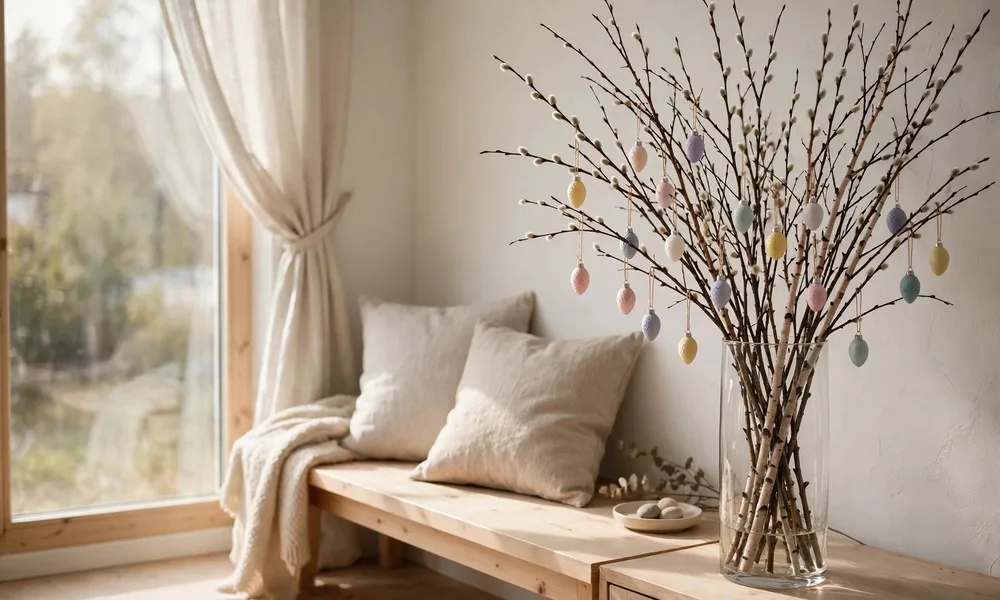
Some of the prettiest home decor is also the simplest. Pyntekvister is a Norwegian word for decorative twigs and small branches that are arranged in a vase, a wreath, or a seasonal display to bring a quiet piece of nature indoors. There is no motor, no plug, and no complicated design rule behind it.
In this guide you will learn what the word means, where the habit comes from in Scandinavian homes, which branches people use, how the display changes with the seasons, and how to make and care for your own arrangement without spending much money.
Quick Facts
| Item | Detail |
|---|---|
| Word origin | Norwegian, from pynt meaning decoration and kvister meaning twigs |
| Simple meaning | Decorative twigs or ornamental branches |
| Common branches | Birch, willow, cherry, and eucalyptus are widely used |
| Forms | Natural, dried, painted, or artificial branches |
| Best known uses | Vases, table displays, wreaths, Easter and Christmas decor |
| Style link | Scandinavian minimalism and a close connection to nature and the seasons |
What Pyntekvister Means
The word breaks into two simple parts. In Norwegian, pynt is about decoration or adornment, the small touches that make a room or an object look cared for. Kvister means twigs or small branches. Put together, pyntekvister simply means twigs used as decoration. English guides often translate it as decorative twigs or decorative branches, and both translations are fair.
The idea behind the word is just as simple as the word itself. Instead of buying a large, heavy ornament, you take a branch with an interesting shape and let the shape do the work. A curved willow stem in a plain glass vase can fill a corner of a room with height, texture, and soft shadow, and it asks for almost nothing in return.
Pyntekvister can be natural branches collected outdoors, branches that have been dried or painted for a longer life, or artificial branches made from wood, plastic, or metal for people who want the same display all year. All three forms count. What matters is the look and the feeling, not where the branch came from.
Because the word is Norwegian, most early writing about it comes from Scandinavian decor blogs and shops. As Scandinavian style has spread around the world, the word has travelled with it, which is why you now see it in English, American, and Asian home decor guides too.
Roots in Scandinavian Homes and Seasons
Scandinavian design is famous for light colours, clean lines, natural materials, and rooms that do not feel crowded. Long, dark winters are part of the reason. When daylight is short, people bring calm and nature inside the home in small, steady ways, and a vase of branches is one of the easiest ways to do that.
The link to the seasons is the heart of the tradition. In spring, budding branches are a sign that new life is coming back after winter. At Easter in Norway, willow branches are often decorated with bright coloured feathers and small eggs, a cheerful display that children in particular enjoy. The feathers turn a bare branch into a small celebration of spring.
At Christmas, branches take on a warmer role. They can carry small lights, stars, and baubles, stand in a hallway vase, or form part of a wreath on the door. Evergreen sprigs also appear in winter displays, standing for life that stays green even in the coldest months.
Different branches have picked up gentle meanings along the way in Nordic tradition. Birch is often linked with purity and new beginnings, willow with bending and adapting without breaking, and spruce with lasting life. You do not need to follow any of these meanings to enjoy the decor, but they explain why a plain branch can feel like more than a plain branch in a Scandinavian home.
Popular Types and How to Choose
Birch is a favourite starting point. Its pale bark, sometimes with dark marks, looks good against white and grey walls, and the thin twigs spread into a soft, wide shape. Birch suits the classic pale Scandinavian look better than almost any other branch.
Willow is the choice when you want movement. Willow stems bend into long curves, and curly willow in particular gives a display height and a playful spiral shape. Willow is also the traditional base for the feather decorated Easter branches described above.
Cherry and other fruit tree branches are loved in spring, because cut branches placed in water indoors can open their blossom early. A single flowering branch in a tall vase is a complete display on its own. Eucalyptus is a different kind of favourite. Its round, muted green leaves add colour and a light scent, and dried eucalyptus lasts a long time without water.
When you choose branches, look first at shape and balance. A branch should stand steadily in its vase and should not lean so hard that it tips the vase over. Check for clean, dry bark with no mould and no insects, especially on branches you collect yourself. If you buy artificial branches, look at the joins and the colour in daylight, because good artificial twigs look calm and natural while poor ones look shiny and plastic.
Size matters too. A tall floor vase in an entryway can take long branches that a small table vase cannot. A useful habit is to cut or choose branches that rise clearly above the vase, so the display has air and height instead of looking crowded at the rim.
Simple Ways to Style Them at Home
The classic display is also the easiest. Put one branch, or a small group of matching branches, in a simple vase and place it where the light falls across it. Entryways, dining tables, mantels, and quiet corners all work well. In Scandinavian style, empty space around the display is part of the beauty, so resist the urge to fill every gap.
For a table centrepiece, lay shorter twigs flat or stand them in a low, wide container, then add candles, small stones, or a few flowers. Keep the arrangement low enough that guests can see each other across the table. A branch display should start conversations, not block them.
Wreaths and wall displays are the next step. Twigs can be bent and tied into a circle, then decorated lightly with ribbon, dried flowers, or seasonal ornaments. Hung branches are also popular, with small ornaments, paper stars, or lights hanging from a branch fixed above a table or a window.
Change the display with the year instead of replacing it. Add feathers and eggs in spring, fresh green leaves or flowers in summer, warm coloured leaves and cones in autumn, and lights and small baubles in winter. The same basic branches can carry all four looks, which keeps the cost low and the waste low as well.
If you enjoy making things, you can paint branches white, black, or a soft metal colour for a stronger modern look, or leave them natural for a softer one. Just let paint dry fully before you add ornaments, and keep painted branches away from food surfaces.
Making Your Own and Caring for Them
Making a basic arrangement needs very little. Choose your branches, clean off loose dirt, and let collected branches dry fully if they are damp. Trim the ends and any sharp or broken pieces with pruning shears or strong scissors, then arrange the branches in the vase a few at a time until the shape feels balanced. Add ornaments, ribbon, or lights last, and step back often to judge the whole display rather than one twig.
Only collect branches where you are allowed to do so, and take fallen or pruned wood where you can instead of cutting living trees. A small amount taken with care is the spirit of this tradition. Nature is the supplier here, and treating it well is part of the decor.
Care is light. Dust branches gently with a dry cloth or a soft brush. Keep dried displays away from strong direct sun, which fades colour, and away from damp rooms, which can cause mould. Fresh flowering branches in water need the water changed every few days, like any cut flowers. Artificial branches only need dusting and an occasional check of bent stems.
With that small amount of care, a natural dried display can last a season or far longer, and an artificial one can last for years. When a natural display finally ends its life, the branches can go back outside to a garden or a compost pile, which is one more reason this simple decor fits so well with low waste living.
FAQs
What does pyntekvister mean in English?
It means decorative twigs or ornamental branches. The Norwegian word joins pynt, meaning decoration, with kvister, meaning twigs. The branches are arranged in vases, wreaths, and seasonal displays.
Are pyntekvister real branches or artificial ones?
Both. Many people use natural birch, willow, cherry, or eucalyptus branches, fresh or dried. Others use artificial branches made to look natural, which last longer and need no water. The style works with either choice.
When are pyntekvister used most?
They are used all year, but they are most visible at Easter and Christmas in Norway and other Nordic countries. Easter branches often carry bright feathers and eggs, while winter branches carry lights and small ornaments.
Do I need to spend a lot to try this style?
No. A collected or low cost branch in a vase you already own is enough to start. The look depends on shape, space, and light, not on price, which is exactly why the tradition has lasted so long.
You may also read: What Is Merfez? The Simple Meaning Everyone Wants to Know
Final Thoughts
Pyntekvister shows how much beauty a very small thing can bring into a home. A few twigs, chosen with care and given space and light, can mark a season, soften a room, and keep a daily link with the natural world outside the window.
Start with one vase and one branch you like the shape of. Change its decorations as the seasons turn, and notice how the room feels. That quiet experiment is the whole idea, and it is open to every home, on almost any budget.


