New Zealand still does not have a winner: the New Zealand election deadlocked with about 60 percent of the vote counted on election night, Saturday, November 7, 2026. National has edged back ahead of Labour in the party vote, but only just. National sits on 29.4 percent and Labour on 29.3 percent, a gap of one tenth of a point. The two parties have swapped places at the top through the evening, and neither side can claim victory yet.
The seat projection from the Electoral Commission tells the same story. The governing parties, National plus ACT plus NZ First, are projected to hold 67 seats. The opposition bloc, Labour plus the Greens plus Te Pati Maori plus the Opportunity Party, is projected to hold 63 seats. Parliament will grow to 131 seats because of overhangs, so 66 seats are needed to govern. More than 172,000 special votes are not in the election night count, and official results are not due until Friday, November 27.
Table of Contents
Quick Facts
| Detail | What We Know |
|---|---|
| Election day | Saturday, November 7, 2026, polls closed at 7pm local time |
| Counted so far | About 60 percent of the vote on election night |
| National party vote | 29.4 percent |
| Labour party vote | 29.3 percent |
| Greens party vote | 13.7 percent, a record for the party |
| ACT party vote | 10.9 percent, a record for the party |
| NZ First party vote | 9.35 percent |
| Opportunity Party vote | About 5.4 to 5.6 percent, above the threshold |
| Projected seats | Governing bloc 67, opposition bloc 63 |
| Seats needed to govern | 66 of 131 seats |
| Special votes | More than 172,000, not counted on the night |
| Advance votes | Nearly 1.67 million voted early |
| Official results | Due Friday, November 27, 2026 |
| Final pre-election poll | Labour 30.7 percent, National 26.4 percent |
| Main campaign issue | The cost of living and the economy |
New Zealand Election Deadlocked: How the Lead Swapped Hands All Night
This has been a night of lead changes. When the first results came in, with 5.7 percent counted, National was in front on 31.58 percent against 28.37 percent for Labour. That early picture looked comfortable for the governing party, but it did not last. Our report on the early results covered that first National lead.
As more votes were counted, Labour closed the gap and moved ahead. By about 40 percent counted, Labour led on 29.88 percent against 29.35 percent for National, a gap of roughly 8,000 votes. Our report on Labour moving ahead at the 40 percent mark set out that moment in full. At that stage the governing coalition was projected to hold exactly 66 of 131 seats.
Now, at about 60 percent counted, National has moved back in front by the narrowest of margins, one tenth of a percentage point, far too small to call a trend. The lead has changed hands three times already, and with 40 percent of the vote still to come plus the special votes, it could change again. The honest description of the race is the one the numbers keep giving: too close to call.
What the Seat Numbers Mean
The party vote tells only part of the story. Under New Zealand’s system, the party vote decides how many seats each party gets, but seats won in local electorates can push the total higher. That is what is happening here. National is leading in enough local electorates to create extra seats, known as overhangs, and that is why Parliament will grow to 131 seats instead of the usual 120. With 131 seats in play, a party or bloc needs 66 seats to hold a majority.
On the current projection, the governing bloc of National, ACT and NZ First would hold 67 seats. That is a working majority, but only by one seat. A single seat majority is the thinnest kind of win. It leaves no room for a by-election loss or a defection, and it means every partner in the coalition matters.
The opposition bloc, Labour plus the Greens plus Te Pati Maori plus the Opportunity Party, is projected to hold 63 seats, three short of the 66 needed to govern. There is also a real chance the final numbers land on a hung Parliament, where neither bloc reaches 66 seats. If that happens, New Zealand would face days or weeks of talks before a government could be formed.
Record Nights for the Smaller Parties
While the two big parties fight over a tenth of a point, the smaller parties are having a remarkable night. The Greens are on 13.7 percent, a record result that would give them their largest ever share of seats and a central role in any opposition bloc. ACT is also on a record result, at 10.9 percent, a strong showing that would confirm it as a major force rather than a small coalition partner.
NZ First is on 9.35 percent, a solid result that keeps it firmly in the governing bloc and in its familiar role of holding the balance of power. The Opportunity Party is on about 5.4 to 5.6 percent, above the five percent threshold a party needs to enter Parliament. It looks set to enter Parliament for the first time. Voters are giving real support to smaller parties across the spectrum, and that makes forming a government harder.
Two Senior Ministers Set to Lose Their Seats
One of the clearest stories of the night is the fate of two senior ministers. Finance Minister Nicola Willis and Defence Minister Paul Goldsmith have all but conceded their seats. For a government fighting for survival, losing the Finance Minister is a heavy blow. Willis has been the public face of the government’s economic policy, and the campaign centred on the cost of living and the economy, so her defeat would carry a message beyond one seat.
Goldsmith is also a senior figure, and his expected loss adds to the sense that voters have punished the government in individual seats. A minister who loses an electorate seat can still return on the party list, but losing a seat held as a minister is a personal defeat.
How New Zealand Votes, in Plain Words
New Zealand uses a system called MMP, which stands for mixed-member proportional representation. Every voter gets two votes: one for a local candidate, and one for a political party. The party vote decides how many seats each party gets overall. If a party wins 30 percent of the party vote, it should end up with about 30 percent of the seats.
Two wrinkles matter tonight. The first is the five percent threshold: a party needs at least five percent of the party vote, or one electorate seat, to get into Parliament at all. The second is the overhang: if a party wins more local seats than its party vote entitles it to, it keeps those extra seats, and Parliament grows to fit them. That is what has happened this time, pushing Parliament from 120 seats up to 131, which is why the target is 66 instead of 61.
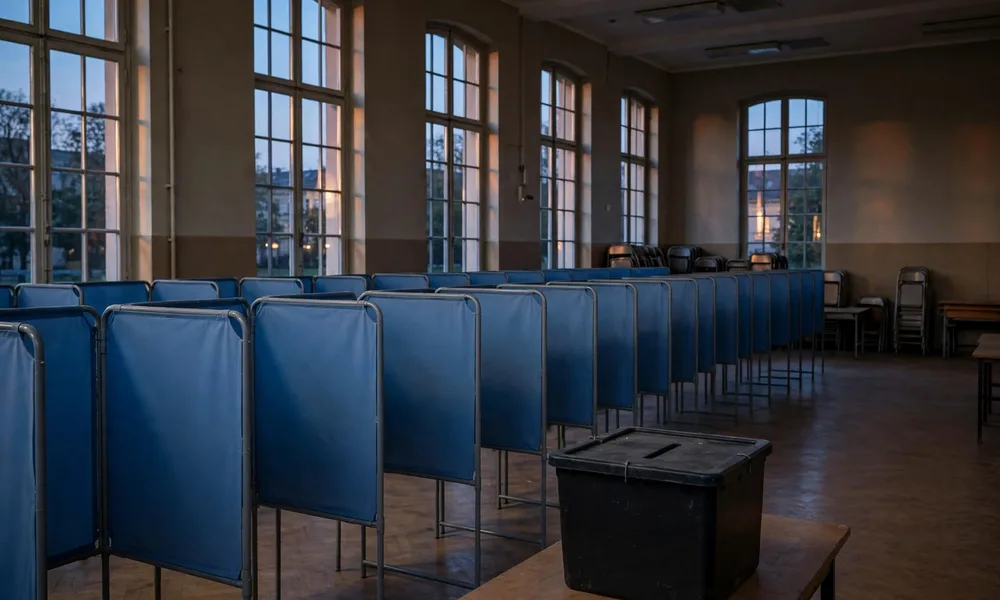
Special votes, from people voting outside their own electorate, people who enrol and vote on the same day, and voters overseas, are not counted on election night. More than 172,000 were cast, and they have a record of leaning more to the left, so in a race this close they could change the outcome.
What Happens Next
Nothing is decided. The count will keep moving through the night, and the final election night figures will still not be the final answer. The official count, which includes the special votes and a careful check of every ballot, is due on Friday, November 27.
If the current projection holds, National would try to form a government with ACT and NZ First, holding 67 seats against 63 for the opposition. That would be a second term, but with a one seat majority, so every vote would matter and any absence could defeat a bill. If the special votes shift the numbers, the governing bloc could gain room, or slip below 66 seats. If neither bloc reaches 66, New Zealand would be in hung Parliament territory, and the parties would have to talk.
There is also the wider picture. While New Zealand waited for its count, the Justice Department in the United States dropped its lawsuit over California ballots, a case already rejected at every level of the courts. Our report on the Justice Department dropping the California ballot lawsuit covers that story in full. For now, the people to watch are the election officials counting the remaining votes, and the party leaders waiting for the numbers to settle. The leaders have not claimed victory, and they are right not to.
Frequently Asked Questions
Who is winning the New Zealand election?
Nobody has won yet. With about 60 percent counted, National leads Labour by one tenth of a point, 29.4 percent to 29.3 percent. The governing bloc is projected to hold 67 of 131 seats, but more than 172,000 special votes are still to come. The result is too close to call.
How many seats does a party need to govern in New Zealand?
It needs 66 seats in this Parliament, because overhangs have pushed the total to 131 seats. The governing bloc is currently projected to hold 67 seats, just one above the line. The opposition bloc is projected to hold 63 seats.
What are special votes, and why do they matter?
Special votes are cast by people voting outside their own electorate, people who enrol and vote on the same day, and voters overseas. More than 172,000 were cast and they are not counted on election night. They have often leaned more to the left, so they could shift the final result.
When will the final result be known?
The official results are due on Friday, November 27, 2026. That count will include all the special votes and a full check of the ballots. Until then, the shape of the next government is not settled, and if neither bloc reaches 66 seats, weeks of talks could follow.
Sources
- AAP: Kiwis set to decide closest NZ election in a generation
- Newswire NZ: New Zealand election night 2026, Labour, National, overhang count
- QNC News: New Zealand election too close to call as National and Labour stay locked together
Final Thoughts
This is the closest New Zealand election in a generation, and the count at 60 percent has done nothing to settle it. National is ahead by a tenth of a point, Labour is right behind, and the seat projection gives the governing bloc a one seat majority that could vanish when the special votes are counted. The smaller parties have had a record night, with the Greens and ACT both setting new highs, and the Opportunity Party looks set to enter Parliament for the first time. Two senior ministers have all but conceded their seats.
New Zealanders will have to wait. The count is not finished, the special votes are not in, and the official result is three weeks away. A race this close deserves patience, and voters deserve a result that counts every ballot. When the final numbers arrive on November 27, the country will know who governs. Until then, the only safe description is the one the numbers keep repeating: too close to call.