Levapioli: Origins, Meaning, Uses, and the Facts You Should Know
Levapioli is one of those words that looks like it should have one clear meaning, yet the internet gives it many. Search for it and you will find pages calling it a design idea, a workshop tool, a wine tool, and even a food dish. Some of those pages sound very confident. The problem is that they do not agree with each other, and none of them points to a major dictionary or an official source.
This guide takes the honest route. It explains what can actually be verified about the word levapioli, starting with the Italian words it is built from. It then looks at the meanings used online, one by one, and clearly marks which parts are solid, which parts are possible, and which parts appear to be modern internet invention. That way you get the full picture without being sold a made up history.
Quick Facts
| Item | Detail |
|---|---|
| Word | Levapioli, also written as two words, leva pioli |
| Language of the parts | Italian: leva means a lever, and pioli is the plural of piolo, a peg, pin, or rung |
| Literal sense | Something like lever for pegs, or a tool or part that lifts or removes pegs |
| Standard dictionary entry | No entry for levapioli as a common word was found in major dictionary sources checked for this guide |
| Most plausible real use | A rare or trade term for a peg pulling or levering tool, similar in shape to the Italian word levachiodi, which means nail puller |
| Modern online uses | Used loosely for pivot mechanisms, flexible design ideas, and adaptable systems, without a single agreed meaning |
| Claims to treat with care | Stories presenting levapioli as a famous food dish, a historic wine tool with a long record, or a formal design movement are not confirmed by strong sources |
Breaking the Word Into Parts
The most reliable way to understand levapioli is to break it into its two Italian parts, because those parts are real words with clear meanings. The first part, leva, means a lever. In Italian it can also connect to the verb levare, which means to lift, raise, or remove. Italian uses this root in many everyday tool words. For example, a levachiodi is a nail puller, built from leva plus chiodi, meaning nails. A levapunti removes staples. The pattern is simple: leva plus the thing being removed names the tool that removes it.
The second part, pioli, is the plural of piolo. A piolo is a peg, a pin, a stake, or one rung of a ladder. Wooden pioli have been used for centuries in furniture, ladders, scaffolding, and farm tools. So levapioli, read in the plain Italian way, would mean something like peg lever or peg remover: a tool, or a part, that lifts, loosens, or pulls out pegs. That reading follows the normal rules of the Italian language, and it is the strongest fact in this whole topic.
What cannot be confirmed is a long, rich history for this exact word. Italian has clear, common words for its famous tools. The corkscrew, for example, is cavatappi or levatappi in Italian, not levapioli. Some websites claim levapioli is the traditional Italian name for a corkscrew, but that does not match standard Italian usage, and no strong source supports it. When a word follows a language pattern but has no dictionary record, the careful conclusion is that it is rare, regional, trade specific, or partly created online. Levapioli seems to sit in that grey area.
Levapioli as a Workshop Tool
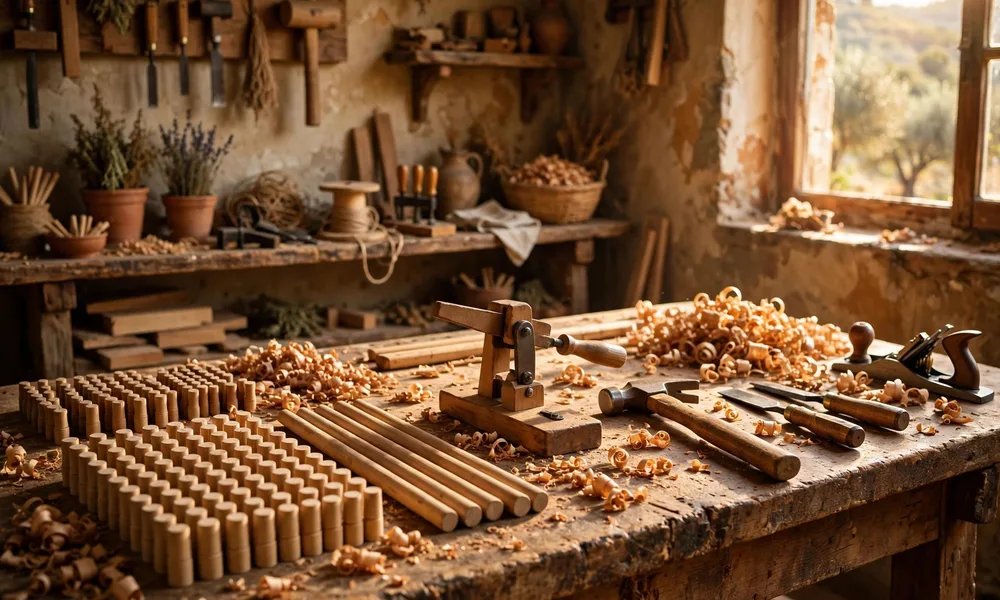
The use that fits the word best is the workshop use. Pegs hold many traditional structures together, from wooden furniture to scaffolding. Removing a tight peg without damaging the wood takes a small levering tool, and a name built from lever plus pegs describes that tool well. At least one detailed online guide describes the levapioli in exactly this way, as a specialised nail and peg pulling tool with a notched head that grips and lifts with leverage, doing cleaner work than the claw of a hammer.
Even here, honesty matters. That description is plausible, and it matches how similar tools work, but it rests on a small number of recent web pages rather than on tool catalogues, makers records, or dictionary entries. No famous maker, standard size, model history, or price can be verified for a tool of this name. So the fair summary is this: a peg pulling tool is the most believable physical meaning of levapioli, tools of this general type certainly exist, but the name itself is not well documented in the wider tool world.
In practice, if you need to remove pegs or nails today, the tools you will actually find in shops are nail pullers, pry bars, cat paws, and peg extractors sold under standard names. If a seller uses the word levapioli for such a tool, you are most likely looking at the Italian style compound name being used descriptively, rather than a distinct, famous product.
Levapioli as a Design and Ideas Word
The biggest group of online articles uses levapioli in a completely different way. In these pages it is not a tool at all. It is an idea word, used for pivot mechanisms, parts that fold or slide, modular furniture, and systems that can change shape or purpose. From there, some writers stretch it further, into a general philosophy of flexible thinking, adaptable business, and step by step progress. The ladder image inside the word helps this use: pioli are also ladder rungs, so the word can be pictured as lifting yourself rung by rung.
These articles often share a style. They speak of post war Italian factories, clever folding furniture, and a spirit of invention, but they rarely name a checkable source, a dated document, or a real product. The timelines and details change from page to page. That pattern is a warning sign. It suggests that writers have taken an attractive sounding word, guessed at its parts, and built a pleasing story around it, each in a slightly different way.
That does not make the design use worthless. Language grows in exactly this way, and a word that suggests levers, pegs, and steps can be a handy label for adaptable design. Furniture and machines really do use pivoting pegs and retractable supports. But readers should know the difference between a living metaphor and a documented tradition. As a formal design term with a recorded history, levapioli is unconfirmed. As a modern internet buzzword for flexibility and staged progress, it is genuinely in use, mostly in blog and magazine style content.
The Food and Other Confusing Claims
A third group of pages presents levapioli as a Balkan grilled meat dish, a little like the famous minced meat rolls known across the Balkans. This claim looks like a mix up. The well documented dish in that family is cevapi, with close relatives such as cevapcici, and its history and name are recorded in food writing and cookbooks. Levapioli, by contrast, has no such record as a dish name in strong culinary sources. The similar sound of the words, plus the habit of content sites copying each other, is the most likely explanation for how this food story spread.
Smaller claims appear as well. One version calls levapioli a traditional wine tool with ornate handles and a patent style history. That story appears to borrow the real history of the corkscrew, including an English patent from 1795 for an early corkscrew design, and then attach the borrowed history to this word. Borrowing a true fact about a different object does not make the claim true. It is a good example of why this topic needs care: a page can contain real dates and real materials and still be describing the wrong word.
The pattern across all these claims is the same. A rare, nice sounding word with no clear owner becomes a blank space, and content writers fill the space with whatever story fits their site, food, tools, design, or self improvement. Search engines then show all the stories side by side, which makes the word look established when it is mostly just repeated.
How to Judge Claims About Rare Words
Levapioli is a useful lesson in checking any unusual term. First, look for the word in a real dictionary of its home language. If it is missing, lower your trust in every big claim built on it. Second, break the word into parts, as this guide did, because word parts often survive even when the full word is rare. Third, ask whether the sources agree. When five pages give five different origins, at most one of them can be right, and possibly none are. Fourth, look for evidence outside content blogs: catalogues, museum records, academic books, trade journals, or official documents. A real traditional tool or dish almost always leaves that kind of trace.
Finally, watch for borrowed history. A claim that quietly takes the dates, patents, or traditions of a similar object and re-labels them is a common trick of low quality content. None of this means rare words are fake by default. Regional and trade words often live outside dictionaries for a long time. It simply means the honest answer for levapioli, today, is a short one: the word parts are real Italian, the peg lever meaning fits the language, and almost everything grander than that is unconfirmed.
FAQs
What does levapioli literally mean?
Built from Italian, it joins leva, meaning lever, with pioli, meaning pegs or rungs. The literal sense is a lever for pegs, most naturally a small tool or part used to lift or remove pegs.
Is levapioli a real Italian word?
Its parts are real Italian words combined in a normal Italian way, but the full word has no entry in the major dictionaries checked for this guide. It is best described as rare, trade specific, or largely created and spread online, rather than as a common Italian word.
Is levapioli a food dish?
There is no strong evidence that it is. The documented Balkan dish with a similar name is cevapi. Pages calling levapioli a traditional dish do not provide checkable culinary sources, so that claim should be treated as a likely mix up.
Is levapioli a famous design concept?
Not in any documented sense. Many recent blogs use it as a label for flexible, pivoting, step by step design ideas, but they do not agree on its history and cite no formal source. Treat it as a modern buzzword, not an established movement.
You may also read: Attrities: Why It Happens and How It Can Affect Your Daily Life
Final Thoughts
Levapioli shows how the internet can grow a whole forest of stories around one small, unclear word. The solid ground is narrow but real: leva and pioli are Italian words for a lever and for pegs, and together they point to a simple peg lifting tool or part. Everything beyond that, the famous dish, the historic wine tool, the grand design philosophy, remains unconfirmed and should be read with a smile and a raised eyebrow. Knowing where the facts stop is not a weakness in a guide. It is the most useful fact of all.


