Global Trader Programme: How Singapore Helps Trading Companies Save Tax
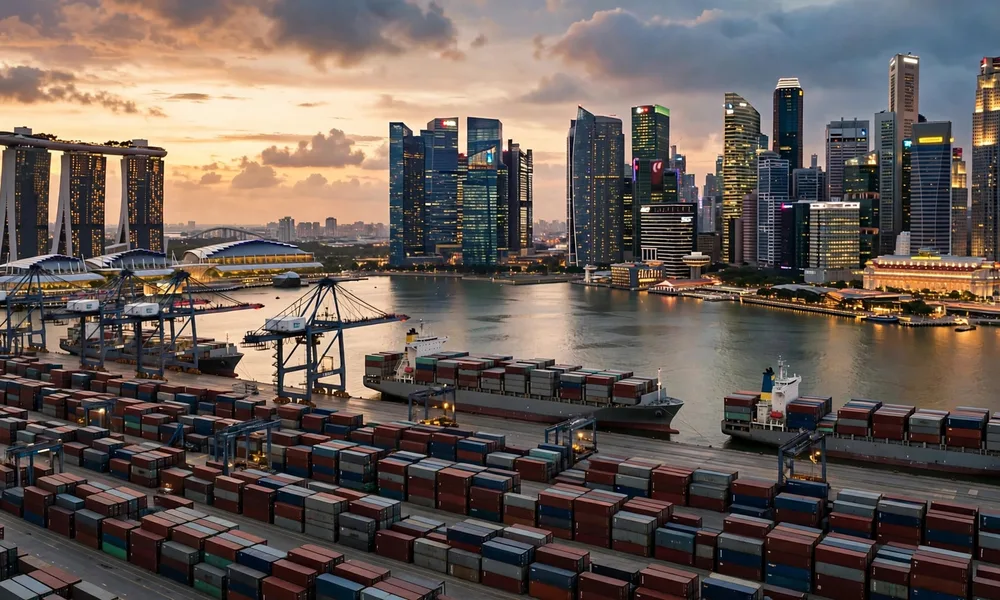
Singapore has no oil fields, no mines, and almost no farmland, yet it sits at the centre of world trade in energy, metals, and food products. One big reason is policy. Since 2001, its Global Trader Programme has offered large trading companies a much lower tax rate if they base real trading work in the city and build their teams there.
This guide explains how the programme works in simple terms, who it is built for, what income it covers, and what a company must give in return. It is general information drawn from official and professional sources, not tax advice for any one company, because each award is agreed case by case.
Quick Facts
| Item | Detail |
|---|---|
| Programme name | Global Trader Programme, often shortened to GTP |
| Launched | June 2001, replacing two earlier trader schemes from 1989 and 1990 |
| Administered by | Enterprise Singapore, the government agency for enterprise and trade |
| Standard company tax rate in Singapore | 17 percent |
| GTP concessionary rates | 5 percent, 10 percent, or 15 percent on qualifying trading income, based on the award |
| Award period | Five years, renewable, with a shorter entry period for growing firms |
| Built for | Well established international physical trading companies with a global network |
| Historic guide thresholds | About 100 million US dollars in turnover, 3 million Singapore dollars in local business spending, and at least 3 trading professionals |
What the Programme Is and Why Singapore Created It
The Global Trader Programme is a tax incentive. An approved company pays a concessionary, or reduced, rate of tax on its qualifying trading income for a set period, instead of the standard Singapore company tax rate of 17 percent. In return, the company must run real and large trading operations from Singapore, employ skilled people there, and use the country’s banks, ports, and professional services.
Singapore launched the programme in June 2001. It replaced two older schemes, the Approved Oil Trader programme from 1989 and the Approved International Trader programme from 1990, which had been built mainly to draw oil trading to Singapore. The new programme merged them and opened the idea to a much wider range of products, from metals and farm goods to electronics and consumer products.
The programme is administered by Enterprise Singapore, the statutory board formed in 2018 from the merger of International Enterprise Singapore and SPRING Singapore, under the country’s trade and industry ministry. Enterprise Singapore promotes Singapore as a trading hub, talks to firms about setting up there, and handles the programme. Tax itself is governed by Singapore law, including the Income Tax Act, which defines a global trading company as a company carrying on international trading in commodities or commodity futures.
How the Tax Saving Works
The saving is simple in shape, even if the detail of each award is complex. Qualifying trading income is taxed at the agreed concessionary rate rather than at 17 percent. Professional sources in Singapore, including EY in guidance accurate as of February 2026, describe the current rates as 5 percent, 10 percent, or 15 percent for five years, with the exact rate depending on the scale and value of what the company commits to do in Singapore.
Only qualifying income gets the low rate. The main types named across official summaries and professional guidance are income from physical trading, income from brokering physical trades, derivative trading income, and income from structured commodity finance activities. Some programme summaries also include related treasury activities and advisory work on mergers and acquisitions done as part of the trading business. Income outside the approved activities is taxed under normal rules.
The award lasts for a set term. The standard award is five years and can be renewed if the company keeps meeting its commitments and shows continued growth. Since 2003, a smaller entry route has also existed. A medium sized, fast growing international firm that wants to make Singapore its regional base can first be considered for a 10 percent rate for a non renewable three year period, then apply for the full five year renewable award once it has built its network and operations to the required level.
Who Can Apply and What They Must Commit
The programme is not for small firms or for a mailbox company with no real activity. Enterprise Singapore welcomes well established players that trade internationally on a principal basis. That phrase matters. A principal trader takes its own decisions about entering trades, holds title to goods, bears the commercial risk, manages trade flows, and uses flexibility across the supply chain to match supply with demand. A simple agent that only passes messages is not the target.
An applicant should already have a wide trading and distribution network and a good track record. It should plan to carry out real functions in Singapore, including strategic management, compliance and risk management, financial management, and logistics management. It should also make significant use of Singapore services, such as banking and finance, logistics, insurance, and arbitration. The Singapore International Arbitration Centre is a major part of that offer, and Enterprise Singapore notes that awards made in Singapore can be enforced in the many countries signed up to the New York Convention.
Historic guidance gives a sense of the scale expected. Guides based on the programme’s published criteria list a minimum annual turnover of about 100 million US dollars, minimum annual local business spending of about 3 million Singapore dollars, and at least three trading professionals in roles such as sourcing and procurement, sales and marketing, or risk management. Senior managers can count toward that team, and the professionals can be local hires or expatriates. These figures are best read as the classic guide thresholds. A current applicant must check the terms in force at the time, because Enterprise Singapore agrees commitments company by company.
The products covered are broad. Programme summaries list energy and chemicals, metals and minerals, agricultural commodities and bulk food products, petroleum and petroleum products, carbon credits, electronic and electrical products, machinery components, building and industrial products, and consumer products. The covered trade types include offshore trade, trans shipment trade, and re export trade, which reflects Singapore’s role as a place where goods may be traded, financed, and managed even when the goods themselves never sit in a Singapore warehouse.
Why Companies Choose Singapore Beyond the Tax Rate
Tax is the headline, but firms stay for the ecosystem around the tax rate. Enterprise Singapore describes a mature commodity derivatives market made up of traders, brokers, exchanges, price reporting agencies, and risk management firms. A new desk in Singapore can hire experienced people, find a broker, price a cargo, and arrange finance in the same city, often in the same district.
Location and connections help as well. Singapore sits on major shipping routes between Asia, Europe, and the Middle East. Enterprise Singapore points to more than 200 shipping lines linking the country to about 600 ports, plus air links to about 100 countries. For a trader moving physical goods, that reach shortens the distance to both where products are made and where they are used.
Trust and stability form the third leg. Singapore offers a clear legal system, strong rule of law, and a long record of political and economic stability. It also has a wide network of free trade agreements and more than 70 agreements for the avoidance of double taxation, which help a global firm trade and invest across borders without being taxed twice on the same income. Professional sources note that the country has held a top ranking for business environment for many years.
Limits, Duties, and Points to Check Carefully
The low rate comes with duties. A company must keep the trading activity, jobs, spending, and strategic functions it promised. If it fails to meet its commitments, renewal cannot be assumed, and the terms of its award matter from the first day. Firms should keep clear records that separate qualifying trading income from other income, because only the approved part earns the concessionary rate.
The programme also only helps a firm that truly trades at scale. The turnover and spending levels, the need for skilled traders in Singapore, and the demand for real risk management on the ground make it a poor fit for a small importer or a purely online seller. Singapore has other grants and schemes for smaller firms that grow overseas, but those are different programmes with different rules, and they should not be mixed up with the GTP.
FAQs
What tax rate does the Global Trader Programme offer?
Approved companies pay a concessionary rate on qualifying trading income instead of the standard 17 percent rate. Current professional guidance describes rates of 5 percent, 10 percent, or 15 percent for five years, with the exact rate set in the company’s award based on its commitments in Singapore.
What kind of income counts under the programme?
The main types are income from physical trading, brokering of physical trades, derivative trading, and structured commodity finance activities. Some summaries also include related treasury and merger and acquisition advisory income. Only income from approved activities and products counts.
How long does the benefit last?
The standard award runs for five years and can be renewed if the company meets its commitments. Growing medium sized firms have also been considered for a first award of three years at 10 percent, after which they can apply for the full five year renewable award.
Who runs the Global Trader Programme?
Enterprise Singapore administers the programme. It is the Singapore government agency for enterprise and trade, formed in 2018 from International Enterprise Singapore and SPRING Singapore. The programme itself was launched in June 2001.
You may also read: Almawadahit.com Review: Is It Really a Tech and AI Website?
Final Thoughts
The Global Trader Programme is a trade between a country and a company. Singapore offers a trading firm a tax rate far below its standard 17 percent, good law, deep finance, and a port city linked to the whole world. In return, the firm must bring real trades, real jobs, real spending, and real decisions to Singapore, and keep them there.
That clear bargain explains why the programme has lasted since 2001 and why Singapore, with no resources in the ground, became a centre for trading the resources of others. For a large trading company, the saving can be major. For everyone else, the lesson is just as useful. Low tax on its own was never the offer. Low tax tied to a complete trading home was.


