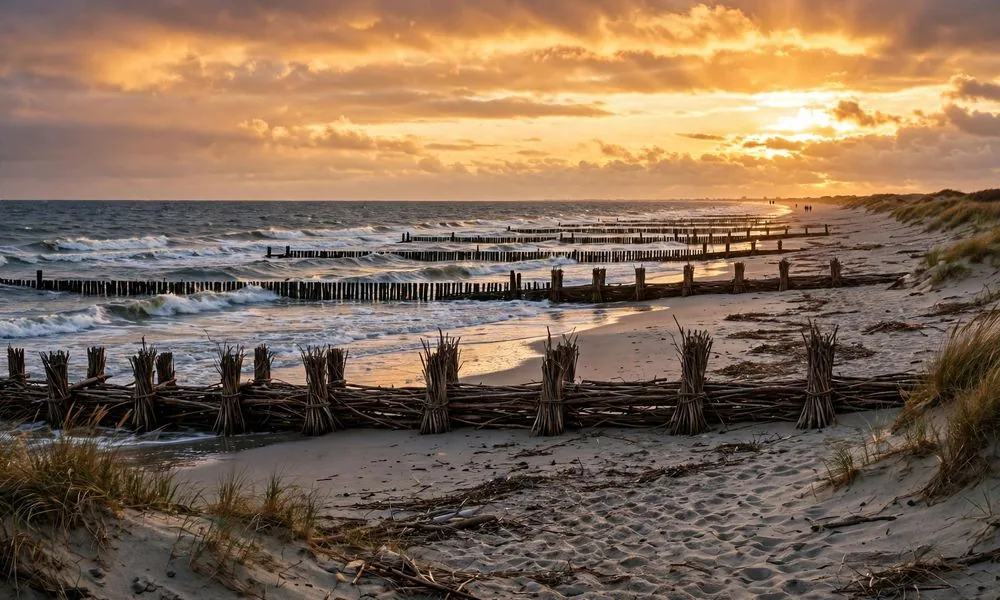
The word fascisterne looks simple, but it causes a lot of confusion online. Some pages use fascisterne as a history term. Other pages seem to link it to the sea, to bundles of branches, and to walls that protect the coast of Denmark. This guide sorts out what is true, what is close but not the same, and why both stories matter. By the end, you will know the real meaning of the word, the Danish history behind it, and how the similar coastal word works.
Here is the key point first. In Danish, fascisterne means the fascists. That is its clear, documented meaning. The coastal idea comes from a near twin word, faskine, whose full plural form looks and sounds very close. Because the two words are so alike, search results often mix them up. A careful guide has to cover both, and keep them apart.
| Name | Fascisterne |
|---|---|
| Type | Danish word and history term, with a closely related coastal term |
| What It Is | The definite plural form of fascist in Danish, meaning the fascists. Not to be confused with faskinerne, the fascines, which are bundles of branches used in coastal and river work |
| Website / Origin | Origin: Danish language, from fascist, which comes through Italian fascismo from the Latin fasces, a bundle of rods used as a symbol of authority in ancient Rome |
What Is fascisterne?
In Danish grammar, many nouns add an ending when they mean the group, not just a group. Fascisterne is the definite plural of fascist. In English, that is the fascists. It does not mean fascists in general in a loose way. The ending points to a known group of people who followed fascism.
Fascism is a political idea that first rose in Italy after the First World War. It stands for strong, central control, extreme pride in the nation, and little room for free debate. A single leader or a small ruling group makes the key choices. Opponents face pressure, censorship, or punishment. Benito Mussolini built his movement in Italy in the early 1920s, and he used an old Roman symbol, the fasces. The fasces was a bundle of rods tied together, sometimes around an axe. The message was strength through unity under one authority.
It is also honest to say what fascisterne is not. It is not, in correct Danish, the normal word for a sea wall or a groyne. The Danish word for a groyne is different, and the Danish word for a fascine is faskine, spelled with a k and without the t. When you see a page that says fascisterne directly means groynes, treat that as a mix up between two similar words. The rest of this article explains both sides, so you can see where the mix up comes from.
Fascisterne in Danish History
The largest Danish fascist party was the National Socialist Workers Party of Denmark, known by its Danish short name DNSAP. It was founded on 16 November 1930, after the Nazi Party in Germany had a strong election result that year. The Danish party copied much from the German party. It used the swastika, the Hitler salute, and a fighting force named SA, like the German model. It also sang a translated version of the German party song. Its newspaper was called Faedrelandet.
The party was first led by Cay Lembcke. Under him it stayed very small, with only a few hundred members, and it won no real support in the 1932 election. In 1933, Frits Clausen took over as leader. He focused on North Schleswig, near the German border, where most of the partys support came from. At the 1939 election, with about 5,000 members, the party won three seats in the Folketing, the Danish parliament. That was 1.8 percent of the vote. In plain terms, most Danish voters rejected it.
Germany invaded and occupied Denmark in April 1940. The DNSAP hoped the occupation would bring it to power. That did not happen. The German authorities used the party, but they never gave it real control of the country. The Danish government and monarchy stayed in place for much of the occupation, which was unusual in occupied Europe. The party did help recruit Danes for German military units, including the Waffen SS and Free Corps Denmark. For many Danes, that work made the word fascisterne feel like a word for betrayal as well as for a political idea.
The Coastal Mix Up: Fascines, Faskiner and Groynes
Now for the sea. A fascine is a rough bundle of brushwood or branches, tied together. People have used fascines for a very long time. Roman armies used them to fill ditches and cross wet ground. Later armies used them to shore up trenches and ramparts. Engineers used fascine mats to protect river banks and to build paths over marshy land. In Danish, that bundle is a faskine. Put the definite plural ending on it and you get a word that looks very close to fascisterne. One letter or two can mislead a search engine, a translator, and a reader.
In Denmark, fascines have a real coastal use, but it is a modest one. The Danish Coastal Authority describes how marram grass planting and spruce fascines are placed in wind gaps in dunes. The branches slow the wind near the ground. Sand carried by the wind drops out and builds the dune up. The method only works where the beach supplies enough wind blown sand and where waves do not often reach the spot. If waves hit the branches directly, they can be washed away. If people fix a dune too hard in one place, the dune can grow high and narrow and lose its natural flexibility.
Groynes are the larger structures people picture on a beach. A groyne is a rigid barrier built at a right angle to the shore, going out into the water. It can be made of wood, stone, or concrete. Its job is to slow the movement of sand along the coast. Waves and currents push sand sideways in a process called longshore drift. A groyne blocks part of that flow, so sand builds up on the side the sand comes from. A wider beach then absorbs wave energy and helps protect dunes, cliffs, and land behind it.
Coastal Defence in Denmark: A Short History
The Authority records that erosion protection with structures such as groynes, rubble mound breakwaters, and revetments began with the first test groynes on the west coast of Jutland in the years 1876 to 1883. Other accounts of the North Sea coast put the start of heavy rock groyne building at about 1874. On that exposed west coast, the sea has always eaten into the land. Local accounts tell of farms that had to move inland more than once over the centuries as the shore retreated.
For about a hundred years, hard structures were the main answer on the most exposed stretches. Then thinking began to change. Sand nourishment was first tried in Denmark in 1974. In this method, extra sand is added to the beach or the shallow water in front of it. The added sand makes storm water shallower, so waves lose energy before they reach the dune face. Severe flooding in 1981, after the dunes were breached, led the state and the coastal towns to agree in 1982 to manage protection together, with national funding and reviews every five years. Since 1992, sand nourishment has been the primary method on long stretches of the North Sea coast.
Is It Legit and Safe?
For a word, legit means this. Is the meaning real, and can you trust pages that explain it? The meaning the fascists is legit and well supported by the Danish language and by Danish history. The DNSAP, its dates, its leaders, and its ban in 1945 are documented in standard reference sources. Claims that the word itself is a normal term for groynes are not supported. They rest on confusion with faskine, the fascine. If a site cannot tell those two words apart, be careful with the rest of its facts too.
At the coast, safety is physical. Old groynes can be slippery, uneven, and dangerous to climb on. The lee side of a groyne and the current near its seaward end can be risky for bathers. Local signs and local rules exist for a reason. Enjoy these structures from the beach, take photos, and keep a safe distance from the water around them, especially in rough weather.
Frequently Asked Questions (FAQs)
Does fascisterne mean the fascists or groynes?
It means the fascists. The coastal bundle is a faskine in Danish, and a groyne is a different structure and a different word. The two ideas get mixed online because the words look alike.
Who were the fascisterne in Denmark?
Mainly the members and supporters of the DNSAP, the Danish Nazi party founded in 1930. It won three parliament seats in 1939 with 1.8 percent of the vote, collaborated during the German occupation from 1940 to 1945, and was banned on 8 May 1945.
How does a groyne protect a beach?
A groyne stands at a right angle to the shore and slows sand moving along the coast. Sand builds up on one side, the beach grows wider, and the wider beach absorbs wave energy. The trade off is that less sand reaches the coast beyond it.
Are groynes still used in Denmark today?
Yes, older groynes and breakwaters are still in place and maintained in some areas. Since 1992, though, adding sand through nourishment has been the main method on long parts of the North Sea coast, because it works with natural processes more gently.
Final Thoughts
fascisterne is a small word with a heavy history. Used correctly, it names the fascists, and in Denmark it points to a real but small movement that copied Nazi Germany, failed to win the Danish public, collaborated during occupation, and was banned when the war ended. That history still matters, because the word is still used as a warning when authoritarian ideas appear again.
The coastal story is worth knowing too, as long as it is told under its right name. Fascines of spruce branches help trap wind blown sand in Danish dunes. Stone and timber groynes, first tested on the Jutland west coast in the late 1800s, trap sand moving along the shore. Modern Denmark now leans on sand nourishment first and uses hard structures with more care. Keep the two similar words apart, and both stories become clear, honest, and far more interesting than the confused version.
You may also read: Messonde: From Measuring Probes to Its Modern Online Meaning


