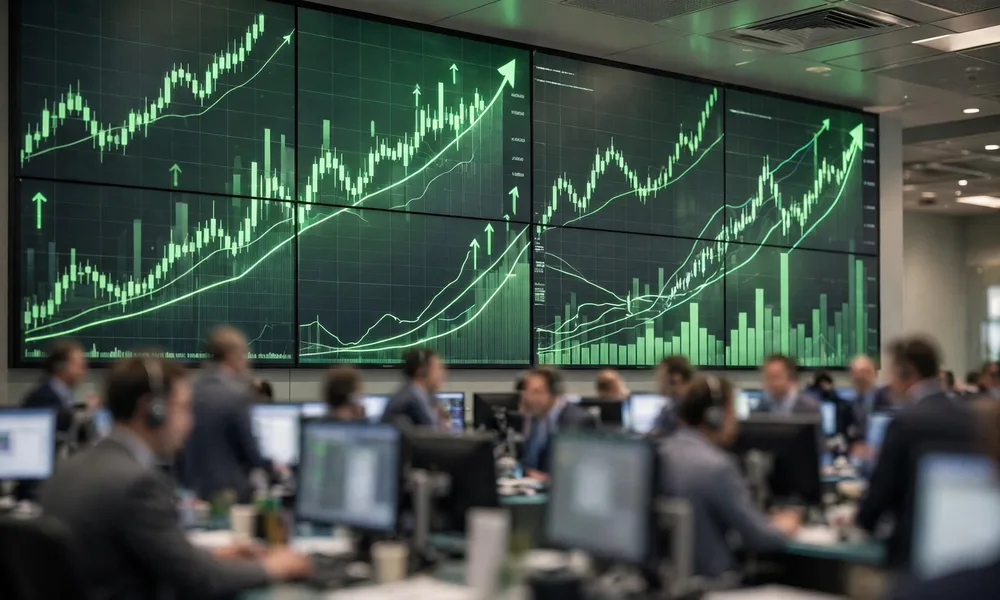
Dow Jumps More Than 1,100 Points as Wall Street Cheers Divided Government After Democratic Sweep

Divided government: The Dow Jones Industrial Average jumped more than 1,100 points on Wednesday, November 4, 2026, as Wall Street cheered divided government after Democrats won control of both chambers of Congress in the midterm elections. The Dow rose more than 2 percent in early trading, the S and P 500 gained about 1.2 percent, and the Nasdaq Composite climbed more than 1 percent, in a rally that reversed an overnight plunge in futures and put the S and P on track for its best day in three months.
Table of Contents
The rally was, at heart, a bet on gridlock. Investors reasoned that a Democratic Congress facing a Republican president would struggle to pass sweeping policy changes, which lowers the risk of sudden shocks to taxes, spending and regulation. President Donald Trump also helped the mood by signalling he was willing to work with Democrats, according to analysts. Here is what moved, who won and lost, and why a blue wave produced a green day on Wall Street.
| Quick Fact | Detail |
|---|---|
| Dow move | Up more than 1,100 points, over 2 percent, in early trading November 4 |
| Peak gain | Briefly over 1,200 points; 1,136 points at 9:40 a.m. Eastern, index at 52,922.96 |
| S and P 500 | Up about 1.2 to 1.8 percent, toward its best day in three months |
| Nasdaq | Up 1.1 to 2.4 percent in early trading, depending on the time of the quote |
| Trigger | Democrats won the House and Senate in the November 3 midterms |
| Why | Divided government lowers the risk of sweeping policy change, analysts said |
| Losers | Cloud and chip stocks fell on fears of tighter AI regulation |
| Winners | Solar, consumer, media and bond markets rose |
A Reversal From Overnight Panic
The morning rally was dramatic precisely because the night before had pointed the other way. As the earliest election results emerged on Tuesday night, Nasdaq 100 futures plunged as much as 2.5 percent, according to Devdiscourse’s market report, as traders braced for an uncertain outcome. By Wednesday morning, as results pointed clearly toward Democrats securing both chambers, sentiment flipped completely.
The numbers tell the story of that flip. Dow futures surged by more than 1,100 points, or 2.15 percent, putting the index on track for its fourth best trading day of the year, according to Dow Jones Newswires via Morningstar. At the open, the Dow rose 1,177 points, according to Invezz, and by 9:35 a.m. Eastern it was up 1,178 points, or 2.3 percent, according to the Associated Press report carried by TMJ4. The Dow’s gain briefly exceeded 1,200 points shortly after the opening bell, before settling at 1,136 points by 9:40 a.m.
The S and P 500 and Nasdaq followed the same pattern. The S and P jumped 1.2 percent in early trading and was potentially on track for its best day in six weeks, according to one report, while the Associated Press put its gain at 1.8 percent toward its best day in three months by mid morning.
The Nasdaq was up 1.1 percent at 9:35 a.m. and 2.4 percent by 10 a.m. in different snapshots, a reminder that intraday quotes move fast on a day like this. The direction, though, was consistent across every snapshot: up, and up sharply.
Why Wall Street Likes Divided Government
The explanation most analysts gave was simple: markets prefer split control in Washington. When one party controls the White House and both chambers, it can pass transformative changes to taxes, spending and regulation quickly, and that creates uncertainty for businesses trying to plan. When power is divided, sweeping change becomes much harder, and businesses can plan around the status quo with more confidence.
RaboResearch Global Economics and Markets made the point in an investor note on November 4, carried by USA Today, saying that as a general rule of thumb asset prices tend to favour administrations with divided control, because it keeps both parties in check. Panmure Liberum strategist Joachim Klement made a similar argument, saying the initial market reaction was a knee jerk response to a surprise result, with gains reflecting the view that a balance of power would restrain both sides.
Trump’s own tone helped. Analysts noted that positive moves may have been triggered by conciliatory comments from the president signalling he was willing to work with Democrats in Congress. That matters, because a president who accepts divided government and negotiates with it is less disruptive than one who fights it at every turn, and markets price that difference quickly. The rally, in other words, was not just about who won, but about how the loser responded to losing.
For the wider market reaction to this week’s politics, read the global stocks slide on AI data centre fears and the November 3 stock market close. Note the distinction: the earlier slide article covered global markets falling on AI and data centre worries, while this rally covers the United States open on November 4, when divided government optimism outweighed those same worries at home.
Winners and Losers in the Rally
Not every stock rose, and the pattern of winners and losers says a lot about what investors think a Democratic Congress will do. Solar power companies helped lead the way, according to the Associated Press, as traders bet that Democratic control could light the way for wind and solar firms. Consumer and media stocks also rose, and bonds strengthened, with Treasurys gaining alongside equities as the prospect of restrained spending eased deficit worries.
The losers were concentrated in technology, and specifically in the artificial intelligence trade. Cloud computing stocks fell sharply, according to Morningstar’s Dow Jones report, with investors concerned that Democratic control of Congress could slow the expansion of AI or bring tighter regulation of it. Semiconductor stocks bucked the trend in the same way, falling even as the wider market rose, on the same fear that AI regulation could tighten.
Shares tied to Trump and to Elon Musk also fell, according to the Geneva Times report, as traders sorted out likely winners and losers from the Republican losses. Musk, a former top Trump adviser, is among the possible targets for investigations by a Democratic controlled Congress, according to the Associated Press, and that prospect weighed on stocks associated with him. The market, in short, did not just cheer gridlock in general; it priced in a specific set of policy guesses about the next two years.
What History Says About Post Midterm Markets
The Associated Press noted a piece of market history that puts November 4 in context: stocks generally do well in the months following any midterm election, regardless of who wins. The uncertainty of the campaign is over, the result is known, and investors can plan around it. That pattern held on Wednesday, but it held more strongly than usual, because the result was a sweep rather than a split decision, and because the sweep produced divided government rather than one party rule.
There is also a caution in the history. A strong day after an election is not a forecast for the next two years. The S and P’s best day in three months is a single day, and single days are driven by positioning, by futures traders covering short bets, and by the mechanical unwinding of overnight panic. The real test of the divided government thesis will come over months, as Congress and the White House negotiate spending, taxes and regulation, and as the AI debate that weighed on chip stocks plays out in committee rooms rather than on trading screens.
For now, though, the market’s verdict is clear enough to report: investors wanted certainty more than they wanted any particular party, and divided government gave them a version of certainty they could trade on. Whether that certainty survives contact with real legislation is a question for the weeks ahead, starting with the lame duck session and the new Congress in January.
This article reports market movements only. It is not investment advice, and a single day’s rally does not, on its own, show whether any stock or index is a good investment.
Frequently Asked Questions
How much did the Dow rise on November 4, 2026?
The Dow jumped more than 1,100 points in early trading, over 2 percent, briefly exceeding 1,200 points shortly after the open before settling at a gain of 1,136 points, to 52,922.96, by 9:40 a.m. Eastern.
Why did stocks rise after Democrats won Congress?
Analysts said investors cheered divided government: a Democratic Congress facing a Republican president is less likely to pass sweeping policy changes, which lowers uncertainty for businesses. Conciliatory comments from Trump about working with Democrats also helped sentiment.
Which stocks fell despite the rally?
Cloud computing and semiconductor stocks fell, on fears that Democratic control could bring tighter regulation of artificial intelligence or slow AI expansion. Shares tied to Trump and Elon Musk also fell.
Was this different from the earlier stocks slide article?
Yes. The earlier article covered global markets sliding on AI data centre fears, while this rally covers the United States market open on November 4, when divided government optimism drove American indexes sharply higher despite those same AI worries hitting tech stocks.
Sources
Reporting for this article drew on the Associated Press on the rally, Dow Jones Newswires via Morningstar on futures, and Invezz on the open.
Final Thoughts
November 4 was a reminder that markets do not vote for parties, they vote for predictability. A Democratic sweep that produced divided government gave traders something they could price: a Washington where big changes are hard, where spending is checked, and where the president signals he will negotiate rather than fight.
The Dow’s 1,100 point jump, the S and P’s best day in months, and the split between rising solar stocks and falling chip stocks all tell the same story from different angles. The rally may fade, and the AI debate may yet weigh on tech, but on the morning after the midterms, Wall Street made its preference clear, and it was gridlock.