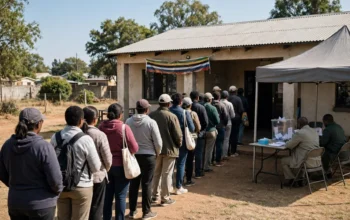
Alaska Senate Race Still Uncalled as Sullivan and Peltola Wait on Ranked Choice Count

Alaska’s Senate race remained uncalled on Wednesday, November 4, 2026, one of only two Senate contests still undecided a day after Americans voted. Republican incumbent Dan Sullivan and Democratic challenger Mary Peltola traded a razor thin lead through the morning as new batches of ballots arrived, and the final result may not be known for up to two weeks because Alaska uses ranked choice voting and accepts absentee ballots for 15 days after Election Day.
The race no longer decides control of the Senate, since Democrats have already secured at least 54 seats. It will decide the size of their majority, and it has drawn national attention for a second reason: a third candidate on the ballot shares the incumbent’s name, and the Justice Department is appealing a dismissed lawsuit over that candidacy. Here is where the count stands, how Alaska’s system works, and why the namesake candidate matters.
| Quick Fact | Detail |
|---|---|
| Race | Alaska United States Senate, 2026 midterm election |
| Candidates | Republican incumbent Dan Sullivan vs Democrat Mary Peltola |
| Status on Nov 4 | Too early to call, according to the Associated Press |
| Other uncalled race | Mississippi Senate race |
| Why it takes time | Ranked choice tabulation plus absentee ballots accepted up to 15 days after Election Day |
| Key dates | Ranked choice tabulation scheduled November 18, certification aimed for November 25 |
How Close Is the Race
The margin has been tiny all day, and the lead has changed hands as counting continued. Just after 9 a.m. Eastern on Wednesday, the Associated Press reported that Peltola led with 102,701 votes to Sullivan’s 102,075 votes, a difference of only 626 votes with about 74 percent of the expected vote counted. Later reports on Wednesday put Sullivan ahead by 1,677 votes, with figures of 100,751 to 99,074 cited in some coverage.
Those different snapshots reflect a count that was still moving, with ballots arriving from remote areas of a huge state and absentee votes still to come. Readers should treat any single Wednesday number as a snapshot, not a final result. What is certain is that the race is within a fraction of a percentage point, that neither candidate has a majority of first choice votes yet, and that the Associated Press lists it as too early to call.
The third candidate complicates the picture further. Daniel J. Sullivan Jr., a retired teacher from Petersburg, won 3,448 votes in one Wednesday tally, more than double the incumbent’s reported lead at that point. Under Alaska’s ranked choice system, those votes do not simply vanish. If no candidate wins a majority of first choice votes, the lowest placed candidates are eliminated one by one and their supporters’ next choices are redistributed until one candidate reaches a majority. That is why the namesake candidacy is being watched so closely.
How Alaska Counts Its Votes
Alaska’s system is different from most states, and that difference explains the wait. Voters rank candidates in order of preference instead of picking just one. If a candidate wins a majority of first choice votes outright, that candidate wins. If not, the candidate with the fewest votes is eliminated and those ballots are transferred to the voters’ next choice. The process repeats until someone passes 50 percent.
The ranked choice tabulation is scheduled for November 18, according to coverage of the race. Alaska also accepts absentee ballots postmarked by Election Day for up to 15 days, which means the final deadline for receipt is also November 18. Officials are aiming for certification around November 25. In a race this close, it may take the full period before a winner can be declared with confidence.
Both candidates have urged patience. Peltola and Sullivan have told supporters to wait for the full count rather than treating any early lead as a win. That message matters in Alaska, where ballots from remote communities can take days to arrive and where a few hundred votes can decide a statewide race.
For the national context, see our coverage of the Democratic midterm sweep and the historic firsts of the 2026 elections.
The Namesake Candidate and the Justice Department Lawsuit
The most unusual part of this race is the second Sullivan on the ballot. Daniel J. Sullivan Jr. appeared on the August 18 open primary ballot and finished third, and he was on the November 3 general election ballot alongside the incumbent, Peltola and a fourth candidate. Republicans have alleged that the namesake candidacy was planted to confuse voters and act as a spoiler. Peltola has denied any involvement in his candidacy.
Before the election, the Justice Department sued in federal court in Anchorage to block certification if Senator Sullivan lost by fewer votes than his namesake received. The department asked the court to hold up certification so ballots cast for Daniel J. Sullivan could be set aside and investigated. On November 1, Chief U.S. District Judge Sharon Gleason dismissed the case in a 20-page order, ruling that the government lacked standing and had no workable plan to segregate ballots while preserving voter secrecy.
The Justice Department filed a notice of appeal to the Ninth Circuit Court of Appeals the same day, and that appeal remains open. A separate criminal investigation involving target letters over the alleged recruitment of the namesake candidate also remains ongoing, according to coverage of the case. No court has found fraud in the race, and the only judge to rule on the Justice Department’s civil case dismissed it. Those facts matter, because the lawsuit has sometimes been described online in stronger terms than the court record supports.
The Alaska Supreme Court earlier upheld a lower court ruling that kept Daniel J. Sullivan on the primary ballot after the Division of Elections had initially sought to remove him. In other words, the courts have so far allowed his candidacy to stand, even as the investigations continue in parallel.
Why Alaska Still Matters After the Senate Was Decided
It is easy to ask why one more seat matters when Democrats already hold the Senate. The answer is the size of the majority. A 54 seat majority and a 55 seat majority behave differently. Every extra seat gives the majority more room to lose votes on a difficult bill, more flexibility in committee assignments and more cushion if a senator is absent or breaks ranks.
Alaska also matters as a test of how election disputes are handled. The Justice Department’s appeal asks whether a federal court can delay a state’s certification over a namesake candidacy. If the Ninth Circuit upholds the dismissal, the case will stand as a limit on that kind of federal intervention. If it revives the case, it could set up a longer fight over certification even after the votes are counted.
For Alaska itself, the race is about representation. Sullivan, the incumbent Republican, and Peltola, a former House member, offer sharply different visions on energy, fisheries, Native issues and the role of the federal government in a state where federal land and federal decisions touch daily life. The ranked choice count will decide which of those visions goes to Washington for the next six years.
More on the reaction to the results can be found in our report on Vice President JD Vance blaming the Iran war for the Republican losses.
What Happens Next
The next milestones are clear. Absentee ballots continue to arrive through November 18. The ranked choice tabulation is scheduled for November 18. Certification is aimed for November 25. The Justice Department’s appeal to the Ninth Circuit has no schedule yet in the sources reviewed, and it runs in parallel to the count rather than stopping it.
Until then, expect the lead to keep shifting in small increments as new batches are reported. Expect both campaigns to watch the ranked choice transfers closely, since the second and third choices of voters who backed eliminated candidates could decide the race. And expect national attention to stay on Alaska, not because it decides control, but because it is the closest Senate race of the cycle and the strangest, with two men named Sullivan on the same ballot.
Frequently Asked Questions
Why has the Alaska Senate race not been called yet?
It is within a fraction of a percentage point, Alaska uses ranked choice voting, and absentee ballots are accepted for up to 15 days after Election Day. The ranked choice tabulation is scheduled for November 18.
Who are the candidates in the Alaska Senate race?
Republican incumbent Dan Sullivan, Democratic challenger Mary Peltola, and a third candidate named Daniel J. Sullivan Jr., a retired teacher, whose similar name has drawn national attention.
What happened to the Justice Department lawsuit?
A federal judge dismissed it on November 1, ruling the government lacked standing. The Justice Department appealed to the Ninth Circuit, and a separate criminal investigation remains ongoing. No court has found fraud.
Does the Alaska result decide Senate control?
No. Democrats have already secured at least 54 seats. Alaska will decide the size of their majority, not which party controls the chamber.
Sources
USA Today live midterm updates, November 4, 2026
US News Pulse, November 4, 2026
WDUV election coverage, November 4, 2026
Times Now World, November 4, 2026
Final Thoughts
Alaska’s race is a reminder that elections are not decided by headlines on election night. They are decided by ballots counted carefully, in order, over days and weeks. The namesake twist makes this count more closely watched than most, but the principle is the same: wait for the full count, respect the ranked choice process, and let the voters’ second choices speak as clearly as their first.