What Is Fonendi? The Simple Medical Tool Every Doctor Still Needs
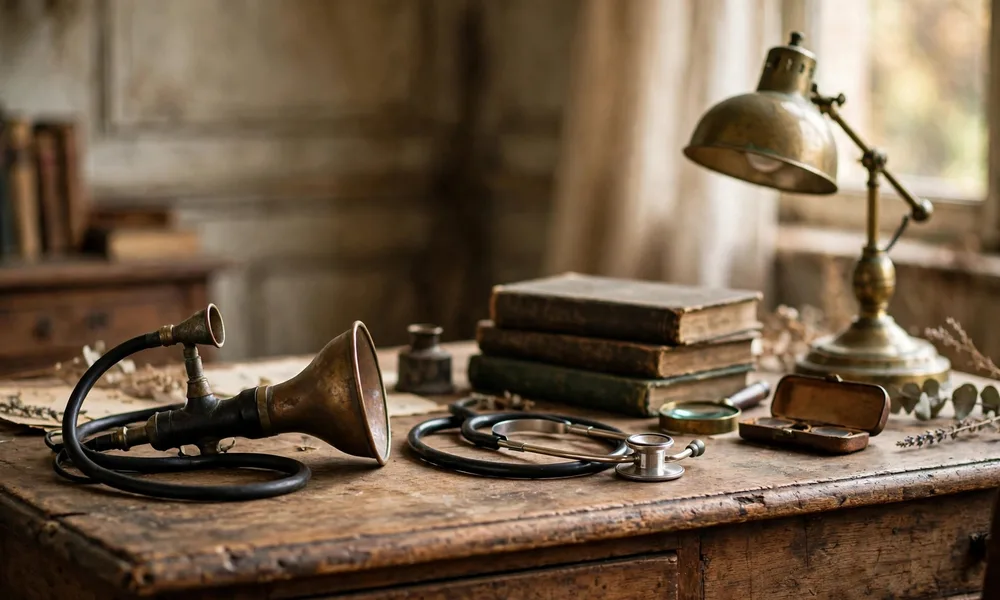
If a doctor in Spain, Italy, or many other parts of Europe asks for the fonendi, they are asking for one of the oldest and most trusted tools in medicine. Fonendi is the everyday, shortened word for a phonendoscope, a close relative of the stethoscope. It is the instrument a clinician places on your chest to listen to your heart, your breathing, and other sounds inside the body.
This guide explains what a fonendi is, where the word comes from, how the tool works, and why it still matters in a world full of scans and screens. It is general information only and not medical advice. For any health concern, the right step is always to speak with a qualified health professional who can examine you in person.
Quick Facts
| Item | Details |
|---|---|
| Term | Fonendi – a colloquial short form of phonendoscope |
| Tool type | Acoustic listening tool for body sounds, a variant of the stethoscope |
| Main use | Auscultation – listening to heart, lung, and bowel sounds |
| Word roots | Greek phono (sound), endo (within), and scope (to examine) |
| Key date | 1816 – Rene Laennec invents the first stethoscope in Paris |
| Phonendoscope date | 1894 – Bianchi presents a stethoscope with a rigid diaphragm, known as a phonendoscope |
| Main parts | Chest piece with diaphragm and bell, tubing, and earpieces |
| Formal use | Everyday spoken term in clinics – formal notes usually say stethoscope or phonendoscope |
Where the Word Fonendi Comes From
Language in a busy hospital loves short words, and fonendi is a perfect example. The full word, phonendoscope, is built from Greek parts. Phono means sound, endo means within, and scope means to look at or examine. Put together, the word describes an instrument for examining sounds from within the body. Over time, staff in fast, spoken settings shortened it. In Spanish the short form is often fonendo, and fonendi is used in a similar everyday way in several European and Mediterranean settings, as well as in online writing about the tool.
That short form is spoken, not formal. You are unlikely to see fonendi in an official report, a textbook heading, or a product manual. There, writers use stethoscope or phonendoscope. But on a ward round, in a classroom, or between a nurse and a doctor who need to move quickly, the short word wins. Many tools earn a nickname like this once they become part of daily life, and the fonendi has been part of daily medical life for a very long time.
It also helps to clear up one mix-up. A fonendi is not a brand. Many makers produce phonendoscopes and stethoscopes, and quality ranges from simple student models to advanced electronic ones. When people online describe fonendi as one single modern product or platform with special powers, that claim should be treated as unconfirmed. The word names a type of tool and a way of working, not one company.
A Short History: From a Rolled Paper Tube to the Modern Fonendi
The story starts in Paris in 1816. French physician Rene Laennec needed to listen to the chest of a young woman patient, and placing his ear directly on her chest was neither proper nor effective in that case. He rolled a sheet of paper into a tube, placed one end on her chest and the other at his ear, and found he could hear her heart sounds more clearly. He soon replaced the paper with a hollow wooden tube. In 1819 he published his work on this method of listening, called auscultation, and the stethoscope began its spread across Europe and the Americas.
Designs improved step by step through the 1800s. Makers added a funnel-shaped bell, lighter stems, and earpieces that sealed better. Binaural designs, which let the listener hear through both ears, appeared from the 1840s and 1850s, with flexible tubing following soon after. A key step for the fonendi line came in 1894, when Bianchi introduced a stethoscope fitted with a rigid diaphragm, and that design became known as the phonendoscope. In 1925, Bowles and Sprague combined a bell and a rigid diaphragm in one chest piece, a pairing that will look familiar to anyone who has seen a modern two-sided stethoscope.
Later changes were about comfort, weight, and clarity rather than a new idea. Better tubing, softer ear tips, and tunable diaphragms made long clinics easier on the listener and the listening more precise. Electronic models added a new branch to the family, but the core act has stayed the same for two hundred years: place the chest piece, listen with care, and interpret what the body is telling you.
How a Fonendi Works and What Each Part Does
An acoustic fonendi has no battery and no screen. It works by carrying vibrations. The flat, round side of the chest piece is the diaphragm. When it rests on the skin, sounds inside the body make it vibrate. Those vibrations travel as pressure changes through the air inside the tubing to the earpieces, and into the ears of the clinician. The other side of the chest piece, the smaller cup shape, is the bell. By turning the chest piece, the user chooses which side is active on many modern models.
The two sides suit different sounds. The diaphragm is better for higher-frequency sounds, such as normal breath sounds and regular heartbeats. The bell is better for lower-frequency sounds, such as certain heart murmurs and some bowel sounds. Good ear tips that seal well, short and well-made tubing, and a chest piece held with the right light pressure all help the sound stay clear. A noisy room works against all of this, which is why a clinician may ask for quiet during this part of an exam.
Electronic fonendi models take the same starting vibrations and turn them into an electrical signal. That allows amplification, filtering of background noise, and in some models recording or sending the sound to a phone or computer. Those features can help with teaching, with keeping a record over time, and with remote consultations. Specific features, prices, and model claims change by maker and by year, so treat any single product claim in an advert as unconfirmed until you check the maker documents yourself.
What Doctors and Nurses Listen For
The most common use is the heart. A trained clinician listens to rate, rhythm, and extra sounds, such as murmurs or gallops, at several points on the chest. No single sound tells the whole story, which is why listening is combined with history, other exam steps, and tests when needed. The fonendi gives fast, low-cost information at the bedside, and its result helps decide what should happen next.
The lungs are the second classic stop. Listening at points on the chest and back can reveal wheezes, crackles, or areas where breath sounds are reduced. The belly is the third. Gentle listening there can pick up the normal gurgles of the digestive system or a notable absence of sound. The tool is also used with a cuff to measure blood pressure by listening for flow sounds in the arm, and at the neck or belly to listen for unusual blood flow sounds called bruits.
Two limits deserve plain words. First, listening skill takes training and practice. Two listeners can hear the same chest and describe it differently, which is why medical training spends so much time on this skill. Second, a normal listen does not rule everything out, and an unusual sound does not prove a diagnosis on its own. The fonendi is one trusted part of a full exam, not a replacement for it. This section is general information about how the tool is used, not guidance for interpreting your own sounds.
Why the Fonendi Still Matters in Modern Medicine
Modern hospitals have ultrasound, CT scans, and monitors on every wall, yet the fonendi hangs around the neck of doctors on every continent. The reasons are practical. It is cheap, light, fast, and works anywhere, including a rural clinic, a home visit, an ambulance, or a ward during a power cut. It needs no charging, no software update, and no permission from a network. For a first look at a new symptom, few tools beat it.
It also shapes the human side of care. The act of listening is one of the first hands-on skills medical students learn, and it brings the clinician close to the patient in a way a screen cannot. Patients often read that moment as care and attention, because it is. A student who learns to tell a normal heartbeat from an unusual one has learned to slow down, focus, and trust trained senses. Those habits stay useful long after newer machines arrive.
The likely future is a blend, not a farewell. Acoustic models will keep serving where simplicity wins. Digital models will keep adding recording, visual waveforms, and remote sharing for teams and teaching. Claims that software can now replace clinical judgment entirely are unconfirmed hype at this stage. The pattern of the last two hundred years is steadier: each new tool joins the exam, and the simple tube that started with rolled paper in 1816 keeps its place beside them.
FAQs
Is a fonendi different from a stethoscope?
Only slightly. A phonendoscope is a type of stethoscope with a diaphragm design for clearer sound. In daily speech, fonendi is the short spoken name for it, and many people use the words as if they mean the same tool.
Can I buy and use a fonendi at home?
They are widely sold, and many students and carers own one. But hearing a sound and understanding it are different things. Home listening is not a substitute for a proper exam, and any worry about heart or breathing sounds needs a professional.
Why does the doctor turn the chest piece around?
Most chest pieces have two sides. The flat diaphragm suits higher sounds, and the smaller bell suits lower sounds. Turning the piece switches which side is active for that part of the exam.
Are electronic models better than acoustic ones?
They add amplification, noise filtering, and recording, which can help in noisy places or for teaching. Acoustic models remain lighter, cheaper, and fully reliable without power. The better choice depends on the setting and the user.
You may also read: Lewis Center Ohio Champion Trees: Where to Find the Biggest Trees Near You
Final Thoughts
The fonendi earns its place the honest way: it works, every day, in almost any setting on earth. Behind its short, friendly name sits a long and well-documented line, from Laennec and his rolled paper tube, through the diaphragm of 1894, to the digital models of today. It does not replace scans, tests, or trained judgment, and this guide has offered general information only, never medical advice. But as the first, fastest way to listen to what the body is doing, this simple tool is still, as the title says, one that every doctor still needs.


