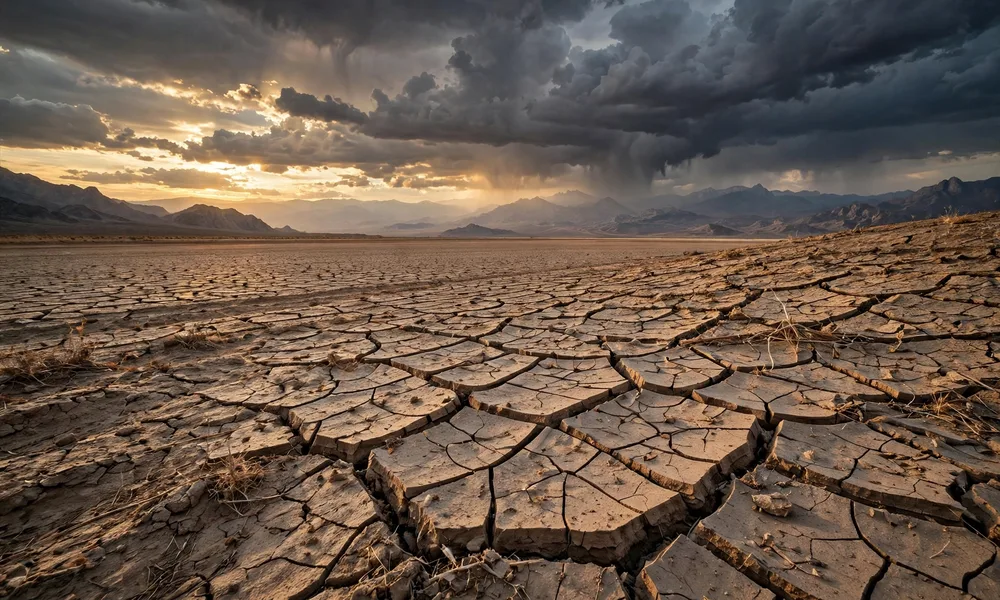
The World Meteorological Organization says the world has entered a new age of climate extremes. Its State of the Climate Update 2026, released on Monday, November 9, 2026, shows that the planet stayed close to record heat through the first nine months of the year. The global average surface temperature from January to September 2026 was about 1.47 degrees Celsius above the pre-industrial average. The past 12 years have each been the warmest on record, and the past four years sit at the top of that list, so 2023 to 2026 are the four warmest years since records began. The report landed as the COP31 climate talks opened in Antalya, Turkey, where United Nations Secretary-General Antonio Guterres warned that climate records keep falling, the human costs keep rising, and those least responsible suffer first and worst.
Quick Facts
| Fact | Detail |
|---|---|
| Report | State of the Climate Update 2026 from the World Meteorological Organization |
| Release date | Monday, November 9, 2026 |
| Temperature, January to September 2026 | About 1.47 degrees Celsius above the pre-industrial average |
| Warmest years on record | 2023 to 2026 are the four warmest years since records began |
| 2026 ranking | On track to be one of the four warmest years on record |
| Copernicus warning | 2026 will most likely become the second-hottest year ever recorded |
| El Nino | On track to be the most intense on record and will continue into 2027 |
| Energy imbalance | Highest level since monitoring began |
| Warming rate | About 0.4 degrees Celsius per decade |
| 1.5C limit | Research suggests the world will cross it permanently in 2028 |
| 2C limit | Could be passed in the late 2030s |
| COP31 dates | November 9 to 20, 2026, in Antalya, Turkey |
| Data covered by the report | January 2025 to September 2026 |
| Final report | State of the Global Climate 2026, set for March 2027 |
What the WMO Report Found on Climate Extremes
The headline finding is simple and stark. The world is not cooling down, and it is not pausing at a high level either. The temperature for the first nine months of 2026 sat about 1.47 degrees Celsius above the pre-industrial average, which places this year among the hottest ever measured. The report covers data from January 2025 to September 2026, and it also notes that melting ice and rising sea levels are continuing.
The longer view in the report is just as striking. The past 12 years have individually been the warmest on record. Within that run, the past four years top the list, which is why 2023 to 2026 now stand as the four warmest years since records began. This is not one hot summer or one unusual season. It is a full stretch of years in which each year has been warmer than almost every year before it.
Guterres framed the findings in plain language. He said climate records keep falling and the human costs keep rising, and he pointed out that those least responsible are suffering first and worst. His message to leaders was direct. He urged them to get serious by cutting emissions faster, accelerating a just transition from fossil fuels, and delivering the finance and protection vulnerable countries need.
A Supersized El Nino Is Making a Hot Planet Hotter
El Nino is a natural warming of surface waters in the Pacific Ocean, and it usually pushes global temperatures higher for a year or more. The current El Nino is different in scale. The WMO says it is on track to be the most intense on record, and it will continue into 2027. That timing matters because it means the extra heat will not fade with the end of this year. Instead, it will carry into next year and raise the likelihood of more extreme weather around the world.
Guterres described the moment as a collision. He said a supersized El Nino is colliding with a planet already superheated by manmade climate change.
The effects of that combination were already visible before the report arrived. The summit follows a year of severe heatwaves in Europe, major wildfires in Indonesia, and catastrophic floods in Nepal. For a look at how unusual cold can also strike in a warming world, read our report on the earliest polar vortex disruption on record.
The Planet Is Trapping More Heat Than Ever
One of the most important findings in the report is about the energy imbalance of the Earth. This measures the difference between incoming solar energy and outgoing energy. When the planet takes in more energy than it sends back out, the extra energy stays here, warming the oceans, the land, and the air. The WMO says this imbalance has reached its highest level since monitoring began.
The speed of the change is striking. The imbalance rose at 0.3 watts per square metre each decade for 2001 to 2025, compared with 0.13 watts per square metre per decade between 1960 and 2025. In simple terms, the planet has been trapping extra heat more than twice as fast in recent decades as it did across the longer period. This finding helps explain why the temperature record keeps climbing even though the world has made some progress on clean energy.
What 1.5C and 2C Mean for the Years Ahead
The numbers 1.5C and 2C appear in almost every climate discussion, and the new report gives them a sharper edge. Research suggests the world will cross the 1.5C limit permanently in 2028 and could pass 2C in the late 2030s, with the planet heating at about 0.4C per decade. Those dates are close. The 1.5C crossing is only about two years away on this path, and the 2C crossing could follow within a decade after that.
Crossing 1.5C permanently does not mean the world ends on that day. It means the average temperature stays above that level year after year, and the risks that grow with warming become harder to avoid. The report does not present these dates as fixed fate. They are what the research points to on the current path, at the current pace of about 0.4C per decade. Faster cuts in emissions would slow the pace and push the dates back.
A Money Fight Delayed the COP31 Opening
The COP31 climate talks run from November 9 to 20, 2026, in Antalya, Turkey, and the opening did not go smoothly. The opening ceremony was delayed by about an hour without an official explanation as negotiators argued over putting climate finance on the formal agenda. That dispute is an early sign of where the hardest talks will be.
The WMO report gave the finance debate a sharper context. When Guterres said vulnerable countries need finance and protection, he was talking about real costs that are already landing. The human costs of these events fall hardest on people with the least protection, and the recent winter storms that flooded tens of thousands of tents show how exposed displaced families can be. Our coverage of that crisis is here: winter storms flood 70,000 tents in Gaza. For the background on how the summit itself opened, see our report on COP31 opening in Antalya.
What Happens Next
The talks in Antalya will run for nearly two weeks, and the early dispute over finance suggests the negotiations will be difficult. Countries must agree on how fast to cut emissions, how to support a just transition from fossil fuels, and how much money will flow to the countries facing the worst impacts. The planet is heating at about 0.4C per decade, the energy imbalance is at its highest recorded level, and a record El Nino will keep adding pressure into 2027. The world has entered a new age of climate extremes, and the choices made at COP31 will help decide how extreme that age becomes.
Frequently Asked Questions
What did the WMO report say about 2026 temperatures?
The report said the global average surface temperature from January to September 2026 was about 1.47 degrees Celsius above the pre-industrial average in this age of climate extremes. The past 12 years have individually been the warmest on record, and 2023 to 2026 are the four warmest years since records began.
What is a supersized El Nino and why does it matter?
El Nino is a natural warming of Pacific surface waters that usually pushes global temperatures higher. The current El Nino is on track to be the most intense on record and will continue into 2027.
When will the world cross the 1.5C limit?
Research cited in the coverage of the report suggests the world will cross the 1.5C limit permanently in 2028 and could pass 2C in the late 2030s, with the planet heating at about 0.4C per decade. Faster emission cuts would slow that pace.
What is happening at COP31 in Antalya?
COP31 runs from November 9 to 20, 2026, in Antalya, Turkey. The opening ceremony was delayed by about an hour without an official explanation as negotiators argued over putting climate finance on the formal agenda.
Sources
Final Thoughts
The WMO report is not a forecast of a distant future. It is a description of the present, written in numbers that are already on the record. The temperature through September 2026, the twelve warmest years in a row, the record energy imbalance, and a record El Nino still building all point in the same direction. The world has entered an age of climate extremes, and the people with the least responsibility for the warming are paying the highest price.