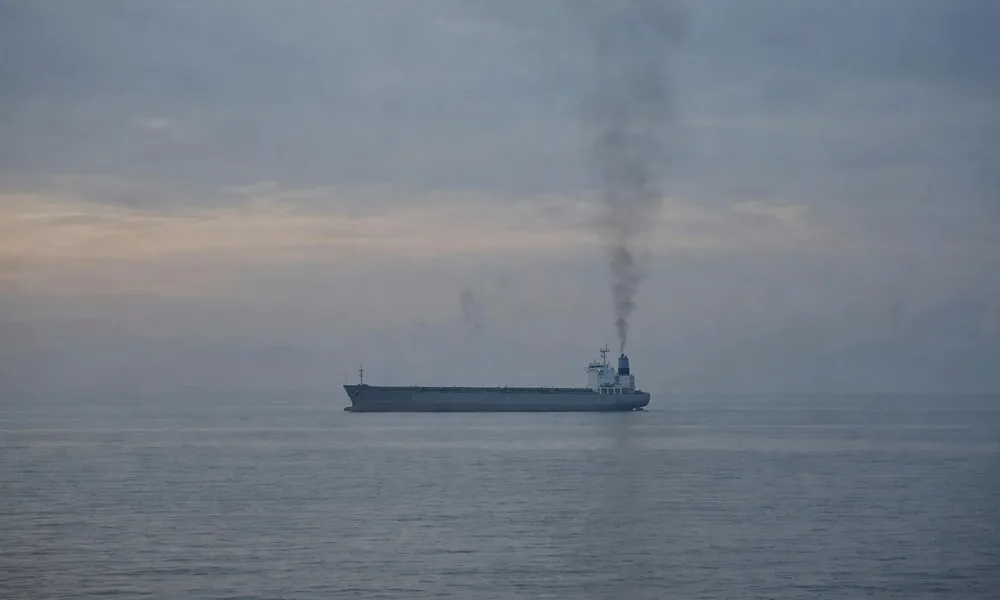
US forces disabled the St. Kitts-flagged cargo vessel M/V Huda in the Gulf of Oman late on Saturday, November 7, 2026, after its civilian crew ignored repeated warnings and tried several times to break the US naval blockade of Iran. That is the short version of what US Central Command, known as CENTCOM, announced that night. A US military aircraft fired precision munitions at the stern of the ship, leaving it disabled, after US forces told the crew to leave the targeted spaces. CENTCOM said the vessel had visited an Iranian port and was trying to leave regional waters when it was stopped. The command did not report any injuries and did not say how many crew members were on board.
Quick Facts
| Detail | What is known |
|---|---|
| Date | Saturday, November 7, 2026 |
| Location | Gulf of Oman |
| Vessel | M/V Huda, a St. Kitts-flagged cargo vessel |
| Action taken | A US military aircraft fired precision munitions at the stern, disabling the ship |
| Crew | Civilian crew, told to leave the targeted spaces before the strike |
| Injuries | None reported by CENTCOM |
| Number of crew | Not stated by CENTCOM |
| Reason given | The ship had visited an Iranian port and tried several times to break the US naval blockade of Iran |
| Blockade tally since July 2026 | 147 commercial vessels changed course and complied, 5 merchant ships disabled including the Huda |
| Blockade effect | CENTCOM estimates it has stopped more than 25 billion dollars in Iranian crude oil exports |
What Happened to the M/V Huda
The announcement came late on Saturday, November 7, 2026, from US Central Command. In a short statement, the command said its forces had disabled a commercial vessel in the Gulf of Oman after the ship’s crew refused to follow instructions linked to the naval blockade of Iran.
The ship was the M/V Huda, a cargo vessel sailing under the flag of St. Kitts. According to CENTCOM, the Huda had called at an Iranian port and was trying to leave regional waters. That attempt to leave, after a port call in Iran, is what put the ship in the path of the US blockade.
CENTCOM said the civilian crew ignored repeated warnings and tried multiple times to break through the blockade. The statement does not describe the warnings in detail, or say how they were delivered. What it does make clear is that the crew kept trying, and that US forces then moved from warnings to force.
Before the strike, US forces directed the crew to abandon the targeted spaces on the ship. A US military aircraft then fired precision munitions at the stern, the rear part of the vessel, and the ship was disabled. CENTCOM released video of the incident, and the video shows smoke rising from the stern of the Huda.
Why US Forces Say They Acted
The reason given by CENTCOM is simple. The Huda was trying to break the naval blockade of Iran, and its crew would not stop when warned. The blockade is the US effort to stop sea traffic linked to Iran, and the Huda, after a visit to an Iranian port, was treated as a ship trying to get out through it.
The sequence matters to the US account. Warnings came first, and they were repeated. The crew, according to CENTCOM, ignored them and made several attempts to get through. Only then did a US aircraft fire on the ship, and only after the crew had been told to clear the spaces that would be hit. The statement notes that the crew was told to leave the targeted spaces before the strike, and that step came before the munitions were fired.
It is also worth noting who was on the ship. CENTCOM described the crew as civilian. The Huda was a merchant cargo vessel, not a warship, and the action against it was a blockade enforcement step, not a battle at sea.
The Blockade in Numbers
CENTCOM put the Huda in the context of a wider enforcement campaign that has been running since July 2026. In that time, according to the command, 147 commercial vessels have changed course and complied with US instructions. Five merchant ships, including the Huda, have been disabled after refusing to comply.
The gap between those two numbers tells its own story. Most ships that are warned turn away. Only a small number keep going, and those are the ones that end up disabled. The Huda is the fifth such case since July.
CENTCOM also gave its own estimate of what the blockade has cost Iran. The command said the blockade has prevented Iran from exporting more than 25 billion dollars in crude oil. That figure comes from CENTCOM itself, and it should be read as the US military’s own estimate, not as an independent count. No outside check of the number was given in the statement.
The Huda was also not the first ship to be hit in these waters. The last confirmed US strike on a cargo vessel before this one came nearly a month earlier, and it also took place in the Gulf of Oman. Enforcement, in other words, has been steady rather than constant, with weeks passing between confirmed strikes.
A Wider Day of Action for the US Military
November 7 was a busy day for the US military in the region, and the Huda was only one part of it. On the same day, CENTCOM announced a new unit called Task Force Iron Gate. The task force is a Tampa-based cell set up to crack down on Iran moving advanced weapons and sanctioned material over land borders and through the Caspian Sea. It takes the pressure on Iran beyond the sea, to the land routes and the Caspian, and you can read our full report on Task Force Iron Gate and what it is meant to do.
President Trump also spoke on Friday, November 7, saying the US military had carried out new limited strikes against Iran, targeting an Iranian air defense system. Our coverage of what Trump confirmed about the new limited strikes on Iran has the details of what he said.
Iranian state media reported the sound of explosions on Qeshm Island and in the port of Jask on Saturday evening. Those reports came the same day as the Huda announcement, and they point to a wider round of military activity around Iran on November 7.
There is one more detail in the reporting that readers should know. The Associated Press noted that the CENTCOM disclosure comes after at least two instances in which CENTCOM did not announce military strikes it took in the region. That means the public record of US strikes may not be complete, and it is a reminder that what is announced on a given day is not always the whole story.
What We Still Do Not Know
For all the detail in the CENTCOM statement, several basic questions have no answer yet. The command did not report any injuries, but it also did not say how many crew members were on board the Huda, or what has happened to them since. The statement does not describe the damage to the ship beyond the video, which shows smoke rising from the stern, and it does not say what will happen to the vessel now.
The statement also does not name the Iranian port the Huda had visited. Until CENTCOM or another source says more, those questions stay open. The facts we have are the ones in the statement and in the reporting around it, and this article will be updated if more is confirmed.
Frequently Asked Questions
Was anyone hurt on the M/V Huda?
CENTCOM did not report any injuries in its statement. Before the strike, US forces directed the crew to abandon the targeted spaces, and the command did not say how many crew members were on board.
Why was the M/V Huda targeted?
According to CENTCOM, the ship had visited an Iranian port and was trying to leave regional waters. Its civilian crew ignored repeated warnings and tried multiple times to break the US naval blockade of Iran, and a US military aircraft then fired precision munitions at the stern, disabling the ship.
How many ships has the US disabled under the blockade?
The Huda is the fifth merchant ship disabled since July 2026, according to CENTCOM. In the same period, 147 commercial vessels changed course and complied with US instructions.
What is Task Force Iron Gate?
It is a Tampa-based cell announced by CENTCOM on the same day as the Huda strike. Its job is to crack down on Iran moving advanced weapons and sanctioned material over land borders and through the Caspian Sea.
Sources
- Reuters, “US military says it disabled cargo vessel in Gulf of Oman”, November 7, 2026 –
- gCaptain, “US Military Says It Disabled Cargo Vessel In Gulf Of Oman”, November 7, 2026 –
- US Central Command statement, November 7, 2026 –
- Associated Press, via Military.com, November 7, 2026 –
Final Thoughts
The disabling of the M/V Huda is a small incident in itself, one ship stopped in the Gulf of Oman, but it sits inside a much larger campaign. The blockade has been running since July, most ships warned by US forces turn away, and a small number, five so far, have been disabled for refusing to comply. The same day brought a new task force for the land routes and fresh strikes on an air defense system, which suggests the pressure on Iran is widening rather than easing.
For readers following the wider story, our report on Iran lifting its missile range limit is also worth a look, as the military moves and the missile story are part of the same tense picture. What happens next will depend on what CENTCOM says in the coming days, and on whether more ships test the blockade in the weeks ahead.