The United States Supreme Court has cleared the way for the Trump administration to resume building border barriers and roads in the Big Bend region of West Texas. The decision, issued on Monday, November 9, 2026, lifts a lower court order that had blocked the work. Construction can now move forward inside Big Bend National Park and across the wider Big Bend sector while the legal case continues. The ruling does not end the lawsuit. It puts the block on hold during the appeal. The administration says the project is needed to control illegal entry in a remote stretch of the border. The challengers say the work will harm a fragile landscape, wildlife, and a historic church.
Quick Facts
| Detail | What is known |
|---|---|
| Decision date | Monday, November 9, 2026 |
| Court | United States Supreme Court |
| Case name | Mullin v. Friends of the Ruidosa Church |
| Lower court order | Preliminary injunction issued in October by US District Judge Kathleen Cardone of El Paso |
| Dissent noted | Justice Ketanji Brown Jackson was the only justice who noted she would have denied the request |
| Project area | Big Bend sector of West Texas, including Big Bend National Park |
| Planned work | More than 300 miles of barriers and roads in the sector |
| Work inside the park | A 17-mile noncontiguous vehicle barrier system |
| Funding | Congress has provided about 46 billion dollars to speed the build |
| Legal basis cited | Section 102 of the Illegal Immigration Reform and Immigrant Responsibility Act of 1996 |
What the Court Decided
The Supreme Court acted on an emergency request from the federal government and granted a stay of the preliminary injunction issued by Judge Cardone. A stay pauses the effect of a lower court ruling, so the block on construction is no longer in force while the case moves through the appeals process. The opinion was unsigned, which means it was issued in the name of the court rather than under the name of one justice. Justice Ketanji Brown Jackson was the only justice who noted that she would have denied the request.
The court also declined a second request from the administration. The government had asked the justices to summarily reverse Judge Cardone’s ruling outright. The court did not do that. It chose the narrower step of staying the injunction while a full appeal goes forward. The stay will remain in place while the government pursues that appeal. It will end automatically if the justices decline to take up the case at a later stage.
The court gave two main reasons. First, it said the government’s interest outweighs any aesthetic, recreational, and environmental harm alleged by the challengers. Second, it said the 1996 law at issue likely precludes judicial review of the claims. The word likely signals an early view rather than a final ruling on the full case.
How the Case Reached the Supreme Court
The dispute centers on waivers issued by the Department of Homeland Security. Those waivers were meant to speed construction and bypass environmental and conservation laws that would normally apply. They were issued between February and July 2026. The first set was issued by Kristi Noem. Later waivers were issued by Homeland Security Secretary Markwayne Mullin. The waivers found that the region is an area of high illegal entry.
The lawsuit was brought by the Center for Biological Diversity, a Big Bend-area river guide and landowner, and a group seeking to preserve a historic adobe church in Ruidosa, Texas. That group says the fragile structure of the church is threatened by construction. The challengers argued that the waivers and the construction plans would cause serious harm to the land, to wildlife, and to a place with deep local and historic value.
In August, the administration paused construction in Big Bend after bipartisan criticism over the impact on the park’s landscape and wildlife. In October, Judge Kathleen Cardone of the Western District of Texas issued a preliminary injunction, a temporary order meant to preserve the current state of affairs until a court can look more closely at the facts and the law. The government then asked the Supreme Court to intervene on an emergency basis, and the justices agreed to stay the injunction.
What the Construction Plan Involves
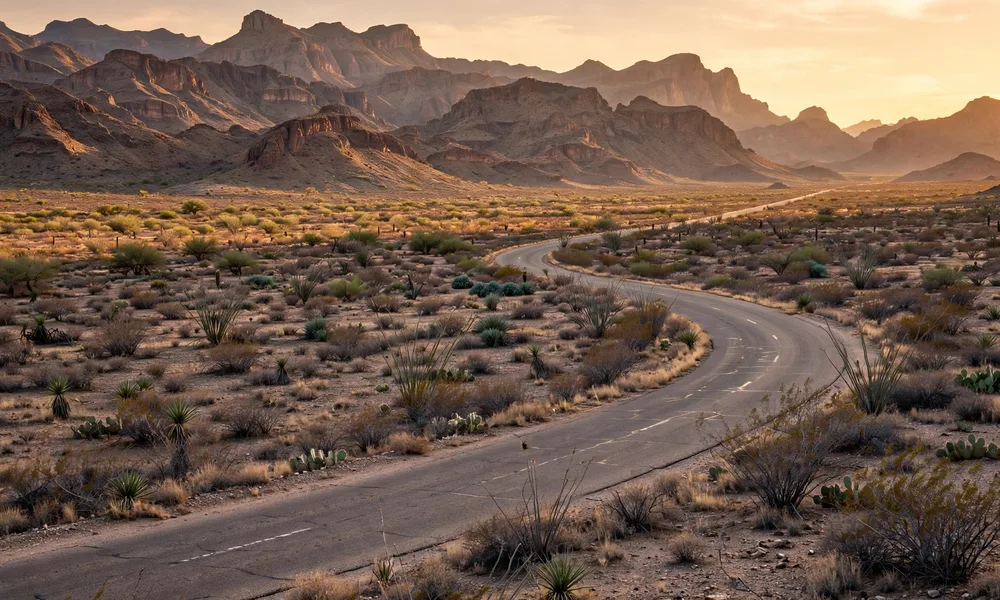
The administration’s plans call for more than 300 miles of barriers and roads in the Big Bend sector, mostly on privately owned land. The sector covers a long and remote stretch of the border along the Rio Grande in West Texas, where much of the land is rough desert terrain far from large towns. Roads are needed to reach construction sites and to patrol the area once the barriers are in place.
Big Bend National Park itself would get a different kind of barrier: a 17-mile noncontiguous vehicle barrier system, built in separate sections rather than one unbroken line. It is a vehicle barrier, not the 30-foot pedestrian barrier planned elsewhere in the sector. It is lower and more open than a tall pedestrian wall. Supporters say this design is better suited to the park. Critics say any barrier in the park will still change the landscape and affect wildlife movement.
Why the Administration Says the Work Should Go Ahead
The administration’s central argument is about border control. It says the Big Bend region is an area of high illegal entry, and the waivers issued in 2026 were based on that finding. The government argues that Section 102 of the Illegal Immigration Reform and Immigrant Responsibility Act, known as IIRIRA, a law passed in 1996, gives the Secretary of Homeland Security broad power to waive legal requirements when needed to build border barriers quickly.
The administration also argues that the balance of harms favors letting construction continue. In its view, the public interest in border security is strong and immediate. It says delays would leave gaps in the border open for longer. The Supreme Court’s statement that the government’s interest outweighs any aesthetic, recreational, and environmental harm alleged by respondents reflects that argument.
What the Challengers Argue
The challengers say the waivers bypass laws that protect the environment, wildlife, and historic places. They say the Department of Homeland Security used its waiver power too broadly and that the courts should be able to review that decision. They also say the harm is real and lasting: once roads are cut through desert land and barriers are set in place, the landscape changes in ways that cannot be undone by a later court win.
The Center for Biological Diversity has focused on wildlife and habitat. Big Bend is home to desert species that depend on open land and free movement across the area. A barrier, even a vehicle barrier, can change how animals move, find water, and reach food. Roads can split habitat and bring more traffic, dust, and noise into quiet areas. The group seeking to preserve the historic adobe church in Ruidosa, Texas, raises a different concern. The group says the church is already fragile and that construction nearby could threaten its structure.
What Happens Next
The case now returns to the appeals process. The government will pursue a full appeal of Judge Cardone’s ruling, and the stay remains in place during that appeal. That means construction can continue while the courts consider the deeper legal questions. If the justices decline to take up the case at a later stage, the stay will end automatically.
For people in West Texas, the next months will show how fast the work moves. The 17-mile vehicle barrier system inside the park will be watched closely, as will the effect on the Ruidosa church and on wildlife. The debate is also part of a wider national debate, as seen in recent coverage of Trump and Iran strikes talks in Qatar and Russia and Ukraine flexibility on territory in Abu Dhabi. Questions about oversight also continue, including the FBI looking into Nvidia and Jensen Huang. For now, the Supreme Court has given the administration a green light to build while the case continues. The challengers have lost the temporary block, but they have not lost the case itself.
FAQs
What did the Supreme Court decide on November 9, 2026?
The court granted the government’s emergency request to stay a preliminary injunction issued by Judge Kathleen Cardone in October. The stay lets construction resume in the Big Bend sector, including inside Big Bend National Park, while the government pursues a full appeal. The court declined to summarily reverse the lower court ruling outright. Justice Ketanji Brown Jackson was the only justice who noted she would have denied the request.
How much construction is planned in the Big Bend sector?
The administration’s plans call for more than 300 miles of barriers and roads in the Big Bend sector, mostly on privately owned land. Inside Big Bend National Park, the plan is for a 17-mile noncontiguous vehicle barrier system, different from the 30-foot pedestrian barrier planned elsewhere. CBP Commissioner Rodney Scott said construction is moving at about 12 miles a week and is expected to be completed by the end of Trump’s second term.
Who brought the lawsuit against the project?
The lawsuit was brought by the Center for Biological Diversity, a Big Bend-area river guide and landowner, and a group seeking to preserve a historic adobe church in Ruidosa, Texas. The group says the fragile adobe structure is threatened by construction. The challengers argue that the waivers bypass environmental and conservation laws and cause lasting harm to the landscape, wildlife, and a historic place.
What happens next in the case?
The stay remains in place while the government pursues a full appeal of Judge Cardone’s ruling. It ends automatically if the justices decline to take up the case. The courts will still need to decide whether Section 102 of the 1996 law precludes judicial review of the claims. Construction can continue in the meantime, which means much of the work may be finished before a final ruling is reached.
SOURCES
Final Thoughts
The November 9 decision is narrow in legal terms but wide in practical effect. It does not end the lawsuit or decide the full merits of the case. It decides that construction should not wait for the appeal to finish, favoring speed and border control over caution about environmental and historic harm, at least for now. The court found that the government’s interest outweighs the harm alleged by the challengers and that the 1996 law likely limits judicial review. The next step is to watch what is built, where it is built, and what the appeal decides.