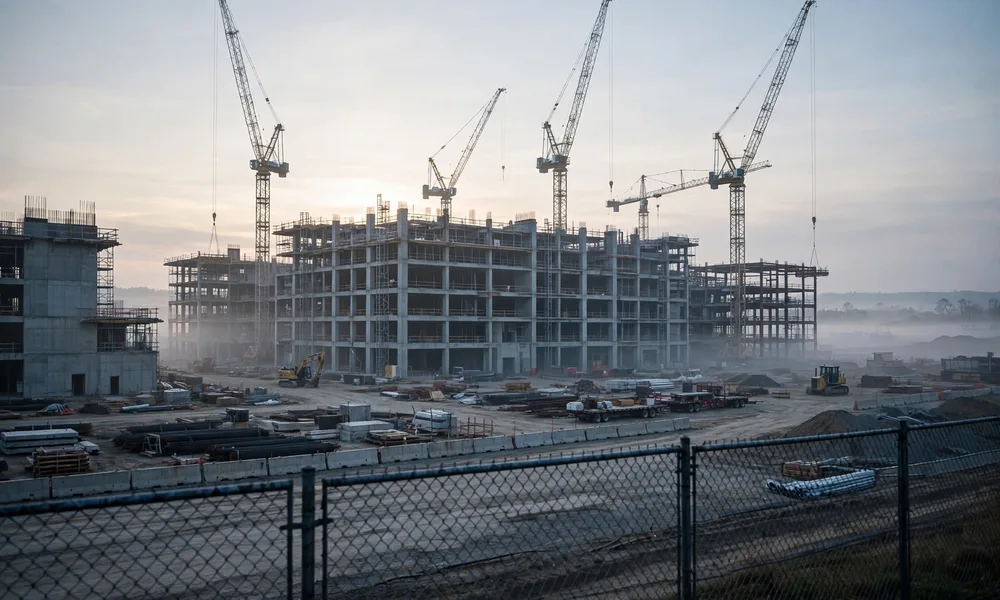
Protesters Break Into Microsoft Data Centre Site in Amsterdam as Europe Protests Begin
Protesters broke into the Amsterdam data centre construction site on Friday, November 6, 2026, at the start of two days of coordinated protests across Europe. Demonstrators pushed through fences at the site on Plimsollweg in the Sloterdijk area, and some climbed a construction crane and hung balloons and a banner. Riot police were deployed and made arrests. The action was part of the Stop Dirty Data Centres campaign, which announced protests in 16 countries on November 6 and 7, 2026, against the rapid build-out of AI computing power and the electricity and water that large data centres use.
Table of Contents
| Quick Facts | Details |
|---|---|
| What happened | Protesters broke into a Microsoft data centre construction site in Amsterdam |
| Date | Friday, November 6, 2026 |
| Location | Plimsollweg, Sloterdijk area, Amsterdam, Netherlands |
| People on site | A Reuters witness counted around 100 people on site, while organisers from Geef Tegengas told local broadcaster AT5 that about 500 entered |
| Police response | Riot police were deployed and made arrests, exact arrest count not confirmed |
| Site owner | Pure Data Centres, backed by Brookfield-owned Oaktree, investing over 1 billion dollars |
| Tenant | Microsoft will be the only tenant of the three-building complex |
| Protest campaign | Stop Dirty Data Centres, with actions announced in 16 countries on November 6-7, 2026 |
| Local context | Amsterdam banned new data centres until 2030, but this project was planned since 2016, before the ban |
What Happened at the Amsterdam Data Centre Site
The protest began on Friday morning at the construction site on Plimsollweg in the Sloterdijk area of Amsterdam. Demonstrators broke through fences around the site and entered the grounds, where work is under way on a large three-building data centre complex. Some of the protesters climbed a construction crane and hung balloons and a banner from it, turning the unfinished structure into a visible symbol of the protest within hours of the action starting.
Reports differ on how many people entered the site. A Reuters witness counted around 100 people on site. Organisers from the group Geef Tegengas told local broadcaster AT5 that about 500 people entered. Both figures are reported here with their sources because no single confirmed total has been published. Riot police were deployed and made arrests, but the exact arrest count has not been confirmed. The mayor had banned the demonstration about 45 minutes before a second planned rally.
Why Protesters Targeted This Amsterdam Data Centre
The protesters are part of a growing backlash against the rapid growth of data centres in Europe, driven in large part by demand for AI computing power. Data centres use large amounts of electricity and water. They need power to run servers around the clock, and they need cooling to keep those servers working safely. In cities where housing, energy, and water are already under pressure, that demand has become a political issue, not only a technical one.
Amsterdam is a clear example of that tension. The city banned new data centres until 2030, a decision that reflected concern about how much power and space these buildings use. The project on Plimsollweg was planned since 2016, before the ban, so it was able to go ahead. For protesters, that history does not settle the argument. They say a project approved years ago can still be wrong today, when the scale of AI demand and the pressure on local resources have both grown. For the developer and the tenant, the timeline matters in the opposite way: a project planned and approved before a ban should not be judged by rules that came later.
What Microsoft and Pure Data Centres Said
Pure Data Centres, the owner of the site, said it was committed to engagement with local stakeholders. The company is backed by Brookfield-owned Oaktree and is investing over 1 billion dollars in the project. Microsoft will be the only tenant of the three-building complex. That structure matters: Pure Data Centres builds and owns the site, while Microsoft will use it. Protests aimed at Microsoft therefore land on a company that does not own the land, but will be its sole user.
Microsoft said it understands strong feelings and respects peaceful expression but does not condone unlawful actions. The statement draws a line that many companies use in these cases. It accepts that people have a right to protest and to hold strong views about data centres, while saying that breaking into a site crosses that line. Protesters, by contrast, often argue that lawful protest alone does not change decisions that were made years earlier, and that direct action is the only way to force a public debate.
The Ban, the Timeline, and Why This Project Went Ahead
Amsterdam banned new data centres until 2030. The ban was a strong signal. It said the city wanted to pause and think about how much space and power these buildings should take. But a ban on new projects does not automatically stop projects that were already planned. The site on Plimsollweg was planned since 2016, before the ban came into force. That is why construction is under way even though the city has said no to new data centres for now.
This kind of timing gap is common in planning disputes. A project can take years to move from first plan to construction, and rules can change in that time. The question then becomes whether the old approval should still stand, or whether new rules should apply to old plans. The city has kept the ban in place for new projects. The developer has continued with a project that predates it. The protesters say the ban shows public feeling has changed, and the project should be judged by today’s standards, not by a plan from 2016.
Protests Across Europe and the Wider AI Debate
The Amsterdam action was not a single event. The Stop Dirty Data Centres coalition announced actions in 16 countries on November 6 and 7, 2026. That scale is important. It shows a campaign that has moved from local planning meetings to coordinated action across borders. The coalition is tapping into a wider worry: that the build-out of AI computing power is moving faster than public debate about its costs.
AI services need data centres. Training large models and running them for millions of users takes huge amounts of computing power, which takes huge amounts of electricity. The buildings that house that power are getting bigger, and more of them are being planned. In many European cities, that growth is running into limits on grid capacity, water supply, and land. The debate is no longer only about one building in one city. It is about how many such buildings a region can support, and who decides.
The timing of the campaign also matters. November 2026 has seen intense focus on AI infrastructure, from chip demand to data centre investment. Readers following that story may also want to read our recent coverage of the wider market, including how chip stocks moved in premarket trading on November 6, which shows how closely investors are watching AI demand. The Amsterdam protest is the other side of that same story: the physical buildings and local costs behind the market numbers.
Public votes have also started to reflect the same tension. In the United States, voters have begun to weigh in on data centre growth through local ballots, a sign that the issue is moving from planning offices into public politics. Our report on how data centres fared on the ballot in the 2026 midterms shows that the debate is no longer limited to Europe. Different countries have different rules, but the core question is the same: how much power, water, and land should go to AI infrastructure, and who gets to decide?
What Happens Next
The immediate question is what happens to the people who were arrested. No confirmed arrest total has been published, and any charges or releases will depend on police and court decisions in the coming days. The second question is whether the mayor’s ban on the second rally will be challenged, and whether future protests at the site will be allowed to go ahead in a different form.
The longer question is about the project itself. Construction on the Plimsollweg site is under way, with a single tenant already agreed and a large investment behind it. A protest, even a large and visible one, does not by itself stop a lawful project. It can slow work, raise costs, and force a public debate, but stopping a project usually needs a planning decision, a court ruling, or a change of plan by the developer or tenant. None of those has happened so far.
How many protesters entered the Amsterdam data centre site?
Reports differ. A Reuters witness counted around 100 people on site, while organisers from Geef Tegengas told local broadcaster AT5 that about 500 entered. No single confirmed total has been published, so both figures should be read with their sources attached.
Who owns the data centre site, and who will use it?
The site is owned by Pure Data Centres, backed by Brookfield-owned Oaktree, which is investing over 1 billion dollars in the project. Microsoft will be the only tenant of the three-building complex once it is complete.
Why was the project allowed if Amsterdam banned new data centres?
Amsterdam banned new data centres until 2030, but the Plimsollweg project was planned since 2016, before the ban. Projects planned before a ban can still go ahead under the rules that applied when they were approved.
What is the Stop Dirty Data Centres campaign?
It is a coalition campaigning against the electricity and water use of large data centres, linked to the rapid growth of AI computing power. It announced actions in 16 countries on November 6 and 7, 2026, with the Amsterdam protest at the start of the two days.
Sources
- Devdiscourse, Activists Breach Microsoft Data Centre Construction Site as Protests Spread in Europe, November 6, 2026
- The Insight International, Amsterdam Protesters Break Into Microsoft Data Center Site, November 6, 2026
Final Thoughts
The protest in Amsterdam was short, visible, and planned to be remembered. A group of people broke through a fence, climbed a crane, and put a banner above a construction site that most people in the city may never have noticed. In doing so, they turned a planning story into a public one, and they linked a single site on Plimsollweg to a debate about AI, energy, and water that now runs across Europe. The companies involved have answered with statements about engagement and lawful protest, but the building is still going up, and the questions behind the protest have not gone away. Whether the next step is a court case, a policy change, or another protest, the Amsterdam action has made one thing clear: the growth of AI infrastructure will be argued in public, on the ground, and not only in planning documents.
Featured image: AI-generated editorial illustration.