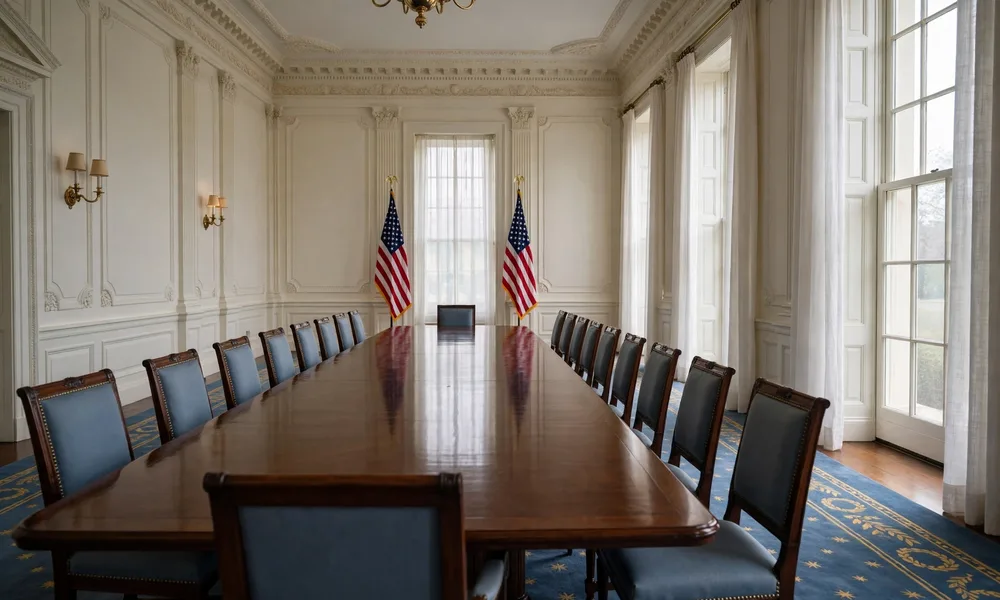
Melania Trump hosts Russia Ukraine delegations: Yes, Melania Trump hosted Russian and Ukrainian delegations at the White House on Thursday, November 5, 2026. The meeting took place one day after Ukrainian President Volodymyr Zelensky awarded her the Order of Princess Olga, First Class, for her role in securing a humanitarian ceasefire. The White House said she would personally bring representatives of Russia and Ukraine, two nations actively at war, together in one room, and it called the moment extraordinary in American history.
Table of Contents
She delivered remarks on the Oleshky ceasefire at 11:00 AM ET. The delegations were made up of the ombudsmen involved in the evacuation mission plus senior officials from both sides. The meeting was the public centerpiece of an engagement the White House said she initiated herself, and it came just days after a six-day ceasefire allowed hundreds of civilians to leave a frontline town in southern Ukraine.
Quick Facts
| Detail | What we know |
|---|---|
| Date of the meeting | Thursday, November 5, 2026 |
| Location | The White House, Washington, D.C. |
| Host | US First Lady Melania Trump |
| Remarks on the ceasefire | 11:00 AM ET |
| Ukrainian delegation | Human rights ombudsman Dmytro Lubinets and MP Davyd Arakhamia |
| Russian delegation | Human rights ombudsman Yana Lantratova and senior official Kirill Dmitriev |
| Ceasefire location | Oleshky, in the Kherson region of Ukraine |
| Ceasefire dates | October 27 to November 1, 2026 |
| Civilians evacuated | About 750 to 800 people |
| People still living in Oleshky | About 2,000 people |
| Next talks | Trilateral talks in Abu Dhabi next week |
| Award received the day before | Order of Princess Olga, First Class, from President Zelensky |
What Happened When Melania Trump Hosts Russia Ukraine Delegations
The White House announced the meeting in advance, and the wording it chose was unusually direct. It said the First Lady would personally bring representatives of Russia and Ukraine together, and it called the gathering an extraordinary moment in American history. The meeting at which Melania Trump hosts Russia Ukraine delegations was not presented as a formal peace negotiation. It was presented as a humanitarian engagement, built around the people who had worked on the evacuation mission in Oleshky and the ceasefire that made that mission possible.
The timing added to the weight of the day, since the meeting came one day after President Zelensky awarded Melania Trump the Order of Princess Olga, First Class. For the full story of that award, read our report on Zelensky awarding Melania Trump the Order of Princess Olga. The White House said Melania Trump independently initiated the engagement and successfully secured the ceasefire. That claim places the credit for the pause in fighting with her office rather than with the State Department or the Pentagon, and it explains why she, rather than a cabinet secretary, hosted the delegations.
Who Sat at the Table
Ukraine sent its human rights ombudsman, Dmytro Lubinets, and MP Davyd Arakhamia to the meeting where Melania Trump hosts Russia Ukraine delegations. Lubinets was a central figure in the evacuation mission, and his presence gave the Ukrainian side a direct link to the work on the ground in Oleshky. Arakhamia, a senior member of parliament, added political weight to the delegation. Together they represented both the humanitarian side of the mission and the political leadership in Kyiv that had backed it. Their attendance showed that Ukraine treated the meeting as serious business, not as a photo opportunity.
Russia sent its human rights ombudsman, Yana Lantratova, and senior official Kirill Dmitriev to the meeting where Melania Trump hosts Russia Ukraine delegations. Kremlin spokesman Dmitry Peskov confirmed the Russian delegation, which removed any doubt about whether Moscow had formally agreed to take part. The pairing of the two ombudsmen, one from each side, was the heart of the meeting. Neither side sent its top diplomat or its defense chief. Both sides sent the people who had actually handled the ceasefire, plus one senior official each who could carry a message back to the leadership.
The Oleshky Ceasefire That Made It Possible
None of this would have happened without the ceasefire in Oleshky. The six-day humanitarian ceasefire ran from October 27 to November 1, 2026, in the town of Oleshky, in the Kherson region of southern Ukraine. Oleshky sits in a contested area, and about 2,000 people still lived there when the ceasefire began. For six days, the guns fell silent long enough for rescue workers to do their jobs. About 750 to 800 civilians were evacuated from the town during that window, and food and medicine were delivered to those who remained.
A ceasefire in a place like Oleshky is not a simple agreement. It requires both sides to trust that the other will hold fire, and it requires a practical plan for moving people through dangerous ground. The fact that the ceasefire held for six full days, and that hundreds of people were moved safely, is a sign that the coordination behind it was real. The war has produced many proposals for ceasefires, and most have failed quickly or never started at all. This one worked, at least for six days, in one town, for a specific purpose. That is a narrow success, but it is a real one, and it gave both sides a reason to keep talking.
The Allegation Against Lantratova
The meeting was not without controversy. The Times reported that Ukraine’s security service, the SBU, has alleged that Yana Lantratova was part of a 2022 operation that illegally transferred a ten-month-old girl and a two-year-old boy from Russian-occupied Kherson to Moscow. This is an allegation made by the SBU, and it has not been proven in court. It should be read as a claim from one side in an active war, not as an established fact. Lantratova has not been convicted of any crime in connection with the alleged transfer, and the allegation itself does not change the fact that she attended the meeting as Russia’s human rights ombudsman.
The allegation shows how complicated this kind of diplomacy can be. The same officials who work on humanitarian missions may also be accused by the other side of serious wrongdoing. That tension was present in the room in Washington, even if it was not the subject of the public remarks. Ukraine sent Lubinets knowing who Lantratova was and what had been alleged about her. Russia sent Lantratova knowing the allegation would be raised in the press. Both sides chose to attend anyway, which suggests that both governments decided the value of the meeting outweighed the discomfort.
What Comes Next in Abu Dhabi
The meeting at which Melania Trump hosts Russia Ukraine delegations is not the end of this process. Trilateral talks involving Ukraine, Russia and the United States are due in Abu Dhabi next week, and they will be the first three-way round since February. That timing is important. The Washington meeting can be seen as a warm-up for Abu Dhabi, a chance for the two sides to meet in a lower-stakes setting before the formal talks begin. If the delegations left Washington on speaking terms, the negotiators in Abu Dhabi will start from a better place than they would have otherwise.
The gap since February shows how rare these three-way meetings have become, so the fact that a new round is happening at all is a sign that the diplomatic channel is still open, even if progress has been slow. What happens in Abu Dhabi will depend on many factors beyond the White House meeting. The war is still active, the political positions of both sides remain far apart, and a single humanitarian ceasefire does not resolve the larger questions. But the sequence of events, a ceasefire in Oleshky, an award in Kyiv, a meeting in Washington, and now talks in Abu Dhabi, shows a diplomatic process that is moving, step by step, in the right direction.
Why This Meeting Matters
The meeting at which Melania Trump hosts Russia Ukraine delegations matters for three reasons. First, it put civilians at the center of the conversation. The war is often discussed in terms of territory, weapons and strategy, and the people living in towns like Oleshky can be forgotten. The ceasefire, and the meeting that followed it, reversed that order. The first question was not who controls which town, but how to get 750 to 800 people out of danger. That is a different way of thinking about the war, and it is one that both sides were willing to support, at least for six days.
Second, the meeting showed that direct contact between Russia and Ukraine is still possible. The two governments have few open channels, and each meeting that takes place keeps those channels alive. Third, the meeting gave Melania Trump a defined and public role in the diplomacy around the war. First Ladies have often worked on humanitarian causes, but few have hosted delegations from two warring nations at the White House. The meeting also landed on a crowded news day in Washington, where the midterm results were still being debated and the House leadership race was already under way. Whether that channel leads anywhere further will be decided in Abu Dhabi and beyond, but the fact that it exists at all is now a matter of public record.
Why did Melania Trump host Russian and Ukrainian delegations?
Melania Trump hosts Russia Ukraine delegations to follow up on the six-day humanitarian ceasefire in Oleshky, which she is credited with helping to secure. The White House said she independently initiated the engagement, and the meeting brought together the ombudsmen and senior officials who had worked on the evacuation mission.
Who attended the White House meeting?
Ukraine sent human rights ombudsman Dmytro Lubinets and MP Davyd Arakhamia. Russia sent human rights ombudsman Yana Lantratova and senior official Kirill Dmitriev. Kremlin spokesman Dmitry Peskov confirmed the Russian delegation.
How many civilians were evacuated during the Oleshky ceasefire?
About 750 to 800 civilians were evacuated from Oleshky during the ceasefire, which ran from October 27 to November 1, 2026. About 2,000 people still lived in the town, and food and medicine were also delivered to those who remained.
What happens next after the White House meeting?
Trilateral talks involving Ukraine, Russia and the United States are due in Abu Dhabi next week. They will be the first three-way round since February, and the Washington meeting is widely seen as a step toward those talks.
Sources
- The White House: First Lady Melania Trump to Convene Russian and Ukrainian Representatives at the White House
- The Times: Melania Trump White House Peace Talks
- Brussels Signal: US First Lady Brings Russian and Ukrainian Officials Together at White House
Final Thoughts
The meeting at which Melania Trump hosts Russia Ukraine delegations, on November 5, 2026, was a small event with a large meaning. It did not end a war, and nobody claimed that it would. What it did was bring Russian and Ukrainian officials into the same room, under the roof of the White House, to talk about a ceasefire that had already saved hundreds of people. A humanitarian channel is open, and both sides are still willing to use it. The test now is whether that channel can carry more than one ceasefire, and whether the conversations that started in Oleshky can grow into something that helps more towns, more families, and more civilians caught in a war that has already lasted far too long.