Mark Rober Net Worth: YouTube Success, Business Growth, and Life Story

Mark Rober helped build a rover that landed on Mars. Then he left space work, picked up a camera, and became one of the most watched science teachers on Earth. His glitter bomb traps for package thieves, his backyard squirrel mazes, and his giant Nerf guns have earned billions of views and a YouTube audience reported in the tens of millions.
Along the way he founded CrunchLabs, a company that sends engineering kits to children every month. So what is mark rober net worth after NASA, Apple, YouTube, and a growing business? No verified figure exists, and he has never published one. This article lays out the published estimates and the documented career that produced them.
Quick Facts
| Full Name | Mark B. Rober |
|---|---|
| Date of Birth | March 11, 1980 |
| Birthplace | Brea, California, United States |
| Education | Mechanical engineering degree from Brigham Young University; master’s degree from the University of Southern California (2014) |
| Former Employers | NASA Jet Propulsion Laboratory (2004 to 2013); Apple Special Projects Group (2015 to about 2020) |
| YouTube Channel Started | 2011 |
| Company | CrunchLabs, founded in 2022 |
| Estimated Net Worth | Commonly estimated between about 20 million and 30 million dollars (estimate only, not verified) |
What Is Mark Rober Net Worth?
Estimates of mark rober net worth vary widely, and the honest answer starts there. Recent net worth and biography sites most often place him somewhere between about 20 million and 30 million dollars in 2026, with several landing near 23 million to 27 million dollars. Older estimates were far lower, including figures under 10 million dollars from earlier in his YouTube career, which shows how fast his business has grown.
One careful recent profile makes a point worth repeating: no outlet has published a verified net worth for Rober, and he has not disclosed one. Net worth pages for creators usually combine an ad revenue calculator with a guess about product income. That method cannot capture the value of CrunchLabs, a private company whose revenue is not public.
Readers should therefore treat every number as a rough estimate built from public clues: a huge channel, premium sponsorships, book and speaking work, and a subscription company that says it has shipped millions of boxes. The clues point to real, substantial wealth, likely in the tens of millions. They do not point to one exact figure, and any site claiming certainty is guessing.
Life Story: From Brea to NASA
Mark Rober was born on March 11, 1980, and grew up in Brea, in Orange County, California, the youngest of three children. His love of building started early. As a child, he made goggles so he could cut onions without his eyes stinging, a small invention that he still tells as the start of his engineering life. He has said he barely spoke until he was three or four, and that teachers misjudged him before a test showed how sharp his mind was.
He studied mechanical engineering at Brigham Young University, graduating in 2004, and went straight to NASA’s Jet Propulsion Laboratory in Pasadena. He spent nine years at JPL. For seven of those years he worked on the Curiosity rover, the car sized robot that landed on Mars in 2012 and still sends back science today. He also contributed to other missions and built JPL’s internal knowledge sharing system.
Most people would call that a dream career and stop there. Rober kept going. In 2014, he completed a master’s degree in mechanical engineering from the University of Southern California, studying while his public career was already taking off. Learning, for him, was never a phase. It became the product.
YouTube Success: Glitter Bombs and Squirrel Mazes
Rober posted his first YouTube video in October 2011, while still at NASA. It showed a Halloween costume using two iPads to create the illusion of a hole through his body, and it drew about 1.5 million views in a day. He turned the idea into a company, Digital Dudz, which sold app based costumes, and later sold it to the costume company Morphsuits.
After leaving NASA in 2013, he worked for a time with the costume business, then joined Apple in 2015 as a product designer in its Special Projects Group, where his work included patents linked to entertainment in self driving cars. He left Apple around 2019 to 2020 to focus on YouTube full time, and the channel exploded in scale.
His December 2018 glitter bomb video, a fake package that sprayed glitter and bad smell over thieves, became a yearly tradition and a global news story. Squirrel mazes, giant Nerf guns, elephant toothpaste, and glitter bombs sent to scam call centers followed. Each video takes months, looks effortless, and teaches real physics and engineering along the way. In 2023, he gave the commencement address at MIT, a sign of how far a YouTube engineer had traveled into the heart of education.
Business Growth: CrunchLabs and Team Fundraisers
In 2022, Rober founded CrunchLabs, an education company that sells a monthly subscription box. Each box gives a child a hands on engineering toy to build, paired with videos in which Rober explains the science. The company describes hundreds of thousands of subscribers and millions of boxes shipped. For his net worth, CrunchLabs is probably the most important asset, because a subscription business with loyal families is worth far more than a pile of old ad checks.
Rober also helped lead some of the largest charity campaigns in internet history. With MrBeast, he co-founded Team Trees in 2019, which raised more than 20 million dollars to plant trees, Team Seas in 2021, which raised more than 30 million dollars for ocean cleanup, and later Team Water for clean water access. This money went to charity partners, not to Rober, but it cemented his place as a trusted public figure, which in turn supports his sponsorship and business income.
His family also shapes his public work. Rober has spoken openly about his son, who is on the autism spectrum, and in 2021 he helped host a livestream with Jimmy Kimmel that raised about 3 million dollars for the organization NEXT for AUTISM. Rober keeps most family details private, and coverage of his personal life should stay at that respectful level.
How He Works: Few Videos, Huge Effort
Part of Rober’s business success is how different his upload pattern is from most creators. Where many channels post weekly or even daily, Rober often takes a month or more on a single video. A glitter bomb takes half a year of engineering. A squirrel maze takes weeks of building and filming, because squirrels do not follow scripts. The result is a small library of videos that keep collecting views for years, which means steady ad income from old work while each new release becomes an event.
He has explained this approach through what he calls the Super Mario effect, an idea he shared in a TEDx talk. When his son played a learning game, failing at a level did not feel like punishment, so he kept trying. Rober argues that framing problems as levels to retry, rather than failures to fear, helps people learn hard things. That thinking runs through his channel and his company. CrunchLabs boxes are built on the same idea: a child tries, the build wobbles, and trying again is the fun part.
This slow, careful style also protects his income. Sponsors pay premium rates to appear in videos that families rewatch, schools show in classrooms, and viewers trust. In a market where many creators burn out chasing daily uploads, Rober built a slower machine that produces more value per video.
FAQs
What is Mark Rober net worth in 2026?
Most recent published estimates place him between about 20 million and 30 million dollars. No verified figure exists, because his main company is private and he has not disclosed his finances.
Did Mark Rober really work at NASA?
Yes. He worked at NASA’s Jet Propulsion Laboratory from 2004 to 2013 and spent seven of those years on the Curiosity Mars rover team.
How does Mark Rober make money now?
His income comes from YouTube advertising, brand sponsorships, CrunchLabs subscription boxes, speaking, and earlier business sales such as Digital Dudz.
What is CrunchLabs?
CrunchLabs is the education company Rober founded in 2022. It sends children a monthly engineering build kit with videos that explain the science behind each project.
You may also read: Aniya Wayans: Everything You Need to Know About Damon Wayans Jr.’s Daughter
Final Thoughts
Mark Rober’s life story runs in a straight line, even if the jobs look different. A boy who built onion goggles became an engineer who built Mars hardware, then a creator who builds wonder for millions of children, then a founder who ships that wonder in a monthly box.
The exact mark rober net worth number will stay an estimate, and that is fine. The documented facts are impressive enough: nine years at NASA, work at Apple, one of the largest science channels in the world, record setting charity campaigns, and a growing education company. Whatever the precise total, Rober has turned curiosity itself into a career, and into wealth that keeps funding the next build.
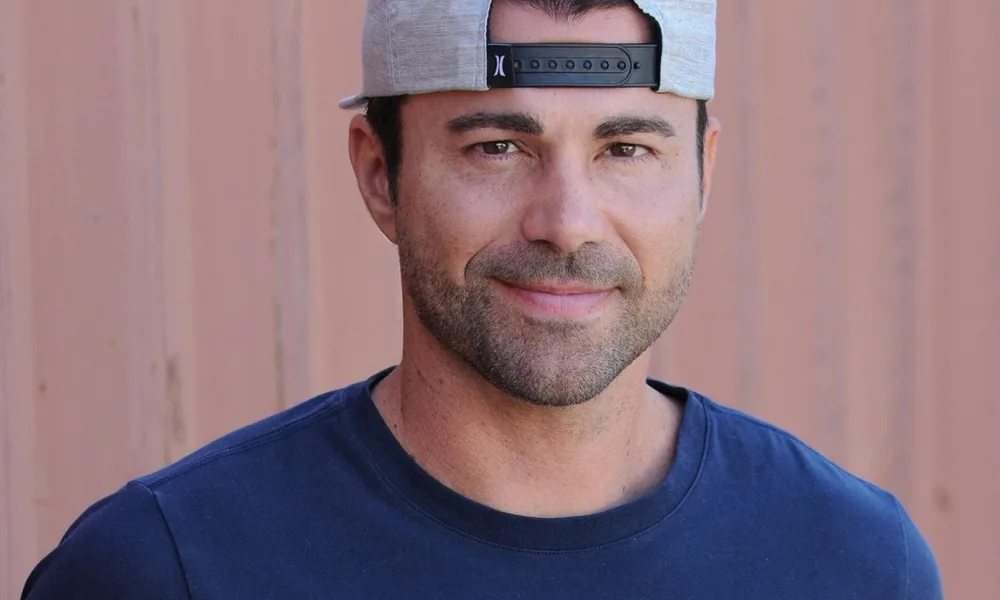
Featured photo: Mark Rober – photo by LKP2024, CC BY 4.0, via Wikimedia Commons