How to Build an Effective Commercial Cleaning Maintenance Plan
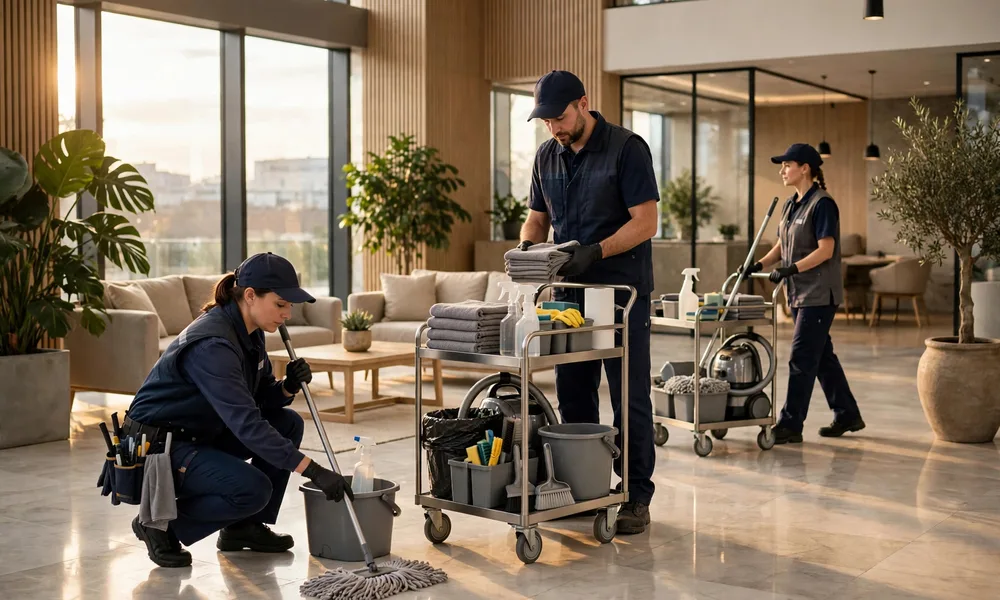
A commercial building never stays clean by luck. Lobbies get footprints, restrooms need constant care, trash fills up, and glass doors collect fingerprints within hours. Without a written plan, cleaning becomes reaction work: staff rush to the mess they can see, while hidden tasks are missed for weeks.
An effective commercial cleaning maintenance plan fixes that. It states what will be cleaned, where, how often, by whom, and how the work will be checked. This guide walks through the steps to build one, from the first walk of the building to the regular reviews that keep the plan alive.
| Item | Details |
|---|---|
| Topic | Building a commercial cleaning maintenance plan |
| Category | Business |
| Core idea | Match each task to an area, a frequency, an owner, and a way to check it |
| Daily focus | Restrooms, entries, trash, food areas, and high touch surfaces |
| Periodic focus | Carpet care, high dusting, floor treatment, and deep cleaning |
| Key guidance | Clean first, then sanitize or disinfect where needed, following product labels |
| Review cycle | Inspect and update the plan as traffic, seasons, and building use change |
Step One: Walk the Building and Map the Zones
Start with a full walk of the site, not with a price list or a generic checklist. Go area by area and note what each space is used for, how many people pass through it, and what surfaces it holds. A plan that treats a quiet storage room like a busy lobby will waste money in one place and fail in the other.
Divide the building into zones. Common zones include entries and lobbies, offices, meeting rooms, restrooms, kitchens and break rooms, corridors and stairs, and special areas such as clinics, food areas, labs, gyms, or factory floors. Each zone may need a different frequency, product, tool, and level of supervision.
During the walk, record the details that change the work. Note floor types, since carpet, tile, stone, and wood all need different care. Note access rules, alarm times, and hours when cleaning can or cannot happen. Note problem spots too, such as an entry that floods with mud in winter or a restroom that serves a whole floor.
Talk to the people who use the building. Managers, front desk staff, and tenants know where complaints come from. Their input helps you set priorities that match real use, not just how the building looks on a quiet morning.
Step Two: Set Priorities by Risk and Traffic
Not every surface carries the same risk. A surface that looks clean is not always the top priority, and a shiny floor matters less than a dirty door handle that hundreds of hands touch each day.
High touch surfaces need frequent care. These include door handles, light switches, elevator buttons, handrails, counters, touchscreens, shared keyboards and phones, and restroom fixtures. The United States Centers for Disease Control and Prevention advises cleaning high touch surfaces regularly, and cleaning other surfaces when they are visibly dirty.
The CDC also draws a clear line between cleaning and disinfecting. Cleaning removes dirt and many germs with soap or detergent and friction. Disinfecting kills more germs that remain, and it works best after cleaning, because dirt can reduce how well a product works. In most routine settings, regular cleaning is enough. Disinfection is added after illness, during an outbreak, in high traffic areas, or where site rules require it. Always follow the product label, including how long the surface must stay wet.
Some sites carry extra rules. Healthcare, food service, childcare, labs, and manufacturing sites may have legal or industry standards on top of normal cleaning. Build those rules into the plan from the start, not as an afterthought.
Step Three: Build the Schedule by Frequency
With zones and priorities clear, group tasks by how often they must happen. This is the heart of the plan, and it stops daily jobs and deep jobs from being mixed into one vague list.
Daily tasks cover health, safety, and first impressions. They usually include restroom cleaning and restocking, trash removal and new liners, entry and lobby care, touchpoint cleaning, kitchen surface cleaning, spot mopping, and a fast response to spills. In busy buildings, some of these jobs may be needed more than once a day.
Weekly tasks go deeper. They often include detailed dusting, full vacuuming with attention to corners and edges, interior glass cleaning, break room deep cleaning such as the fridge and microwave, and floor care in lower traffic areas. Monthly tasks may include high dusting, vent cleaning, storage area cleaning, supply audits, and supervisor inspections. Quarterly or periodic work covers carpet extraction, floor refinishing, machine scrubbing, and planned deep cleaning, timed so it does not clash with business hours.
For every task, write five things: the area, the frequency, the person or team responsible, the supplies and method to use, and the expected result. A line that just says clean the office helps no one. A line that says who cleans which restrooms, at what times, with which products, and to what standard can be trained, followed, and checked.
Do not forget seasons. Winter brings salt, sand, and wet floors to entries. Spring suits a deep clean and window work. A good plan adds seasonal tasks in advance instead of treating every month the same.
Step Four: Assign People, Supplies, and Safety Rules
A plan fails if nobody owns it. Assign each task to a named person, team, or shift, and name a supervisor who checks the work and handles problems. Clear ownership also helps with cover: when someone is sick or on leave, the plan shows exactly which duties need a replacement.
Training is part of the plan, not a separate extra. Cleaners need to know how to use each product and tool, how long a disinfectant must stay on a surface, and how to clean without spreading dirt from one area to the next. Simple habits matter, such as using fresh cloths, not dipping a used cloth back into clean solution, and washing hands after cleaning.
List the supplies each zone needs and where they are stored. Stock checks belong in the schedule, because a cleaner without soap, liners, or paper will skip tasks no matter what the plan says. Keep chemicals labelled and stored safely, away from food areas, and keep safety data sheets where staff can find them fast.
Safety rules protect cleaners and building users alike. They include signs for wet floors, gloves and other protective gear where products require it, good ventilation during chemical use, and never mixing products, especially bleach with ammonia or other cleaners. Note any areas that need care around electrical equipment, machines, or sensitive documents.
Step Five: Check the Work and Keep Improving
A plan on paper is only a start. Build in inspections, with a simple scoring checklist for each zone, and walk key areas at set times. Restrooms and entries should be checked most often, because they shape how people judge the whole building.
Keep records. A short log of completed tasks, missed tasks, complaints, and fixes gives you proof of service and shows patterns over time. If one restroom draws repeated complaints, the log will show whether the problem is frequency, timing, supplies, or training.
Review the plan on a set cycle, such as monthly for small sites and quarterly for larger ones, and also after any big change: new tenants, new hours, building work, or a health incident. Adjust frequencies up or down based on evidence. Some areas will need more care than expected, and others less, and moving effort to the right places improves results without simply raising cost.
Share results with the client or building manager. A short report with inspection scores, completed periodic work, and planned next steps builds trust and makes renewal far easier than promises alone.
Common Mistakes That Weaken a Cleaning Plan
The most common mistake is a one size fits all schedule copied from another building. The second is focusing only on what looks dirty, while high touch surfaces and restrooms get too little time. The third is writing tasks with no owner and no standard, so two cleaners do the same job in two different ways.
Other frequent problems include skipping periodic work until floors or carpets are damaged, storing supplies far from where they are used, and never reviewing the plan after the building changes. Each mistake is cheap to prevent at the planning stage and expensive to fix later.
FAQs
What should a commercial cleaning plan include?
It should include a zone map of the building, tasks grouped by daily, weekly, monthly, and periodic frequency, a named owner for each task, the products and methods to use, safety rules, and a way to inspect and record the work.
How often should high touch surfaces be cleaned?
Regularly, and in busy buildings usually every day or several times a day. Door handles, elevator buttons, switches, rails, and restroom fixtures are the main examples. Disinfection is added after illness or during outbreaks.
What is the difference between cleaning and disinfecting?
Cleaning removes dirt and many germs using soap or detergent and friction. Disinfecting uses a chemical product to kill more germs left on the surface. Cleaning comes first, because dirt can stop a disinfectant from working well.
How often should the plan be reviewed?
Review it monthly or quarterly depending on the size of the site, and right after major changes such as new tenants, new opening hours, building work, or a health incident in the building.
You may also read: The Best Plagiarism Checkers in 2026
Final Thoughts
An effective commercial cleaning maintenance plan is a working system, not a list of chores. Walk the building, split it into zones, set priorities by risk and traffic, schedule tasks by frequency, assign clear owners, and check the results.
Buildings change, and the plan should change with them. The sites that stay clean month after month are not the ones with the longest checklists. They are the ones where the plan is clear, the team is trained, and someone reviews the work and fixes small gaps before they become complaints.