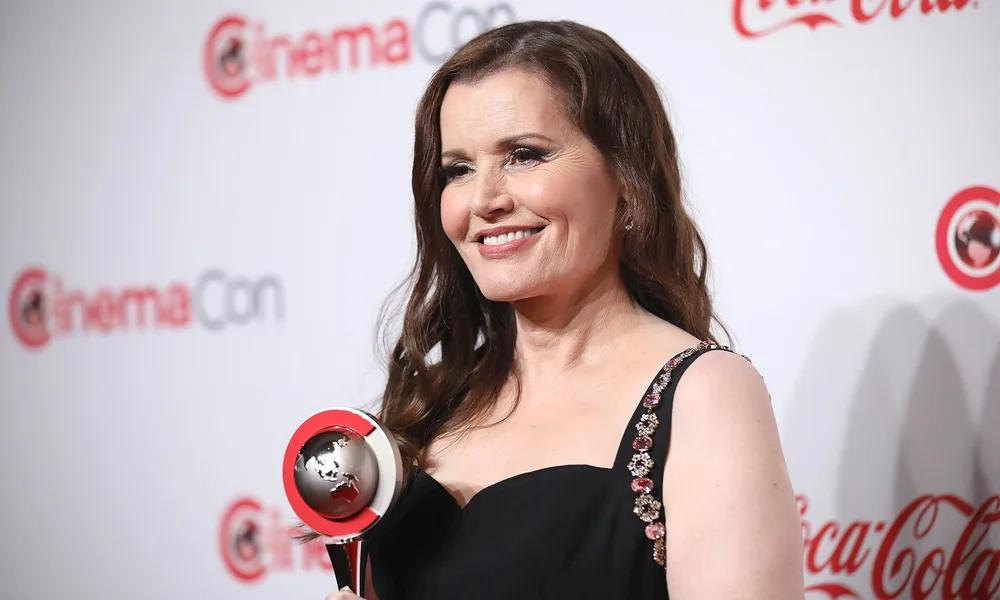

Alizeh Keshvar Davis Jarrahy: The Private Life of Geena Davis’ Daughter
Alizeh Keshvar Davis Jarrahy grew up as the daughter of an Oscar winning actress and a surgeon, in a home where famous faces were normal. Yet the most remarkable thing about her public story is how little of it is public. She did not become a child star, she did not chase the camera, and as a young adult she has kept the same quiet approach.
Her name still matters in one important way. Watching the world through her young daughter’s eyes is what pushed her mother, Geena Davis, to found one of Hollywood’s best known research groups on how girls and women appear on screen. This article tells Alizeh’s documented story: her family, her childhood influence, her studies, and the private life she has chosen since.
| Full Name | Alizeh Keshvar Davis Jarrahy |
|---|---|
| Born | April 10, 2002 |
| Mother | Geena Davis, Academy Award winning actress, born January 21, 1956 |
| Father | Dr. Reza Jarrahy, surgeon |
| Brothers | Twin brothers Kaiis Steven and Kian William, born May 6, 2004 |
| Known For | Being Geena Davis’ eldest child, and the daughter whose childhood inspired the Geena Davis Institute on Gender in Media |
| Studies, As Reported | People magazine, citing her LinkedIn profile, reports studies at the University of Southern California in the music industry and cinematic arts |
| Public Life | Private, with only occasional public appearances alongside her family |
A Famous Mother Who Became a Parent in Her Forties
Alizeh’s mother, born Virginia Elizabeth Davis on January 21, 1956, in Wareham, Massachusetts, became famous as Geena Davis through films such as The Accidental Tourist, for which she won the Academy Award for Best Supporting Actress, as well as Beetlejuice, Thelma and Louise, and A League of Their Own. She later won a Golden Globe for playing a president in the television series Commander in Chief.
Davis married Alizeh’s father, surgeon Reza Jarrahy, on September 1, 2001. Alizeh was born the following spring, on April 10, 2002, when her mother was 46. Two years later, on May 6, 2004, the family grew again with twin sons, Kaiis Steven and Kian William. Davis has said in interviews over the years that she was grateful to have become a mother in her forties. She explained that she felt more settled and more determined that her children would grow up with strong self esteem, something she felt she herself had lacked when she was young.
The parents raised their three children largely out of the spotlight, in California. Davis and Jarrahy separated in 2017, and their divorce was finalized in December 2021, after about twenty years of marriage. By then Alizeh was already a young adult, and the family’s approach to privacy did not change with the divorce.
The Daughter Who Changed How Her Mother Saw Hollywood
The best documented part of Alizeh’s childhood is not a film role or a red carpet moment. It is a simple scene at home. When Alizeh was about two years old, Davis began watching preschool television shows and children’s films with her, and she noticed something she had never focused on before: there were far fewer female characters than male ones, even in entertainment made for the youngest children. She has described being horrified by the imbalance, and by the thought that children absorb that picture of the world without questioning it.
In a 2016 interview with The New York Times, Davis put it directly. Asked why she started her work on gender in media, she answered that the impetus was her daughter, because she was very aware of the lack of great female characters in film while living that experience as a mother. That same year, in an essay about Alizeh published in Parade, she wrote that she could not stop the culture from sending disempowering messages to her daughter, no matter how much she limited media exposure, but she could tell her daughter that it was wrong, teach her that it was unfair, and work to change it.
That work became the Geena Davis Institute on Gender in Media, founded in 2004 at Mount Saint Mary’s University, the same year Alizeh’s twin brothers were born. The institute gathers data on representation in film and television and shares it directly with the studios and creators who make children’s entertainment. Its research later expanded beyond gender to include other forms of representation, and in 2022 the institute received a Governors Award from the Television Academy for its work. Few toddlers can be said to have influenced an industry, but in a real and documented sense, Alizeh did, simply by sitting beside her mother in front of a television.
Growing Up Away From the Camera
Unlike many children of stars, Alizeh did not grow up performing. She has no acting credits as a child performer, no reality show history, and no public record of chasing fame. What her mother shared about her childhood was small and human. Davis told Good Housekeeping in 2006 that young Alizeh loved princesses, but always on her own terms: in her games, the princesses were never simply asleep or waiting under a spell. They were active princesses who battled dragons and evil witches. It is a small detail, but it matches the lesson Davis said she wanted her daughter to learn about stories and about herself.
The family’s public appearances together were occasional and normal for a Hollywood family: a charity event here, a theatre night there. One recorded example is Alizeh appearing backstage at the Broadway musical Beetlejuice in New York in September 2019, a neat family link, since the original Beetlejuice film was one of her mother’s early hits. Photographs from a 2017 children’s hospital charity event in Culver City also show the full family of five together. Beyond such moments, the record is quiet, by design.
Studies and Early Steps Toward Film and Music
As Alizeh grew older, her reported interests leaned toward the creative industries, but toward the business and craft side rather than the acting side. People magazine, in its profile of Davis’s three children, reported that according to Alizeh’s LinkedIn profile she attends the University of Southern California, where she is pursuing a bachelor’s degree connected to the music industry and cinematic arts. The same report noted internships, including work connected to MPATH MUSIC, a music company.
Those details should be read for what they are: a magazine summary of a professional networking profile, not a long interview given by Alizeh herself. She has not given major interviews about her plans, and no confirmed public record shows her launching an acting career or releasing music of her own. Later entertainment coverage has described her as steadily building experience in the industry since the early 2020s, but the specifics remain thin. The honest picture is of a young woman studying the worlds of film and music at a major university in Los Angeles, gaining early work experience, and keeping her next steps to herself.
That approach also fits comments her mother has made over the years about hoping her children would find their own paths. Davis built an unusual double career, as both a star and a researcher, and the evidence so far suggests her daughter is interested in working behind the scenes of the same industry, in music and film, rather than in front of a camera.
A Private Life by Choice
Today, in her early twenties, Alizeh Keshvar Davis Jarrahy remains a private person. She does not run a public career as an influencer, she has not sold her story to magazines, and detailed claims about her income, relationships, or daily life that appear on small biography websites are not backed by reliable reporting. Her net worth is not published by any trustworthy source, and any exact figure offered online should be treated as a guess.
There is something worth respecting in that. Being the child of a famous parent brings attention that the child never applied for. Alizeh’s one great public effect, inspiring her mother’s institute, happened before she could even remember it. Everything since has been her own quiet choice: a normal education, early steps in music and film studies, and a life lived mostly off camera in a family that could easily have chosen otherwise.
Whether she eventually works in the music business, in film production, or in something entirely different, the public record will likely learn about it the way it learned about her studies, briefly and after the fact. Until then, the accurate story of Alizeh Keshvar Davis Jarrahy is the story of a young woman from a very public family who has kept her own life private, and of a childhood that quietly helped change how Hollywood counts the girls in its stories.
FAQs
When was Alizeh Keshvar Davis Jarrahy born?
She was born on April 10, 2002. She is the first child of actress Geena Davis and surgeon Reza Jarrahy, who married on September 1, 2001.
Does Alizeh have siblings?
Yes. She has younger twin brothers, Kaiis Steven and Kian William, born on May 6, 2004. She is the only daughter and the eldest of the three children.
What does Alizeh do now?
People magazine, citing her LinkedIn profile, reports that she studies at the University of Southern California in fields connected to the music industry and cinematic arts, and that she has held internships including one connected to MPATH MUSIC. She keeps her life private and has not launched a public acting career.
How did Alizeh inspire the Geena Davis Institute?
When Alizeh was a toddler, Geena Davis watched children’s shows with her and noticed how few female characters appeared. That experience led Davis to found the Geena Davis Institute on Gender in Media in 2004 to study and improve representation on screen.
You may also read: Bethenny Frankel Net Worth: How She Built an $80 Million Fortune
Final Thoughts
Alizeh Keshvar Davis Jarrahy is a reminder that influence does not always look like fame. She did not ask for public attention, and she has not used her family name to chase it. Yet her childhood viewing habits helped start research that changed how an entire industry thinks about girls on screen. Her own story is still being written, privately and on her own terms, in music and film studies in Los Angeles, and that privacy is not a missing piece of the story. It is the story.
Featured photo: Geena Davis – photo by Gage Skidmore, CC BY-SA 2.0, via Wikimedia Commons