AGIBOT Unveils GO-3 Preview, a Robot Brain That Learns From the Real World
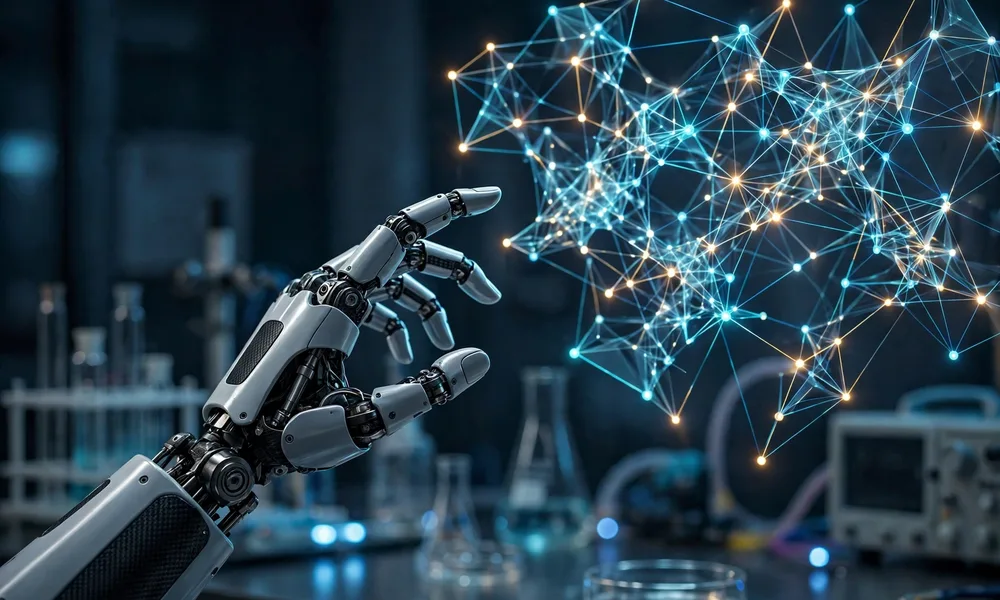
AGIBOT has introduced a new robot model that it says can learn in a way that feels closer to how a person learns on the job. The model, called GO-3 Preview, was unveiled on November 3, 2026 in Shanghai. It is described as an embodied foundation model, a type of artificial intelligence built to control a physical robot body rather than only answer questions on a screen.
The idea behind GO-3 Preview is simple to explain, even if the engineering behind it is complex. Most robot models are trained in a lab, then sent out into the world. GO-3 Preview is designed to keep learning after that point too. It connects three stages that are often kept apart: pre-training, post-training and post-deployment learning. In plain terms, the robot learns the basics first, then gets refined for specific tasks, then keeps improving from real world experience.
That claim matters because robots still struggle outside controlled settings. A warehouse floor, a home kitchen or a busy workshop is full of small surprises. Objects move, lighting changes, people walk past and tools end up in the wrong place. A robot that can only repeat what it was taught in training will soon get stuck. A robot that can keep learning from what it actually sees and does has a better chance of staying useful.
Quick Facts
| Detail | What we know |
|---|---|
| Model name | GO-3 Preview |
| Developer | AGIBOT |
| Unveiled | November 3, 2026, in Shanghai |
| Model type | Embodied foundation model for robots |
| Architecture | WRAM, short for World Reasoning Action Model |
| Benchmark results | First place on RoboDojo, RoboTwin and RoboColiseum |
| Companion systems | Genie Evolver for post-training and Genie Master agent framework |
| Open source plan | Fully open sourced by the end of 2026 |
What GO-3 Preview Is Supposed to Do
AGIBOT describes GO-3 Preview as a single brain for a robot body. It takes in what the robot sees and senses, works out what is happening around it, predicts what might happen next and then decides what action to take. That full loop is important. Many older systems split those jobs across separate pieces of software, which can make the robot slow or inconsistent when something unexpected happens.
The architecture behind the model is called WRAM, which stands for World Reasoning Action Model. According to AGIBOT, WRAM brings three jobs together in one system: understanding a task, predicting future states and generating actions. So instead of first understanding a scene and then, in a separate step, planning a movement, the model is built to handle those steps as one connected process. For a robot that needs to pick up an object, hand it to a person or move through a cluttered room, that connected approach could mean smoother and more reliable behaviour.
Why the Three Benchmark Results Matter
AGIBOT says GO-3 Preview ranks first on three embodied AI benchmarks: RoboDojo, RoboTwin and RoboColiseum. Benchmarks are standard tests that let researchers compare different models on the same tasks. In robotics, they often test skills such as grasping objects, following instructions, moving safely around obstacles and completing multi-step jobs.
Ranking first on three separate benchmarks is a strong signal, but it is not the same as proving the model works perfectly in every real home or factory. Benchmarks are still controlled tests, even when they try to copy real conditions. The interesting part of the GO-3 Preview announcement is that AGIBOT is not only pointing to test scores. It is also pointing to a learning loop that continues after deployment, which is where real world performance is really decided.
Readers should also keep one thing in mind. Benchmark leadership can change quickly in this field, as new models arrive every few months. The value of GO-3 Preview will become clearer when independent researchers test it outside AGIBOT and when developers try it on robots and tasks that AGIBOT did not design.
Learning After Deployment: The Big Idea
The phrase post-deployment learning is at the heart of this release. In older robot software, deployment was close to the end of the story. A model was trained, tested and then frozen. If it made the same mistake twice, it would keep making it until engineers retrained it and shipped an update.
GO-3 Preview is built around a different cycle. Pre-training gives it broad skills. Post-training refines it for particular robots and jobs. Post-deployment learning then lets it keep improving from real experience. That could mean learning the layout of a specific building, getting better at handling a particular tool or adjusting to the way a specific team works.
This kind of learning also raises practical questions that AGIBOT and its users will need to answer over time. How does the robot avoid learning bad habits from messy data? How is learning checked before it changes behaviour in a safety critical job? And how much control does the owner of the robot keep over what it learns? Those questions are not answered by a launch announcement alone, but they will shape how widely a system like this can be trusted.
Genie Evolver and Genie Master Explained in Plain Terms
GO-3 Preview does not arrive alone. AGIBOT also points to two companion systems: Genie Evolver and Genie Master. Genie Evolver is described as a post-training system. In simple terms, it is the toolset that helps take the broad base model and shape it for a specific job, using extra training data and feedback.
Genie Master is described as an agent framework. Think of it as the organiser that helps the robot handle longer and more complex jobs, breaking a big task into smaller steps and keeping track of progress. A robot that only follows one instruction at a time can do simple work. A robot that can plan a sequence, check its own progress and recover from a failed step can handle far more useful work.
Together, the three pieces tell a clear story about where AGIBOT is heading. The model is the brain, Genie Evolver is the training workshop and Genie Master is the manager that turns instructions into finished work. If those pieces work well together, developers may find it easier to build robots for new tasks without starting from scratch each time.
What Open Sourcing by the End of 2026 Could Change
AGIBOT says GO-3 Preview will be fully open sourced by the end of 2026. Open sourcing means the model and related materials are made available for other researchers and developers to use, study and build on, subject to the licence terms that AGIBOT publishes. That step could speed up work across the whole field, because smaller labs and startups would not need to train a similar model from zero.
Open models also tend to get tested more widely and more quickly. Independent teams try them on different robots, in different settings and with different tasks. That testing can reveal strengths and weaknesses faster than internal testing alone. It can also lead to new applications that the original developer never planned.
At the same time, open sourcing does not remove the hard parts of robotics. A model still needs a suitable robot body, sensors, safety checks and a lot of real world testing before it can do useful work in a home or a workplace. The announcement is best read as an invitation to the wider research community, not as proof that capable general purpose robots are ready for every job tomorrow.
Where This Fits in the Robot Race
Robotics is now one of the most competitive areas in artificial intelligence. Companies around the world are racing to build models that can control humanoid robots, factory arms and helper robots. Some focus on hardware, some on software and some, like AGIBOT, try to build both together.
GO-3 Preview fits a clear trend in that race. The field is moving from robots that repeat fixed routines to robots that can understand language instructions, see their surroundings and adapt when plans go wrong. That shift is driven by the same kind of large AI models that changed text and image work, now applied to physical action.
For readers of The Akron Magazine, the practical takeaway is not about one benchmark score. It is about the direction of travel. Robots that learn from the real world, rather than only from lab data, could become more useful in everyday settings over the next few years. How fast that happens will depend on safety, cost, reliability and whether open models like this one really do help other teams build on the work.
FAQs
What is GO-3 Preview?
GO-3 Preview is an embodied foundation model from AGIBOT, unveiled on November 3, 2026 in Shanghai. It is designed to control a physical robot, connecting pre-training, post-training and post-deployment learning so the robot can keep improving from real world experience.
What is WRAM?
WRAM stands for World Reasoning Action Model. It is the architecture behind GO-3 Preview, built to unify task understanding, prediction of future states and action generation in one system, rather than splitting those jobs across separate tools.
Which benchmarks does AGIBOT say it leads?
AGIBOT says GO-3 Preview ranks first on three embodied AI benchmarks: RoboDojo, RoboTwin and RoboColiseum. Those results are reported by AGIBOT, and independent testing will help confirm how the model performs on other robots and tasks.
When will GO-3 Preview be open sourced?
AGIBOT says the model will be fully open sourced by the end of 2026. The exact licence terms and release details have not been fully set out in the launch summary, so developers should check the official release when it appears.
Final Thoughts
GO-3 Preview is an ambitious step, and its most interesting promise is not a single test score. It is the idea of a robot brain that keeps learning after it leaves the lab. If AGIBOT delivers on its open source plan, researchers around the world will soon be able to test that promise for themselves. Until then, the sensible view is hopeful but patient: this is a notable launch in a fast moving field, and its real impact will be shown in the robots that use it in the months ahead. For more on the wider AI landscape, see this overview from Reuters on artificial intelligence.