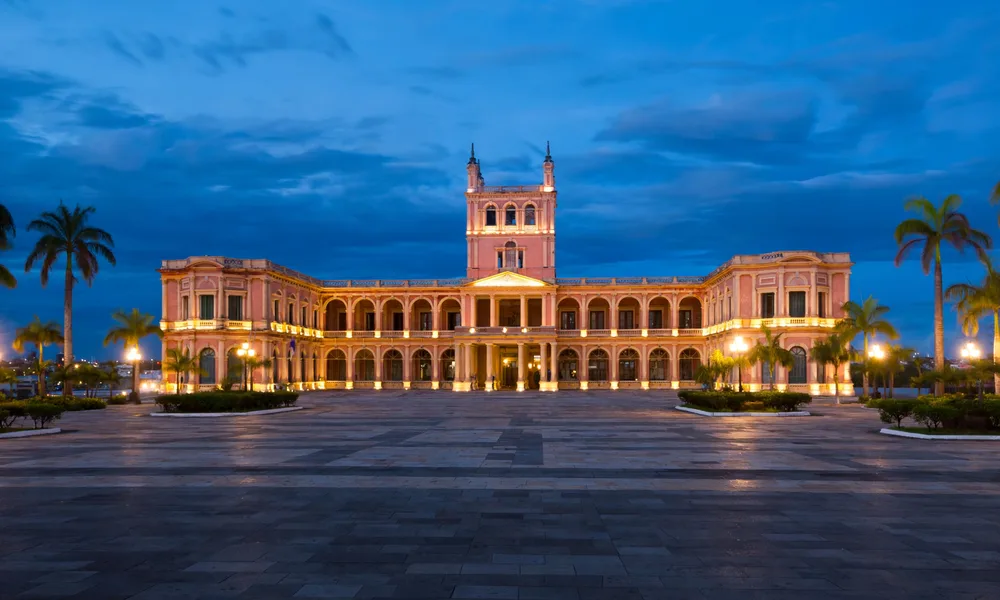
Santiago Pena charged with financial crimes and ordered into pretrial detention on Saturday, November 7, 2026, one day after the Senate removed Paraguay’s former president from office over the collapse of Ueno Bank. Prosecutors charged Pena with breach of trust and administration or mismanagement for personal gain. After a hearing of about three hours, Judge Hernan Otazu ordered Pena held in pretrial detention at a military facility in Asuncion. Pena denies wrongdoing and pleaded not guilty. His attorney is Ricardo Preda. The charges are the latest step in a fast-moving crisis that began when the central bank put Ueno Bank into resolution on Tuesday, November 3, freezing the accounts of nearly 3 million customers and sparking protests across the country.
Table of Contents
Quick Facts
| Fact | Detail |
|---|---|
| Who was charged | Former president Santiago Pena, 47 |
| Date of charges | Saturday, November 7, 2026 |
| Charges | Breach of trust and administration or mismanagement for personal gain |
| Court decision | Pretrial detention at a military facility in Asuncion |
| Judge | Hernan Otazu |
| Pena’s plea | Not guilty; he denies wrongdoing |
| Pena’s attorney | Ricardo Preda |
| Also charged | Former central bank chairman Carlos Carvallo |
| Bank involved | Ueno Bank, a digital-first bank with nearly 3 million customers |
| Customers affected | Nearly 3 million, almost half of Paraguay’s 6.5 million people |
| Public funds at Ueno | Roughly 850 million dollars as of June 2026 |
| People charged so far | 27 in connection with suspected financial crimes |
| Depositors paid out | Equivalent of 160 million dollars to nearly 1.2 million savers |
| New president | Pedro Alliana, sworn in Friday, serving until August 2028 |
How Ueno Bank collapsed
Ueno Bank was one of Paraguay’s most popular banks. It was a digital-first bank, and its accounts reached nearly 3 million customers, almost half of the country’s population of about 6.5 million people. For many Paraguayans, Ueno was where their savings sat, where their wages landed, and where their pension payments arrived.
The numbers behind the collapse are large. As of June 2026, public institutions including the state pension fund held roughly 850 million dollars in accounts with Ueno. Ueno lent 146 million dollars to companies tied to its owner, Grupo Vazquez. Pena owned a stake in the parent company of Grupo Vazquez before divesting last year.
Prosecutors say Pena intervened in decisions on the placement, renewal and retention of public and social security funds at Ueno Bank. That claim sits at the heart of the case against him. Three criminal investigations are now open, covering oversight of the bank, the handling of its failure, and the placement of public funds there. In total, 27 people have been charged in connection with suspected financial crimes linked to the bank, including Ueno founder Miguel Vazquez and bank executives. Six executives are held pending trial and two others are under house arrest.
The Senate vote that removed Pena
The political fallout moved fast. On Thursday, Pena offered to resign, but lawmakers chose a different path. On Friday, November 6, Paraguay’s Senate voted 44 to 0, with 44 senators present and one absent, to remove Pena from office. The vote made him the second president ousted by impeachment since the end of Gen. Alfredo Stroessner’s 35-year dictatorship in 1989.
Impeachment carried consequences beyond losing the presidency. By removing him through impeachment rather than accepting his resignation, lawmakers stripped Pena of the lifetime non-voting Senate seat and the broad immunity that former presidents normally receive. That loss of immunity opened the door to the criminal charges that followed on Saturday.
Pena was arrested within about an hour of his removal and spent Friday night in custody. Vice President Pedro Alliana was sworn in as president on Friday and will serve out the rest of Pena’s term, which ends in August 2028. Alliana himself had survived an impeachment vote on Thursday, a sign of how deep the political crisis had run. Alliana promised not to abandon the depositors affected by the collapse. The full story of the removal, the vote, and the swearing-in is covered in our earlier report on how the Senate removed Pena and Alliana was sworn in.
Santiago Pena Charged and Ordered Into Pretrial Detention
On Saturday, November 7, prosecutors formally charged Pena with breach of trust and administration or mismanagement for personal gain. The charges relate to his alleged role in decisions about public and social security funds held at Ueno Bank. Prosecutors say he intervened in decisions on where those funds were placed, whether they were renewed, and whether they stayed at the bank.
The hearing lasted about three hours. Judge Hernan Otazu then ordered Pena held in pretrial detention at a military facility in Asuncion. Pretrial detention means Pena stays in custody while the case moves forward, rather than being released while he awaits trial. Pena pleaded not guilty and denies wrongdoing. His attorney, Ricardo Preda, is representing him as the case proceeds.
Pena was not the only senior figure charged on Saturday. Former central bank chairman Carlos Carvallo was also charged with breach of trust, falsifying documents and enrichment. Carvallo had resigned earlier in the week, as the crisis around Ueno Bank grew. The charges against Carvallo add a second strand to the case, linking the bank’s oversight to the alleged crimes.
It is important to keep the legal position clear. Pena is charged, not convicted. The charges are allegations that prosecutors must prove in court. Pena denies wrongdoing and has pleaded not guilty. The same applies to Carvallo and the other people charged in the wider case. Pena, 47, was Paraguay’s youngest-ever president. He is an economist and a close ally of US President Donald Trump.
What happens to depositors
For most Paraguayans, the most urgent question is not about Pena. It is about their money. The central bank said on Saturday that the equivalent of 160 million dollars had since been paid out to nearly 1.2 million savers under the state deposit guarantee scheme, and depositors will be reimbursed. That payout is a start, but it covers only part of the nearly 3 million customers affected.
The deposit guarantee scheme exists to protect ordinary savers when a bank fails. Under the scheme, eligible depositors receive payments up to a set limit. The central bank’s statement suggests the process is under way, but many savers are still waiting. Pensioners are among the most exposed, because a frozen account can mean a missed payment for food, medicine and rent.
The scale of the public money involved adds to the pressure. With roughly 850 million dollars of public funds, including state pension money, held at Ueno as of June 2026, the government faces hard questions about why so much public money sat in a single bank. Those questions are part of the criminal investigations now open, and they are also political questions that Alliana’s government will have to answer.
The bank collapse has also raised wider questions about financial oversight in Paraguay. Ueno grew fast as a digital-first bank, and its failure has shown how quickly a popular bank can fall when its capital position weakens. The fallout from a major bank failure rarely stays inside one country. Financial regulators around the world watch cases like this one for lessons about digital banks, deposit guarantees and the risks of concentrated lending. A separate recent case shows how fast financial authorities can move when they act, as seen in our report on how the US Treasury cut Mexc off from US banks.
What comes next
The legal process is now the main track to watch. Pena remains in pretrial detention at the military facility in Asuncion while prosecutors build their case. His attorney will prepare his defence, and the court will set the next steps. Carvallo’s case will move forward alongside it, and the wider investigations into 27 charged people will continue.
Politically, Alliana now leads a country in crisis. He takes over with the term running until August 2028, which gives him time, but the bank collapse and the impeachment have left deep wounds. He has promised not to abandon the depositors, and delivering on that promise will be one of the first tests of his presidency. Restoring confidence in the banking system will be another.
The protests that broke out over the frozen savings are a reminder that this crisis is lived by ordinary people, not only by politicians and bankers. How fast depositors get their money back, and how clearly the government explains what went wrong, will shape public trust in the months ahead.
Paraguay’s courts have already made history by removing a sitting president through impeachment for only the second time since the end of the Stroessner dictatorship. The charges against Pena and Carvallo now test whether the legal system can handle a case that touches the top of government, the central bank and one of the country’s biggest banks at the same time. Political upheaval of this kind is not limited to Paraguay, as shown by our report on the court decision that voided Atiku Abubakar’s ADC candidacy in Nigeria.
FAQs
Why was Santiago Pena charged?
Prosecutors charged Pena with breach of trust and administration or mismanagement for personal gain. They say he intervened in decisions on the placement, renewal and retention of public and social security funds at Ueno Bank. Pena denies wrongdoing and pleaded not guilty.
Where is Pena being held?
Judge Hernan Otazu ordered Pena held in pretrial detention at a military facility in Asuncion after a hearing of about three hours on Saturday, November 7. He had been arrested within about an hour of his removal from office on Friday and spent Friday night in custody.
Will Ueno Bank depositors get their money back?
The central bank said the equivalent of 160 million dollars had been paid out to nearly 1.2 million savers under the state deposit guarantee scheme, and depositors will be reimbursed. Many savers are still waiting, and the process is ongoing.
Who is running Paraguay now?
Vice President Pedro Alliana was sworn in as president on Friday, November 6, after Pena’s removal. He will serve out the rest of Pena’s term, which ends in August 2028. Alliana promised not to abandon the depositors affected by the bank collapse.
Sources
Final Thoughts
Santiago Pena charged and detained: it closes a week in Paraguay, but it does not close the crisis. A popular bank failed, millions of savers were locked out, a president was removed, and now that former president faces criminal charges in pretrial detention. The legal cases will take time, and the courts must be allowed to test the allegations. Pena denies wrongdoing, and he is charged, not convicted.
At the same time, the depositors waiting for their savings cannot wait for the courts. The central bank has started paying savers under the deposit guarantee scheme, and the new president has promised to stand by them. Whether those promises are kept, and whether the investigations explain how so much public money ended up at risk in one bank, will decide how Paraguay recovers from this crisis.