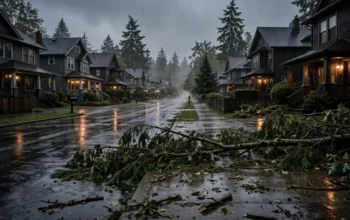
A magnitude 5.7 earthquake struck central Japan in the early hours of Sunday, November 8, 2026, and injured at least 22 people across Aichi and Shizuoka prefectures. No deaths were reported. The shaking was the strongest felt in western Shizuoka in 107 years, and it disrupted bullet train services in parts of the region. The Japan Meteorological Agency has warned residents to stay ready for more strong shaking over the next week, especially in the next two to three days.
Quick Facts
| Fact | Detail |
|---|---|
| Magnitude | 5.7 (Japan Meteorological Agency), 5.5 (US Geological Survey) |
| Time | 1:04 am local time, Sunday, November 8, 2026 |
| Epicentre | Near Hamamatsu, about 10 km northwest of Hamakita, western Shizuoka |
| Depth | About 40 km (JMA), 38.1 km (USGS) |
| Injuries | At least 22 across Aichi and Shizuoka, some reports say 23 or 24 |
| Deaths | None reported |
| Strongest shaking | Upper 5 on Japan’s 7 level scale |
| Tsunami warning | None issued |
| Aftershock warning | Strong quakes possible for about a week |
What Happened in the Early Hours of Sunday
The earthquake struck at 1:04 am local time on Sunday, November 8, 2026, when most people in the region were asleep at home. That timing shaped the injuries that followed. People were woken by sudden shaking, and several were hurt as they tried to get up, move to a safer spot, or get out of bed in the dark.
The Japan Meteorological Agency put the magnitude at 5.7. The US Geological Survey reported a slightly lower figure of 5.5. The epicentre was near Hamamatsu, about 10 km northwest of Hamakita in western Shizuoka Prefecture. Tremors were felt as far as Kyoto, Nara and Yamanashi, which shows how far the energy travelled from the source.
An early report on this same event, published soon after it happened, said there were no casualty or damage reports at the time of writing. That is common after a quake in the middle of the night, when information takes time to come in from hospitals, police and local officials. The picture changed as the morning went on. You can read that first report here: our early report on the Hamamatsu earthquake. This article brings the story up to date with what is now known about injuries, damage and warnings. No tsunami warning was issued, so the official advice stayed focused on shaking, falling objects and further quakes.
At Least 22 People Injured Across Two Prefectures
The clearest change since the first hours is the injury toll. At least 22 people were injured across Aichi and Shizuoka prefectures, according to local media and the Associated Press. Some local reports put the figure a little higher, at 23 or 24. The difference is small and reflects the way casualty numbers are counted in the first day, as hospitals and local authorities confirm each case. No deaths were reported.
The injuries were mostly the kind that happen when shaking throws people off balance or knocks objects down around them. In Tokoname, Aichi, a woman in her 50s fractured her ankle. In Toyota, a man in his 40s and a woman in her 80s fell, hit their heads and were taken to hospital. Both were conscious when they were taken in, which is a hopeful sign, though head injuries are always treated with care.
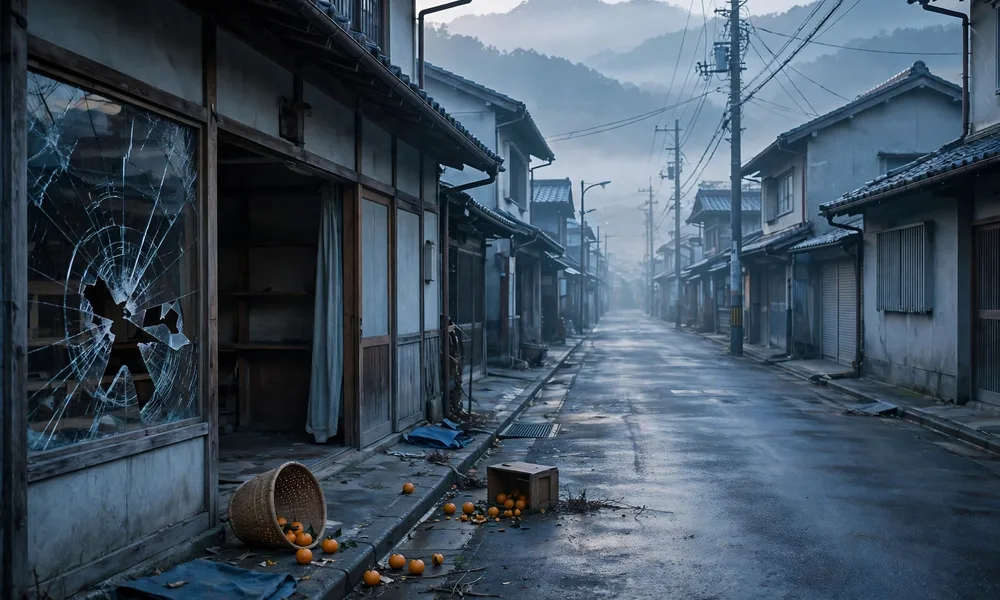
Store windows shattered, items were knocked off shelves, and people fled buildings as the shaking hit.
In Shizuoka, a woman in her 90s injured her shoulder after falling from her bed. Her case shows why a quake at 1:04 am carries a different risk from one in the middle of the day. Older people who are woken suddenly can lose their balance before they are fully awake, and a fall from bed can be enough to cause a serious injury at that age.
The Strongest Shaking in Western Shizuoka in 107 Years
The most striking fact in this update is how rare the shaking was in the places hit hardest. The strongest shaking reached upper 5 on Japan’s 7 level seismic intensity scale in Chita, Aichi Prefecture. That was the first upper 5 shaking recorded there since March 1997, a gap of 29 years.
In western Shizuoka, the shaking also reached upper 5, and that was the first time in 107 years. A gap of more than a century means almost no one living in the area today had felt shaking that strong there before. Lower 5 shaking was also recorded in parts of Aichi, Shizuoka, Gifu and Nagano prefectures.
Japan uses its own seismic intensity scale, which measures how strongly the ground shakes at a given place rather than the total energy released by the quake. That is why one quake can produce different readings in different towns. The magnitude tells us the size of the event at its source. The intensity tells us what people actually felt where they were standing.
Bullet Trains Disrupted and Daily Life Shaken
One of the most visible effects of the quake was on transport. Bullet train services on the Tokaido Shinkansen were disrupted or suspended in parts of the region. The Tokaido line is one of the busiest high speed rail routes in the world, linking Tokyo with Nagoya, Kyoto and Osaka through the very region that was shaken. When services stop on that line, the effect spreads quickly to passengers and timetables across central Japan.
Japanese bullet trains are built with safety systems that stop trains automatically when strong shaking is detected. It is better for a train to stop safely and wait for checks than to keep running while the track and overhead lines are still being inspected. After a quake, engineers need to check the line before services can restart, and that takes time.
For readers following markets as well as news, the week has already brought sharp moves in Japan. The Nikkei fell into bear market territory in early November as technology shares sold off across Asia, a story covered in our report on the Nikkei bear market and the Asia AI selloff. A natural disaster in the same week adds another layer of worry for investors, even when the direct damage is limited. The quake also arrived in a week when Japanese culture was in the spotlight for a very different reason, with a strong opening for a new film covered in our report on the Godzilla Minus Zero opening.
Aftershock Warning and the Nankai Trough Question
The Japan Meteorological Agency has warned residents to brace for possible strong quakes for about a week, especially in the next two to three days. That is standard advice after a quake of this size, because aftershocks are common and the largest ones often come in the first days. The agency also warned of falling rocks and landslides with rain, a risk that grows when rain soaks ground that has already been shaken loose.
One question that always follows a quake in this part of Japan is whether it could lead to the feared Nankai Trough megaquake. The Nankai Trough is a long offshore fault zone where large quakes have happened in the past, and scientists watch it closely. After this event, the agency assessed that the quake was unlikely to lead to a Nankai Trough megaquake, and said it does not change the assessment of how the plates are locked. That is a careful, measured statement. It does not say the risk has gone away. It says this particular quake has not changed the long term picture.
Separately, a magnitude 4.3 quake struck the Kumamoto region at 10:53 am local time on Sunday. That is a smaller event in a different part of the country, reported as a separate quake rather than an aftershock of the Shizuoka event. Its timing on the same day is a reminder of how active Japan is, and how often smaller quakes happen alongside larger ones.
Frequently Asked Questions
How many people were injured in the central Japan earthquake?
At least 22 people were injured across Aichi and Shizuoka prefectures, according to local media and the Associated Press. Some local reports put the figure at 23 or 24. No deaths were reported. Injuries included a fractured ankle, head injuries from falls, and a shoulder injury from a fall from bed.
How strong was the earthquake?
The Japan Meteorological Agency reported a magnitude of 5.7, while the US Geological Survey reported 5.5. The strongest shaking reached upper 5 on Japan’s 7 level seismic intensity scale. That was the first upper 5 in Chita, Aichi since March 1997, and the first upper 5 in western Shizuoka in 107 years.
Was there a tsunami warning?
No tsunami warning was issued after the quake. The epicentre was inland near Hamamatsu in western Shizuoka Prefecture, and official advice focused on shaking, falling objects, aftershocks and the risk of landslides with rain.
What should people in the area do now?
The Japan Meteorological Agency has warned residents to brace for possible strong quakes for about a week, especially in the next two to three days. People should stay alert, keep heavy objects off high shelves, fix tall furniture where possible, and be ready to move to a safe place if strong shaking returns. Anyone who feels unwell after a fall or a blow to the head should seek medical care.
Sources
Final Thoughts
This earthquake is a story of two parts. The first part is the early report, written when the shaking had just happened and no injuries or damage had been confirmed. The second part is this update, written after the morning brought the fuller picture. At least 22 people were hurt, windows shattered, shelves emptied, and bullet trains stopped. The shaking was the strongest in western Shizuoka in 107 years.
For the people who were injured, the story is personal rather than statistical. A fractured ankle, a head injury, a shoulder hurt in a fall from bed, these are injuries that take time to heal. The best way to respect that is to keep the facts straight, follow the official warnings in the days ahead, and remember that the aftershock period is not over yet. The next two to three days matter most, and staying ready is the simplest way to stay safe.