Hakeem Jeffries Launches Bid to Become First Black Speaker of the US House
Hakeem Jeffries has formally launched his bid to become Speaker of the United States House of Representatives. He announced his candidacy in a letter to fellow House Democrats on Wednesday, November 4, 2026, one day after Democrats won control of the House in the midterm elections on November 3. If he wins the leadership vote inside his party and then wins the vote on the House floor in January, he would become the 57th Speaker and the first Black Speaker in American history. His path now runs through a closed door party vote on November 18, followed by the full House vote when the 120th Congress convenes on January 3, 2027.
Quick Facts
| Detail | What we know |
|---|---|
| Candidate | Hakeem Jeffries, Democratic leader in the House |
| Office sought | Speaker of the United States House of Representatives |
| Announcement date | Wednesday, November 4, 2026 |
| How he announced | A Dear Colleague letter to fellow House Democrats |
| House result | Democrats won the House, with 228 seats counted by Wednesday morning |
| Party leadership vote | Behind closed doors on November 18, 2026 |
| House floor vote | January 3, 2027, when the 120th Congress convenes |
| Votes needed on the floor | 218 votes |
| Current Speaker | Republican Mike Johnson |
| Historic significance | If elected, Jeffries would be the first Black Speaker in US history |
| Opposition noted | A grassroots petition opposing his bid has passed 600,000 signatures, according to Times Now World on November 6, 2026 |
What Jeffries Announced and Why It Matters Now
Jeffries did not wait long after the midterm results came in. On Wednesday, November 4, 2026, he sent a Dear Colleague letter to his fellow Democrats asking for their support to serve as the 57th Speaker of the House. Democrats had just won back the House in the November 3 midterms, and the party needed a clear leader to carry that win into the next Congress. Jeffries, who has led House Democrats since January 2023, put his name forward first, in writing and in public.
The letter was organised under three headings: Affordability, Accountability and American Values. On affordability, he spoke to the cost of living pressures that shaped much of the midterm campaign, from housing and groceries to health care and everyday bills. On accountability, he signalled a House that would use its oversight powers and hold the executive branch to account. The letter also vowed dramatic change, a phrase that told his colleagues he does not see the new majority as a time for caution.
The announcement matters because the Speaker is not a ceremonial post. The Speaker sets the agenda for the House, decides which bills reach the floor, and stands second in the line of succession to the presidency, after the vice president. Jeffries has served two terms as minority leader, leading House Democrats while they were out of power. That experience is central to his pitch: he already knows the caucus and the institution, and he is ready to move from leading the opposition to leading the House itself.
How the Path to Speaker Works
Becoming Speaker is a two step process, and Jeffries must win both steps. The first step is inside his own party. On November 18, 2026, House Democrats will hold leadership elections behind closed doors. In that vote, Jeffries needs a majority of House Democrats to secure the nomination for Speaker.
The second step is the vote on the House floor. When the 120th Congress convenes on January 3, 2027, every member of the House will vote for Speaker. Jeffries will need 218 votes, a majority of the 435 seats. Winning the party nomination does not guarantee the floor vote, because the floor vote is public, and members can vote for someone else or vote present.
At this stage, the signs point in his favour. No challenger has emerged to contest the nomination, which is meaningful in a party that has often seen leadership contests. A lack of opposition does not mean unanimous support. Some incoming progressive members have not yet committed to backing him, and their votes will matter in both votes. The absence of a declared rival gives Jeffries a clear run at the nomination and time to build support member by member.
Democrats also won the Senate, according to the results reported by Wednesday morning, when 228 House seats had been counted for Democrats. That double win raises the stakes of the Speaker election. For readers following the wider fallout, the scale of the Republican losses is also covered in our report on how Republicans lost ground in the midterms. Jeffries would succeed Republican Mike Johnson, so the change of Speaker is also a change of party control in the House.
Why This Bid Would Be Historic
If Hakeem Jeffries is elected, he would be the first Black Speaker in the history of the United States House of Representatives. The office has existed since 1789 and has been held by 56 Speakers before him. Jeffries himself became the first Black leader of a party in Congress when he took over as Democratic leader in January 2023. The Speakership would be the next step, and the highest office in the House.
History is made by votes, not by announcements. The historic first will only happen if he wins the party vote on November 18 and the floor vote on January 3. Until then, it is a bid that would make history if it succeeds, not a result that has already happened. Jeffries represents a district in Brooklyn, New York. For voters, the historic angle is only part of the story. The other part is what kind of Speaker he would be, and his letter gives an early answer: a Speaker focused on affordability, accountability, and American values.
The Petition and the Pushback
Not everyone is welcoming the bid without question. A grassroots petition opposing Jeffries has passed 600,000 signatures, according to a report by Times Now World on November 6, 2026. The petition was organised by social media creator Nicole Whitted, and it cites private meetings with Jared Kushner as a reason for opposition. That is the report as published, and it should be read as reported opposition, not as a confirmed finding about the meetings themselves. The petition does not vote in the leadership election, but it shows that the bid is being watched closely outside Congress.
Petitions of this kind are a familiar part of American politics. They let people outside Congress register a view, and they can gain attention quickly on social media. A total of more than 600,000 signatures is large enough to be noticed. It is not, however, a vote in the House, and it is not a measure of support among the Democrats who will decide the nomination. The petition is a public pressure campaign. The election is a vote among elected members. Some incoming progressive members have also not yet committed to supporting him, a separate and more direct question than the petition.
What Happens Next
The next key date is November 18, 2026, when House Democrats meet behind closed doors to elect their leaders. That meeting will be the first real test of the bid. If Jeffries wins a majority there, he will become the Democratic nominee for Speaker, and the focus will shift to the floor vote on January 3, 2027. If the vote is close, or if a challenger emerges late, that will be news in itself. For now, the absence of a challenger suggests a smooth path, but leadership votes have surprised observers before.
Between now and November 18, the work will be quiet and personal. Jeffries will be talking to members one by one, listening to their concerns, and making the case for his leadership. New members who have not yet committed will be an important part of that work, since their first vote as representatives will be for Speaker.
After the party vote, the attention will turn to January 3 and the 218 votes needed on the floor. That vote is held in public, with each member called by name. If Jeffries wins it, he will take the gavel from Mike Johnson and become the 57th Speaker. If he falls short, the House will have to vote again. Our report on the early 2028 endorsement race looks at how senior Democrats are positioning themselves for the next presidential cycle. For readers, the simple way to follow this story is to watch November 18 for the party vote, January 3 for the floor vote, and the days in between for any sign of a challenger or a shift in support.
Frequently Asked Questions
Has Hakeem Jeffries already become Speaker?
No. He has formally launched his bid, but he still needs to win the Democratic nomination on November 18, 2026, and then win 218 votes on the House floor on January 3, 2027. Until both votes are held, he is a candidate for Speaker, not the Speaker.
Why would his election be historic?
If elected, Jeffries would be the first Black Speaker in US history. The office has existed since 1789, and 56 Speakers have held it before him. He already made history in January 2023 as the first Black leader of a party in Congress.
How many votes does he need to win?
He needs a majority of House Democrats in the closed door leadership vote on November 18, 2026, to win the party nomination. He then needs 218 votes, a majority of the 435 seats, in the full House on January 3, 2027.
Is anyone running against him?
No challenger has emerged so far, but not every Democrat has committed to support him. Some incoming progressive members have not yet said whether they will back him. A grassroots petition opposing his bid has also passed 600,000 signatures, according to Times Now World, but a petition is not a vote in the leadership election.
Sources
- Hakeem Jeffries, Dear Colleague: Announcing Candidacy for Speaker of the House, November 4, 2026
- Times Now World, Hakeem Jeffries Faces Petition Opposition Over Jared Kushner Meetings, November 6, 2026
- Politico, 2026 midterm election results coverage, November 2026
Final Thoughts
Hakeem Jeffries has made his move early, clearly, and in writing. His letter sets out a platform built on affordability, accountability and American values, and it promises dramatic change. The process ahead is clear: a party vote on November 18, then a floor vote on January 3, with 218 votes needed to take the gavel. No challenger has stepped forward, but support is not yet unanimous, and a large public petition shows the bid is already being debated beyond Congress.
If he wins, the result will be historic, remembered as the moment the House chose its first Black Speaker. But history is made by votes, and those votes are still to come. The next six weeks will tell us whether Jeffries can turn a strong announcement into a winning coalition. For now, the bid is real and the path is set.
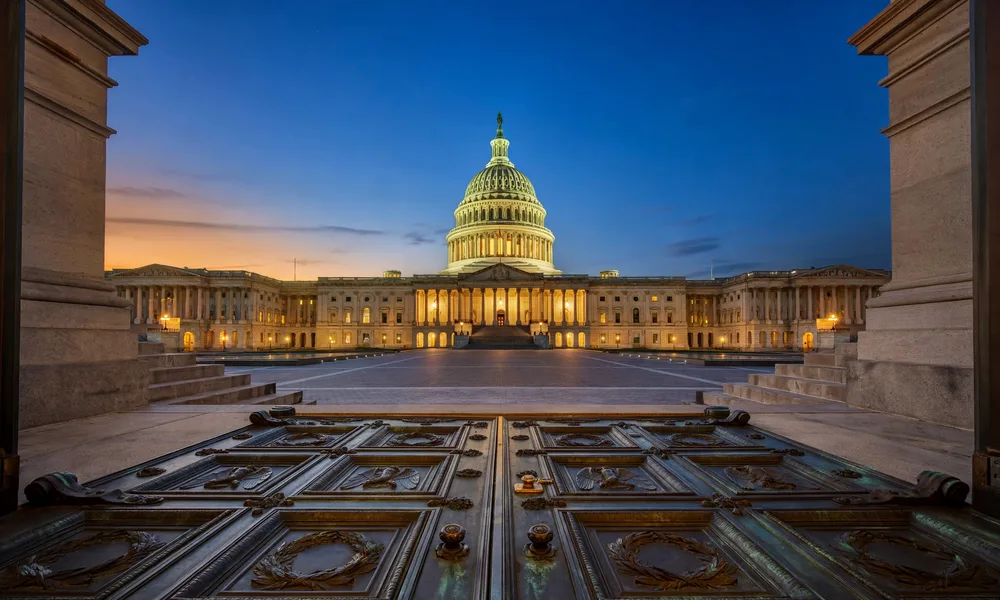
Featured image: AI-generated editorial illustration.