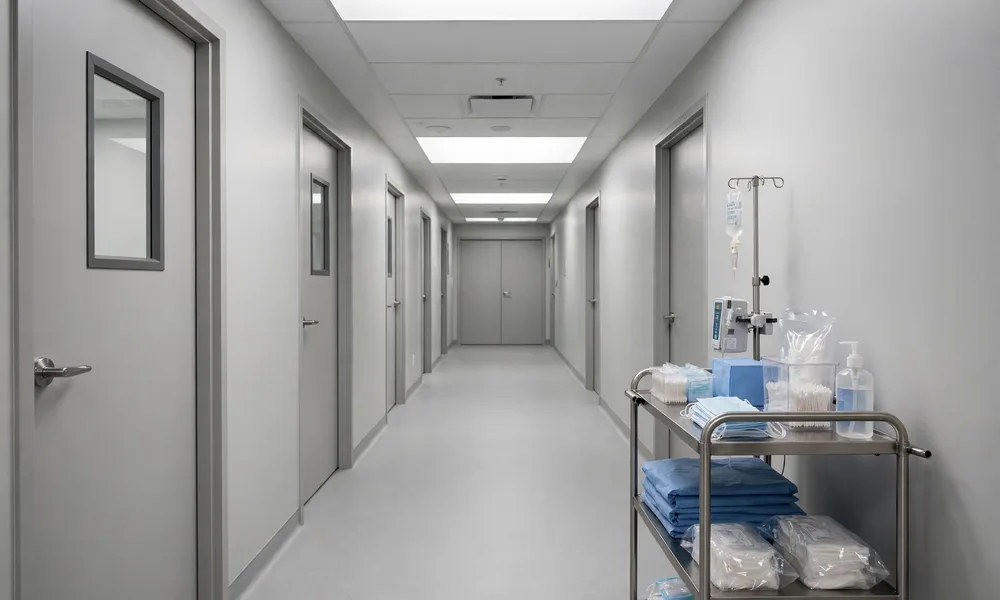
A British healthcare worker who tested positive for Ebola in the Democratic Republic of Congo is being flown back to the UK for specialist treatment. The patient is in stable condition, the identity has not been disclosed, and the person is expected to arrive in Britain on Wednesday or Thursday, November 5, 2026. The UK government confirmed the case on November 4 and said well established procedures had been activated. The risk to the UK public remains low. This is the first British national infected during the current outbreak in DR Congo, which was declared on May 15 and is caused by Bundibugyo virus. The patient will be taken by specialist ambulance to a high consequence infectious disease unit.
Quick Facts
| Patient | British healthcare worker, identity not disclosed |
| Where infected | Democratic Republic of Congo, while helping with the outbreak response |
| Condition | Stable |
| Expected arrival | Wednesday or Thursday, November 5, 2026 |
| Confirmed by | UK government, on November 4, 2026 |
| Risk to UK public | Low, according to the UK government |
| Outbreak declared | May 15, 2026, in DR Congo |
| Virus type | Bundibugyo virus |
| Likely hospital | Royal Free Hospital in London, which has a high level isolation unit |
| Other UK centre | Royal Victoria Infirmary in Newcastle |
| UK Ebola cases ever | Four confirmed cases, one lab incident in 1976 and three health workers from West Africa in 2014 to 2015 |
| Sent by | A humanitarian organisation, to help with the outbreak response |
What Happened to the British Healthcare Worker
The patient is a British citizen who was working in DR Congo as a healthcare worker. Reuters identified the patient as a healthcare worker, and the Press Association reported that the person had been sent to DR Congo by a humanitarian organisation to help support the response to the outbreak. The worker tested positive for Ebola while working in the country, and the decision was then made to bring the person back to Britain for specialist care. The patient is in stable condition, so the transfer could be planned carefully.
The UK government confirmed the case on Wednesday, November 4. A government spokesperson said that a British citizen currently in DR Congo had tested positive for Ebola, that the UK had well established procedures for dealing with cases like this, and that those processes had been activated. The spokesperson added that further information would be shared in due course as appropriate, and that the risk to the UK public from Ebola remains low. The patient was expected to arrive in Britain on Wednesday or Thursday, and the plan was for a specialist ambulance to take the person to a high consequence infectious disease unit after landing.
Where the Patient Will Be Treated
The patient is expected to be taken to the Royal Free Hospital in London, which has a high level isolation unit run by a dedicated team of doctors, nurses and laboratory staff. The Royal Free is one of only two hospitals in the UK equipped to deal with Ebola in this way. The other is the Royal Victoria Infirmary in Newcastle. Dr Damien Tully of the London School of Hygiene and Tropical Medicine said both hospitals have specialist isolation systems and are staffed by highly trained infectious disease teams.
A high level isolation unit is built to keep a dangerous infection contained while giving the patient the best possible care. The patient is cared for in a sealed room, staff wear full protective equipment, and every step follows strict infection control rules. That is how a planned medical evacuation can be carried out without putting the wider public at risk.
The Outbreak in DR Congo
The outbreak in DR Congo was declared on May 15, 2026, and it is caused by Bundibugyo virus, one of the viruses that can cause Ebola disease. The World Health Organization explains that Ebola disease is a severe illness that is often fatal, and that three viruses are known to cause large outbreaks: Ebola virus, Sudan virus and Bundibugyo virus. The average case fatality rate is around 50 percent, although rates have varied from 25 to 90 percent in past outbreaks. Early intensive supportive care, including rehydration and treatment of symptoms, improves survival.
The scale of the current outbreak is large. Reports have put the number of confirmed cases at more than 10,000, and more than 5,000 people have died. The outbreak has been described as the second largest and fastest spreading on record, and the second largest in the history of DR Congo. Healthcare workers are on the front line of these outbreaks, often treating severely ill patients under extremely challenging conditions, and even with rigorous protective measures, accidental exposures can occur.
Ebola in Simple Terms
Ebola disease is caused by viruses in the Orthoebolavirus group. People can catch it from wild animals, and it then spreads from person to person through direct contact with the blood or body fluids of a person who is sick with the disease or has died from it. The World Health Organization lists blood, saliva, vomit, faeces and urine among the fluids involved, and it notes that objects or surfaces contaminated with body fluids can also pass on the virus. People cannot transmit the disease before they have symptoms, and they remain infectious as long as their blood contains the virus.
The symptoms can start suddenly and include fever, fatigue, muscle pain, headache and sore throat. These are followed by vomiting, diarrhoea, abdominal pain and rash, and symptoms of impaired kidney and liver function. Bleeding is less common than many people think, although some patients may develop internal and external bleeding later in the illness. The incubation period, from infection to the start of symptoms, varies from 2 to 21 days. That long window is one reason contacts of a patient are monitored for 21 days.
There is no approved vaccine or treatment for Bundibugyo virus disease at present, although candidate products are in development. Approved vaccines and treatments exist only for Ebola virus disease. For other forms, care is based on early intensive supportive care, including rehydration and treatment of symptoms. Seeking early care can be lifesaving. This is general information only. If you are worried about your own health, talk to your own doctor for medical advice.
Why Experts Call the Case Concerning but Not Unexpected
Dr Damien Tully, an associate professor at the Medical Research Council and Uganda Virus Research Institute and London School of Hygiene and Tropical Medicine Uganda Research Unit, called the case deeply concerning but not entirely unexpected. He said healthcare workers are on the front line of these outbreaks, often treating severely ill patients under extremely challenging conditions, and that even with rigorous protective measures, accidental exposures can occur. His words capture the two sides of the story. It is concerning because a British worker has fallen ill, but it is not unexpected because the outbreak is large and health workers are the people closest to it.
Dr Tully also said the case does not suggest that the virus has become more transmissible, or that the threat to the UK has increased. He described the risk to the public from this planned medical evacuation as extremely low, because Ebola is transmitted mainly through direct contact with infected bodily fluids, and people are not generally infectious until they develop symptoms.
What Happens Next for the Patient and the Public
For the patient, the next step is treatment in the isolation unit. The medical team will provide supportive care, monitor the illness closely, and watch for any change in condition. The length of treatment is not known, and it will depend on how the patient responds. Contacts of the patient will be identified and monitored, as part of the standard process for a case like this. That monitoring is a precaution, and it is how health teams make sure that no one else falls ill without being noticed early. The same week has brought other health and science news, including our report on Immunic and its progressive multiple sclerosis research on November 5, and our report on the ozone hole in 2026, the largest in a decade according to NASA and NOAA.
For the public in the UK, the advice has not changed. The government says the risk remains low, and experts say the planned evacuation does not increase the threat. Ebola does not spread through the air in the way that flu or a cold does. It spreads through direct contact with the body fluids of a person who is sick, which is why health workers and close contacts are the people at risk. The Foreign, Commonwealth and Development Office currently advises against all travel to parts of DR Congo.
Frequently Asked Questions
Who is the British healthcare worker with Ebola?
The patient is a British healthcare worker who tested positive for Ebola in DR Congo. The identity has not been disclosed. The worker was sent to DR Congo by a humanitarian organisation to help with the outbreak response, and is in stable condition.
Where will the patient be treated in the UK?
The patient is expected to be taken by specialist ambulance to a high consequence infectious disease unit, expected to be the Royal Free Hospital in London, which has a high level isolation unit. The Royal Victoria Infirmary in Newcastle is the other UK centre equipped for Ebola.
What is the risk to the UK public?
The UK government says the risk to the UK public remains low. Experts describe the risk from this planned medical evacuation as extremely low, because Ebola spreads mainly through direct contact with infected bodily fluids, and people are not generally infectious until they develop symptoms.
What are the symptoms of Ebola?
Symptoms can start suddenly and include fever, fatigue, muscle pain, headache and sore throat, followed by vomiting, diarrhoea, abdominal pain and rash. The incubation period is 2 to 21 days. This is general information only. If you are worried about your own health, talk to your own doctor for medical advice.
Sources
This article is based on reporting from the Press Association via Newsquest, LADbible, and the World Health Organization fact sheet on Ebola disease. The Newsquest report is available at Newsquest, the LADbible report is available at LADbible, and the World Health Organization fact sheet is available at World Health Organization.
Final Thoughts
A British healthcare worker has fallen ill with Ebola while helping others in DR Congo, and is now being brought home for specialist treatment. The patient is stable, the government confirmed the case on November 4, and the plan is clear: a specialist ambulance to a high level isolation unit, most likely at the Royal Free Hospital in London. The case is the first British infection in the current outbreak, which began on May 15 and is caused by Bundibugyo virus, and it comes as the outbreak passes 10,000 confirmed cases with more than 5,000 deaths. Experts call it deeply concerning but not entirely unexpected, and they stress that the risk to the UK public remains low. The worker went to DR Congo to help, and now deserves the best care Britain can give.